In Pokrovsk, Russian Infiltrators Suffer Extreme Losses To Create "Illusion of Control"
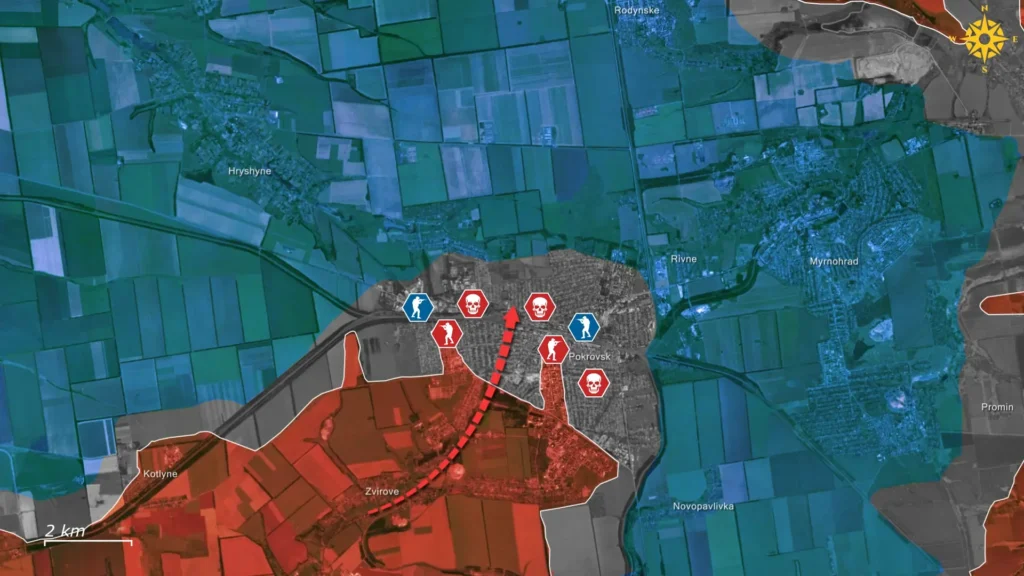
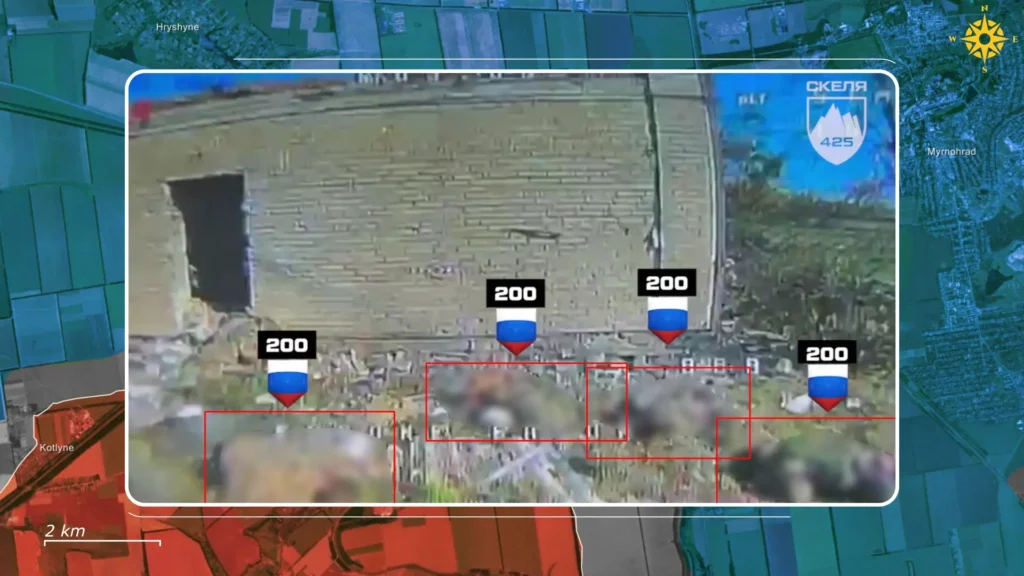
Pokrovsk has become such a lethal kill zone that most Russian troops remain 10 kilometers outside the city. Small groups of infiltrators, whose survival rates are infinitesimal - are sent in daily and nightly to create the illusion of control because there is no such thing in this urban hellscape.
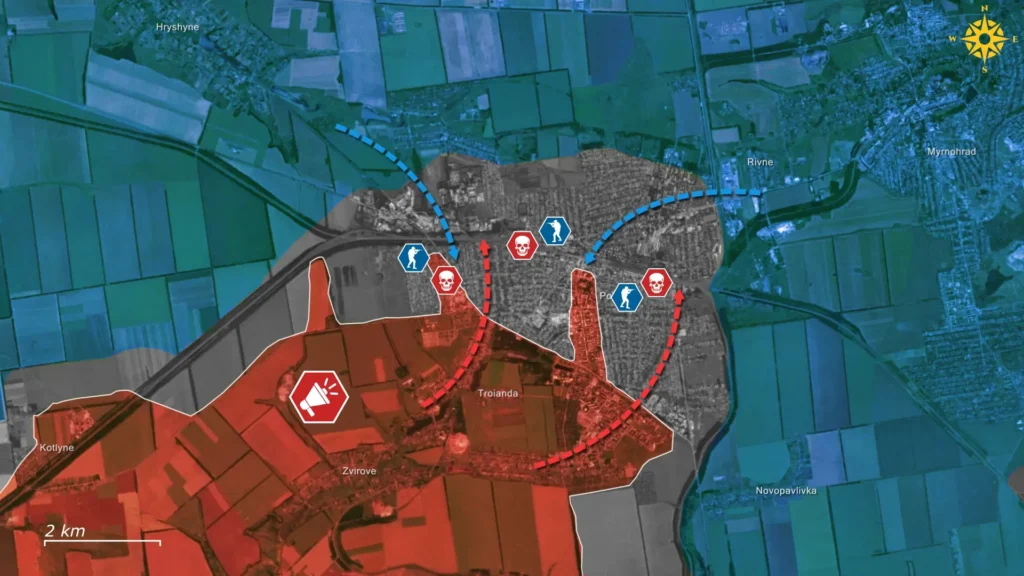
The Ukrainians are holding the northern part of the city, defined by a rail line that runs through it, which preserves their logistics routes. If the situation becomes untenable, they intend to withdraw to prepared positions, but for now the calculus of casualties inflicted on the Russians favors holding. JL
RFU News reports:
For Russian soldiers, the order to attack Pokrovsk has become a death sentence. The Russian army's losses in the sector are so extreme that many contract soldiers, who once enlisted for bonuses, now see imprisonment as preferable to the slaughter awaiting them on the front. The main forces of both sides now remain ten kilometers outside the town. A dispersed conflict is fought by small, almost autonomous groups in engagements that rarely involve more than a handful of soldiers on each side. Infiltration serves to maintain Russia's symbolic push forward to create the illusion of control, Ukraine's army does not need to reclaim every block of Pokrovsk. What matters is keeping Russian control south of the railway line, serving as a tactical barrier from the still-defended north.
The battle for the town has slowly become a lethal war of shadows with almost no chance of survival. The Russian army is disintegrating under the weight of its own losses, and its push to capture Pokrovsk turns into a slow-motion collapse of morale and unit-level desertions.
For many Russian soldiers, the order to attack Pokrovsk has become synonymous with a death sentence.
Soldiers whisper among themselves that entering Pokrovsk means certain annihilation by Ukrainian artillery and drones, as videos from the area reveal the growing panic within the Russian ranks. In one, an agitated officer films two soldiers who refuse to go into the town, both saying they prefer prison over suicide missions. One claims a medical condition, the other shows a wound, but the officer is unmoved. He records them as proof to strip them of their pay, while threatening that they will be transferred to a penal unit and ultimately will be pushed into Pokrovsk at gunpoint anyway.
Such scenes are no longer rare, as the Russian army's losses in the sector are so extreme that many contract soldiers, who once enlisted for bonuses, now see imprisonment or even death in custody as preferable to the slaughter awaiting them on the front.
But these men will not be sent back to Russia to serve prison terms, as the Russian command sacrifices such penal battalions as cannon fodder and bait to reveal Ukrainian fire positions.
Drone-dominated battlefield spawns war of shadows
Inside Pokrovsk itself, the battle has evolved into a war of shadows, with the mass assaults of the first two years of the Russian invasion gone. Now, a dispersed conflict is fought by small, almost autonomous groups, with both sides having adapted to the drone-dominated battlefield that prevents large-scale movement.
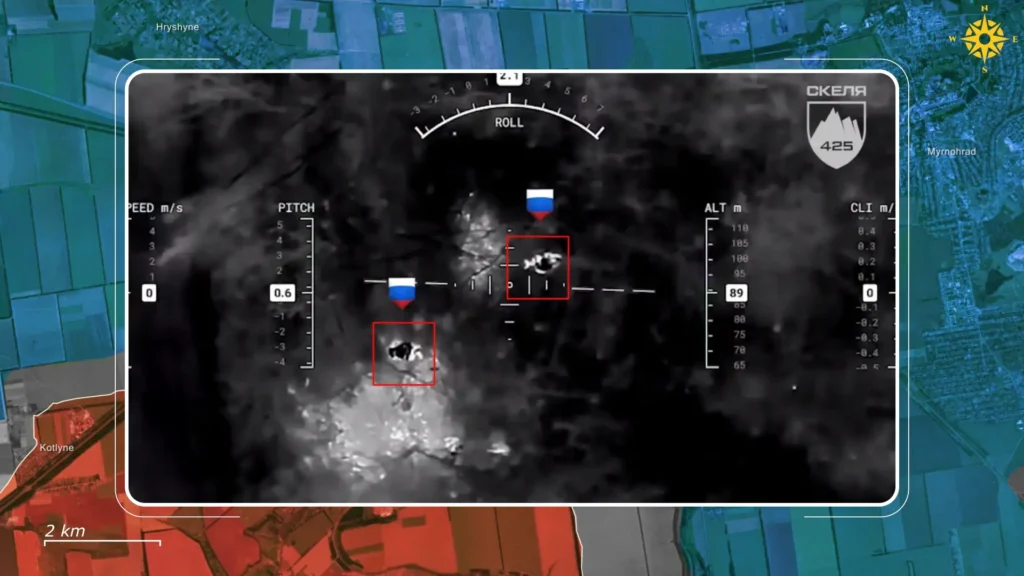
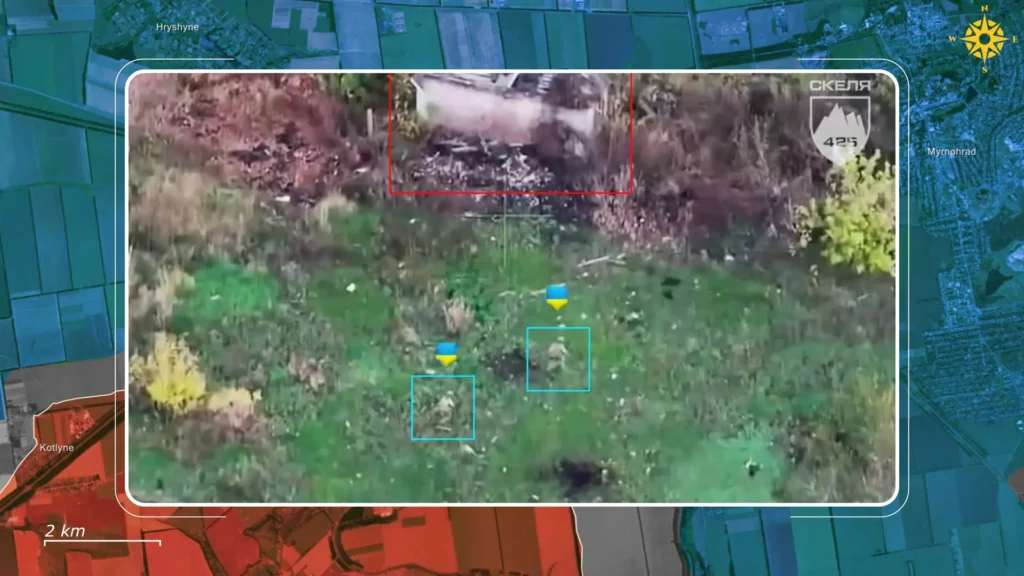
The Russians use micro-units of infiltrators, two or three men slipping through rubble, hiding in basements, probing for Ukrainian strongpoints. The Ukrainians counter them with their own ghostly patrols, reconnaissance teams that move in pairs or trios, each guided by a drone in the sky with thermal vision, while the soldiers themselves carry portable electronic warfare devices.
These patrols are silent, highly mobile, and lethal, despite engagements that rarely involve more than a handful of soldiers on each side. One street, one courtyard, or one collapsed apartment block may become a self-contained battlefield for hours.
This war of shadows is a direct consequence of the omnipresence of surveillance and FPV drones, as any concentration of troops or vehicle movement is immediately detected and destroyed.
Main forces remain outside as small units fight street by street
The main forces of both sides now remain roughly ten kilometers outside the town limits, unable to advance through the open fields that have become killing grounds. Inside Pokrovsk, only the smallest, bravest, and most disciplined units can survive.
For the Russians, infiltration serves to maintain a symbolic push forward and to create the illusion of control, while for the Ukrainians, the mission is to contain, hunt, and eliminate these infiltrators before they can threaten logistics or weaken defensive cohesion.
The defenders operate with speed and precision: detect the enemy, fix them in place by surrounding and suppressing them, neutralizing the trapped soldiers with rifles, grenades, bombs, or drones, and withdraw before Russian drones can kill them in return.
Skill-based warfare becomes unsustainable meat grinder for Russia
This new model of urban warfare rewards skill, awareness, and endurance more than numbers. Yet for the Russians, whose units are filled with unwilling conscripts and penal soldiers, it has become an unsustainable meat grinder. Their desertions and refusal to fight are the logical outcome of a system that sends men to die for objectives already lost in the chaos of the grey zone.
Ukraine's strategic focus: Hold the railway line
Overall, despite the terrible nature of this fighting, Ukraine's army does not need to reclaim every block of Pokrovsk. What matters is keeping Russian territorial control south of the railway line, serving as a tactical barrier from the still-defended north.
While the Azov units push east of Rodynske to relieve pressure and reopen Myrnohrad's northern approach, Ukrainian defenders inside Pokrovsk only need to hold long enough to keep that corridor alive. If Myrnohrad's connection stays open, the town can continue to resist, or if necessary, conduct an organized withdrawal under cover of the northern fields.
I’ve been spending a lot of time playing H555 Game lately, and it’s genuinely refreshing. The gameplay flows nicely, and it never feels repetitive. If you’re someone who enjoys light, easygoing entertainment, make sure to check it out. It’s one of those games that keeps you coming back without even realizing it.
As a Partner and Co-Founder of Predictiv and PredictivAsia, Jon specializes in management performance and organizational effectiveness for both domestic and international clients. He is an editor and author whose works include Invisible Advantage: How Intangilbles are Driving Business Performance. Learn more...








2 comments:
I’ve been spending a lot of time playing H555 Game lately, and it’s genuinely refreshing. The gameplay flows nicely, and it never feels repetitive. If you’re someone who enjoys light, easygoing entertainment, make sure to check it out. It’s one of those games that keeps you coming back without even realizing it.
https://digitalforge.qa/best-email-marketing-company-qatar
Post a Comment