


Ilya Volzhsky reports in Novaya Gazeta:
Capturing Kupiansk is a necessary precondition for any Russian advance on Lyman and the Slovyansk-Kramatorsk fortress belt. But Ukraine controls both the right-bank and left-bank sections of Kupiansk including the city council building in the center. The Russians periodically attempt to infiltrate groups into the city. Remaining Russian troops might be a company’s worth scattered across various districts, "in the dozens at most. The Russian army will attempt to resume the offensive, if only to avoid acknowledging its recapture. It is unlikely they will achieve this since Ukrainian forces neutralised all the gains Russia made in Kupiansk over the past year.”
Fierce battles for the relatively small city of Kupyansk in eastern Ukraine’s Kharkiv region have been going on for several years, with Moscow and Kyiv both currently claiming to be in control of it. Novaya Europe spoke to several military analysts to gain a clearer understanding of the situation.
Russian troops captured Kupyansk in the first days of the full-scale invasion of Ukraine in February 2022 and held the city until September that year, when the Armed Forces of Ukraine (AFU) liberated it during their successful counteroffensive in the Kharkiv region. However, by the summer of 2023, the Russian military resumed its attempts to retake it.
Late last year those efforts came to a head, with Chief of the General Staff of the Russian Armed Forces Valery Gerasimov reporting to Vladimir Putin on 20 November that Kupyansk had finally been captured, with Putin announcing 10 days later that Russian troops were in full control of the city.
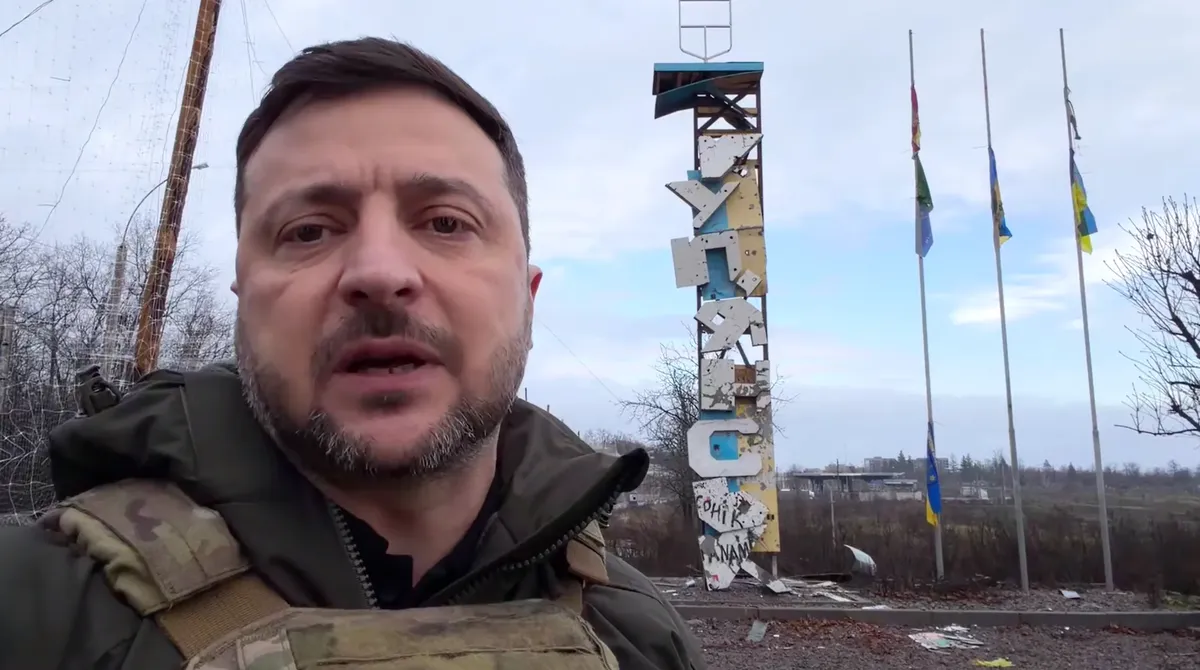
However, on 12 December, it was reported that Ukrainian units had broken through to the Oskil River, liberated part of the city’s districts, and encircled a grouping of several hundred Russian troops. In a brilliant PR stunt, Ukrainian President Volodymyr Zelensky even visited the outskirts of Kupyansk himself and recorded a video to debunk Putin’s claims that the Russians were in full control.
Ukrainian President Volodymyr Zelensky on the outskirts of Kupyansk, 12 December 2026. Screenshot: Zelensky / Telegram
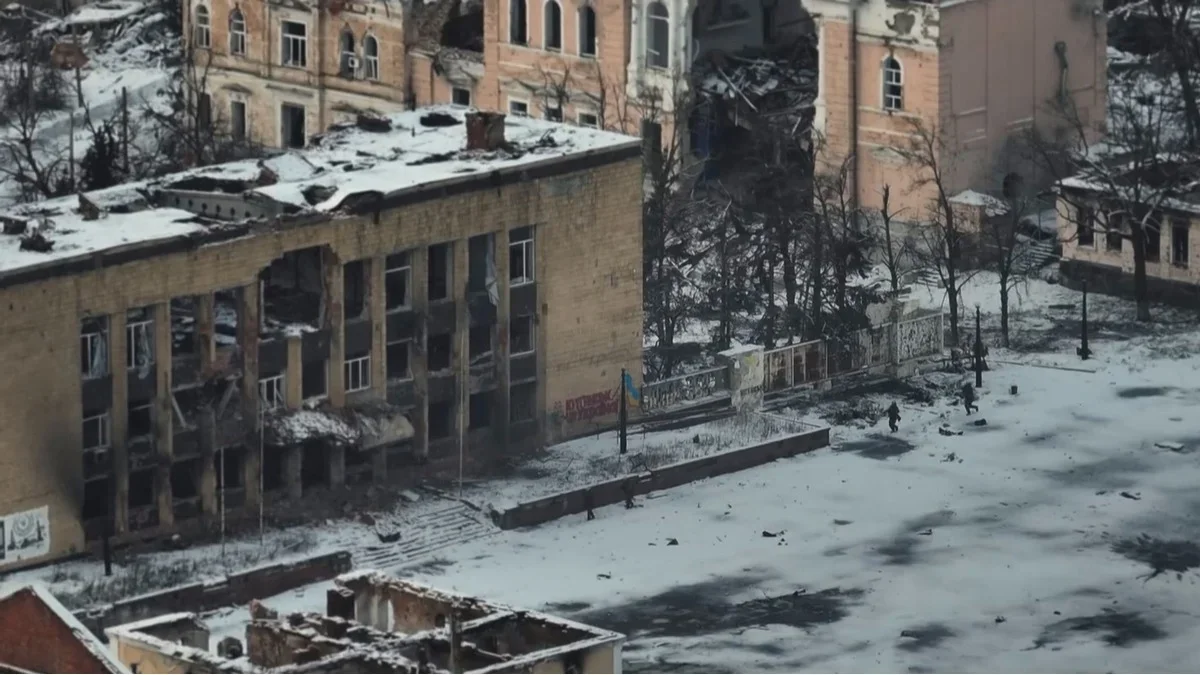
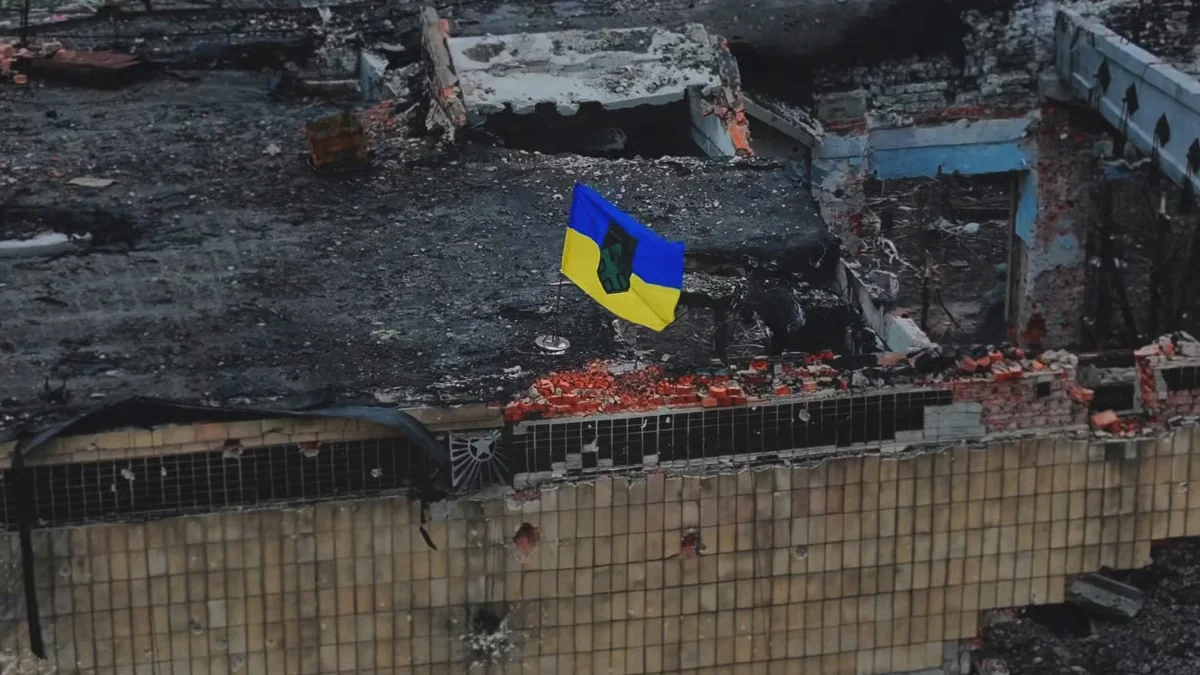
Exactly a month later, the 2nd Corps of the National Guard of Ukraine, Khartiya, captured the Kupyansk city council building — the most important government institution in the city — and, according to a video posted from the scene on social media, raised the Ukrainian national flag outside it, despite there being fierce Russian resistance.
On 15 January, Gerasimov once again claimed that Kupyansk was under Russian control, while also alleging that the AFU had made several attempts to place Ukrainian flags on other administrative buildings in the city using drones, part of what he called the AFU’s attempts to simulate their presence in Kupyansk.
Clearing operations underway
“Currently, Ukrainian forces control nearly all of the severely destroyed city of Kupyansk,” Roman Svitan, a military expert and retired AFU colonel, told Novaya Europe. “Russian forces are attacking along both the right and left banks of the Oskil River, attempting to break through to their encircled assault troops within the city.”
Ukrainian soldiers running toward the Kupyansk city administration building. Photo: Khartiya Corps
“Up to a hundred Russian soldiers could be hiding in basements at present. They are being located and eliminated by AFU clearing groups and drones, sometimes through intercepted radio communications. This clearing operation will continue for a considerable time,” Svitan adds, concluding that Kupyansk could currently be termed a “grey zone”.
Kirill Mikhailov, a Russian military analyst, agreed, telling Novaya Europe that “Ukrainian sources estimate it will take several more weeks to complete the clearance of remaining isolated Russian military personnel from the city. There are also reports of attempts to push Russian forces further north along both banks of the Oskil.”
“I estimate the number of Russian soldiers remaining in Kupyansk to be in the dozens at most,” Mikhailov added. “The Russian army will probably attempt to resume the offensive on Kupyansk in the near future, if only to avoid acknowledging its recapture. However, it is unlikely they will achieve this quickly, given that Ukrainian forces have recently neutralised all the gains Russia made in Kupyansk over the past year.”
The flag raised by Ukrainian soldiers on the Kupyansk city administration building. Photo: Khartiya Corps
Mikhailov noted, based on official reports, that the Khartiya reconnaissance and assault group, which is largely composed of soldiers from Latin America and operates within the National Guard’s Khartiya Corps, is in charge of the operation to secure the city, and had been posting videos and stills of its progress clearing Kupyansk.
Mikhailov also highlighted the involvement of the 475th Separate Assault Regiment, a recently formed unit that exemplifies Ukraine’s new emphasis on close drone-infantry coordination in offensive operations.
“The AFU controls both the right-bank and left-bank sections of Kupyansk,” military and political analyst Alexander Kovalenko told Novaya Europe. “The Russians periodically attempt to infiltrate sabotage groups into the urban area. The remaining Russian army assault troops in the city are few in number. I estimate there might be up to a company’s worth scattered across various city districts. The Russians try to avoid combat and hide in ruins, making these sabotage and reconnaissance groups very difficult to detect and eliminate. They are supplied with provisions and ammunition using transport drones.”
At any cost
The operational goal behind the Russian determination to capture Kupyansk, according to Mikhailov, was to seize the crossings over the Oskil River, allowing Russian forces to encircle the Ukrainian bridgehead on the river’s left bank, but this did not happen.
The Russian military high command’s directive to its troops was to seize Kupyansk at any cost.
Kovalenko said he believed the Russian military high command’s directive to its troops was to seize Kupyansk at any cost, to which end the 6th Combined Arms Army, supported by elements of the 1st Tank Army, are both now poised to advance on the city.
A secondary Russian objective is an assault on the settlement of Velykyi Burluk, according to Kovalenko, who noted that the operation was contingent on Russian forces first being able to secure Kupyansk’s right bank and expanding the bridgehead near the village of Dvorichna, something he estimates will take the Russians at least another six months to achieve.
According to Svitan, the leftbank district of Kupyansk-Vuzlovyi is now under full AFU control, much to the frustration of the Russians, who are focused on capturing the area in order to gain control of the railway station there, which connects to a line that runs to the town of Valuyki in Russia’s Belgorod region, as well as to other strategically important destinations. Establishing a major logistics hub there is a key Russian objective.
Additionally, capturing Kupyansk itself is a necessary precondition for any Russian advance on the nearby city of Lyman and, ultimately, for a northern approach toward the Slovyansk-Kramatorsk urban conglomerate, a primary strategic goal for the Russian army.


0 comments:
Post a Comment