A Blog by Jonathan Low


Feb 3, 2018

A Eulogy For the Headphone Jack

The loss of the headphone jack is another of those 'improvements' whose beneficiaries do not appear to be consumers. JL


Charlie Hoey comments in Medium:

Calling the connectors you’d find on every piece of consumer electronics “audio jacks” is like calling your car a “grocery machine”. Without that port, we will be beholden to device drivers between our sounds and our speakers. We’ll lose access to any pair of headphones. It will be the end of a common interface for sound transfer that survived unchanged for a century, the end of plugging your iPod into any stereo bought since WWII. Entrepreneurs and engineers will lose access to a universal, license-free I/O port.

How Avocado Selfie Emojis Are Becoming a Super Bowl Thing

Cutting through the clutter - whatever it takes. JL

Katie Richards reports in Adweek:

Avocados From Mexico has delighted Super Bowl viewers with TV. (This year) the brand created clickable, branded icons. It has developed a patent-pending “Picmoji” feature it’s going to use in the Avocados From Mexico campaign that combines your best selfie with your favorite emoji (the avocado, duh). "We are in a brandless industry, fresh produce, and we don’t have the budget that consumer-packaged-goods have. We have to get creative to be disruptive to breakthrough that clutter.”

The Love Oracle: Can Artificial Intelligence Help You Succeed At Dating?

Could it be any worse than whatever you're currently trying? JL

Thomas Hornigold reports in Singularity Hub:

Researchers have developed an AI that can dispense relationship and dating advice, a kind of virtual advice columnist. They trained the machine on hundreds of thousands of pages of a web forum where people ask for and give love advice. The key insight they used to guide the neural net is that people are often expecting fairly generic advice. Many people ask similar questions about their love lives. If that sounds unimpressive, ask yourself: when my friends ask me for advice, do I do anything different?

Americans Are Saving Energy Because Fewer People Are Going Outside

Younger people, especially, prefer staying in with their technology, which requires less energy usage than driving. JL

Angela Chen reports in The Verge:

Americans spent an extra eight days at home compared to 2003. Being at home means using more energy by keeping the lights on and watching TV. But it also means less travel, and that fewer people are outside operating offices and stores. Overall we saved 1,700 trillion British thermal units (BTU) of heat, or 1.8% of the national total. Americans spent one day less traveling and one week less in buildings other than their homes a decade earlier. Youths spent 70% more time at home than the general population.

New Apple Data Confirm Podcast Listeners Really Are Advertisers' Holy Grail

Intimacy and trust lead to engagement - which means listeners are hanging in, even through ads. JL


Miranda Katz reports in Wired:

Podcast listeners are making it through about 90% of a given episode, and few are skipping through ads.Podcasters and advertisers  have long suspected their listeners might be a holy grail of engagement. The medium is inherently intimate, and creates a feeling of closeness between listener and host—the sense that the person talking is someone you know, whose product recommendations you trust. "There’s a level of dedication from podcast listeners that you otherwise don’t find.”

US Banks' Venmo Alternative 'Zelle,' Moved $75 Billion Last Year, Signs 100,000 New Users Daily

The banks have not capitulated to the tech companies. JL

Sarah Perez reports in Tech Crunch:

Or, in other words, Zelle is now processing more than double the payment volume of Venmo. There are more than 60 financial institutions on board, including 50 percent of U.S. demand deposit accounts. “It’s in lots of banking apps – probably right on your phone.” The point being that: by the way, you already have access to Zelle, so why don’t you use it instead?

Feb 2, 2018

Trying To Make Sense of Kodak's Dubious Crytocurrency Gamble

Slapping your corporate name on a digital currency and claiming it's the future?

I've got some old Kodak Brownie cameras I'd be willing to sell, but only for hard cash...JL 

Kevin Roose reports in the New York Times:

The 130 year old company lent its name to a digital currency billed as “a photo-centric cryptocurrency to empower photographers to take greater control in image rights management.”Kodak’s stock rose 200% following the announcements, and has not fallen since. KodakCoin’s initial offering is expected to raise $20 million. “The best-case scenario is that they believe that the technology will deliver what they’ve pitched. The worst-case scenario is that they are being very opportunistic.”

Longtime Google Engineer Quits, Saying the Company No Longer Innovates

Leaving Google after 13 years. A classic tale of entrepreneurial-to- big company transitions. JL


Steve Yegge comments in Medium:

"I always thought I would die at Google — maybe choking to death on one of their free chocolate brownies, surrounded by colorful furniture, free food, and slightly entitled geniuses. I left because the company strategy is a mess; picking unwinnable fights and then trying to force their product on us. They are so focused on protecting what they’ve got, they fear risk-taking and real innovation. They are mired in politics, and ha(ve) become 100% competitor-focused rather than customer focused."

How Mobile Video Ad Measurement Verification Could Boost Spending

Measures do matter.

Measuring ad viewership in mobile and apps remains uncertain and is reported to be suppressing growth. If new measurement processes enhance data quality and credibility, ad sales could finally achieve the trajectories long expected of them. But that's a big 'if.' JL 

George Slefo reports in Advertising Age:

Historically, it has been a challenge to achieve the same degree of transparency and engagement within mobile video inventory, particularly when bought programmatically.  77% of all video spend will be executed programmatically in 2018 and 80% will be spent on mobile come 2019. (But) "A key part keeping people out of this market is the lack of measurability."

The Reason Tesla Rivials Are Paying $500,000 For Model 3 Data

The scarcity value of data on a potentially industry redefining innovation whose production snafus has created a shortage of vehicles to buy. JL

Tim Higgins reports in the Wall Street Journal:

A shortage of Model 3 sedans has created a frenzy among curious competitors, Tesla enthusiasts and auto reviewers to get their hands on the electric car.  Caresoft has purchased (several) from third parties since November, with the goal of studying them and selling data and technical insights to Tesla competitors—for $500,000. UBS estimated GM was losing $7,400 on each (electric Chevy Bolt) sold because of lack of scale and that Tesla would lose $2,800 on the Model 3, might break even (at) $41,000.

Does Anyone Actually Work At WeWork?

It may not be for everyone, but it definitely beats hunting for a seat near a power outlet at Starbucks. JL

Eric Konigsberg reports in Esquire:

WeWork  operates in nineteen countries, with 170 locations worldwide and thirty-eight in New York alone. Fees range from $220 a month for space at a power outlet to $650 for a private office. You get unlimited coffee and craft beer, printer credits, yoga classes, themed happy hours, and lunch ’n’ learn seminars. Big companies with their own wings in WeWork: Microsoft, IBM, GE, Spotify, Bank of America, NBC. “Our valuation and size are more based on our energy and spirituality than a multiple of revenue.”

Why These Startup Exits Delivered the Highest Return On Invested Capital

Valuation efficiency is optimally based not just on beating prior estimates but on how enterprises used private and venture capital invested prior to going public. JL


Joanna Glasner reports in Tech Crunch:

In a startup environment where investors continue to chase unicorns and mega-rounds, the largest returns don’t always go to the most predictable candidates. Valuation to invested capital (VIC) is the post-exit valuation divided by the amount of venture and seed funding prior to exit. It’s often lower-profile companies that come out on top. Even  public companies that traded below private valuations, like Cloudera and Blue Apron, are still worth several times invested capital.

Feb 1, 2018

How 'Jackpotting' Hackers Empty Out ATMs In Minutes

A digital update on bank robber Willie Sutton's line about criminals targeting banks 'because that's where the money is.' JL


Dan Goodin reports in ars technica:

ATMs located in the US are falling prey to jackpotting, an attack in which malicious hardware or software forces the machines to dispense huge amounts of cash to waiting thieves. Thieves are carrying out the heists by getting physical access to the machines and infecting them with malware. "Targeted stand-alone ATMs are located in pharmacies, big box retailers, and drive-thrus.

The Things Most Brands Get Wrong In Using Amazon

As many brand manager learned the hard way, mobile ads required a different approach than those on TV.

With Amazon, similar re-thinking is necessary for photos and titles, bullet points for product features and keywords that may seem unhelpful to marketers but may be the way consumers think of your product - and search for it - can all help optimize sales. JL


Paul Margaritis reports in Advertising Age:

The hero image is the most important piece of product detail: eye-catching and lets consumers know what your product is, how it's used, and why they want it. The title  needs to be simple and easy to read. Use the first bullet to give a description, the second the materials and construction, the third and fourth to explain the features that set your product apart. Optimize your product description more for SEO than for information. Hidden keywords (help) consumers search for your product.

Google's Ads Still Dominate In Search, Rivals Say

Regulators are not going to relent in pressuring Google to make its search engine fairer to competitors. And it is prudent to assume that Google will not give up finding ways to keep its listings dominant. JL


Sam Schechner and Natalia Drozdiak report in the Wall Street Journal:

Third-party data show that Google's product ads appear in almost all of the spots it displays as part of the EU remedy. Only 2% of product-ad spots in Germany show competitors' ads. In the U.K. the proportion is 0.4%. Some say that despite the new system, they struggle to get products listed on the first page of Google's search results. When they do, it is so costly to outbid Google they can barely make money.

Is China's Rise Over?

It is generally when an institution's dominance appears unassailable that its vulnerabilities become worrisome because to point them out is to be disloyal, making it harder to correct them.

That said, to suggest the rise is over is not to say its power is diminished. The global reality is that everything is relative. JL


Daniel Lynch reports in the Stanford University Press blog:

While external specialists have cleaved to the narrative of China as being on a nonstop trajectory of sensational growth and expanding influence, government and business leaders within the PRC take a more sober view, challenging the dominant narrative of China as the ever-rising power. These specialists consider the foundations of the rise far too feeble for Beijing to be taking big risks in foreign policy. If the rise does stall, solving China’s other problems will be more difficult owing to over-assertiveness.

How Blockchain Could Kill Cable and Netflix

It would do so by disintermediating content aggregation and distribution because there is no longer a need or economic justification for centralized architecture. JL

Rizwan Virk reports in Venture Beat:

Blockchain has the power to disrupt the entertainment industry because it brings out a new, decentralized model for content distribution. Today Netflix and Cable still rely on “centralized” aggregation and distribution. Content creators must get past “gatekeepers” and strike deals with the network, which then distributes it. In a decentralized world, no single website or authority would have a say over what content is to be distributed and how it will reach the “last mile.” No website would be able to block specific content.

Why Amazon, Berkshire and JPMorgan Want To Enter Health Care Now

Data. And opportunity.

All of the well-intentioned,  market-based arguments for solving America's health care conundrum aside, access to big data may be the key to driving success in this economy.

Especially if you are an institution that thrives on monetizing the knowledge that data provides and taking advantage of information asymmetries. Like, for instance, if you are one of the world's largest ecommerce, banking and insurance companies. Which - whaddya know? - the three partners in the initiative just announced happen to be.

So, the fact that they have intelligent leaders, what appear to be genuinely public-spirited motives and the means to make a difference, is important, but should not blind anyone to the opportunity inherent in gaining health care data and the ability to recombine it with financial, commercial and attitudinal information to gain market dominance. JL


Abha Bhattarai reports in the Washington Post, Karl Russell and Nick Wingfield report in the New York Times:
What happens when a company that has access to our weekly shopping lists, eating habits and in-home Alexa-based assistants also becomes involved in our medical care? There are federal restrictions on using medical data for marketing purposes or to make lending decisions by banks. But the law covers traditional health insurance and health care; it doesn’t cover many other sources of health-related data. “Amazon is a data-centric company.”


Jan 31, 2018

AI-Powered Drone Learns To Fly By Mimicking Cars and Bikes On City Streets

It's all data. The differentiator is how it's interpreted and applied. JL

Evan Ackerman reports in IEEE Spectrum:

Deep-learning algorithm uses car and bicycle dataset to fly a drone autonomously. Using a monocular camera image, DroNet instructs whatever UAV it’s inside to move with a specific steering angle and velocity. The velocity is moderated between ludicrous speed and zero depending on the probability of collision. The training data comes from outdoor city streets, but the researchers found that it works well inside buildings and garages, even though no indoor data was used to train the network.

The Organizations Most Likely To Be Affected By Facebook's New Algorithmic Changes

Many publications have been trying to decrease their dependence on Facebook. The new algorithmic changes aimed at the newsfeed will hasten that trend, whether those affected like it or not. JL

Rani Molla reports in Re/code:

Publishers have seen Facebook traffic to their websites decline for more than a year, thanks to Facebook’s previous algorithm tweaks as well as moves by publishers to be less reliant on the social media company. Note that this data is for desktop traffic from Facebook, so the declines could also be part of a general move away from reading on desktop.

How Self-Driving Cars Will Affect the Insurance Industry

There will be fewer accidents, companies will accept liability for those that do occur, most people will be leasers or renters rather than buyers/owners, meaning that the need for individual accident insurance will come into question and the rates charged should come under pressure.

All of that said, it is not unreasonable to assume that the insurance industry will try to lobby governments to maintain some form of mandatory insurance as a condition of possessing a license, at least as a stopgap measure. And as for a potential decline in rates, creative means of generating future revenue have probably already been initiated within the industry's planning processes. JL


Parker O'Very reports in Venture Beat:

Google, Volvo, and Mercedes-Benz already accept liability in cases where a vehicle’s self-driving system is at fault for a crash. Tesla is extending an insurance program to purchasers. Preventable human error is the cause of  94% of all accidents. Experts predict a sharp decline in accidents. Likely in the 2040s, by current estimates — drivers will realize there’s no longer a need to carry personal accident insurance.

The Halo Effect And Other Managerial Delusions

Too much management writing suggests that there is one way - let alone 'a' way - to achieve personal and organizational success whereas, especially in this technologically-driven era, the reality is that uncertainty reigns. JL

Phil Rosenzweig reports in McKinsey Quarterly:

The halo effect describes the tendency to make specific inferences on the basis of a general impression. Rather than succumb to the hyperbole and false promises found in so much management writing, business strategists would do better to improve their critical thinking. No formula can guarantee a company’s success in a competitive environment. Delusions of absolute performance and of lasting success have particularly serious repercussions. Strategic choice is an exercise in decision making under uncertainty.

Stores Borrow Tricks From Online Retailers

If you can't beat them, copy them. JL

Esther Fung reports in the Wall Street Journal:

U.S. store locations declined by 0.1% in 2017 from a year earlier, the first downturn since 2009. The (stores retailers) are keeping are embracing technology to compete with online shopping. Facial-recognition alerts salespeople that a customer in their loyalty program has walked in. Mirrors that double as video screens and cameras record a makeup artist’s application, which can be sent to the customer’s phone. Inventory management aligns workers more closely to traffic patterns

Why Tech Savvy Board Members Are A Competitive Necessity

In an era when every business is a tech business, enterprises that wish to optimize the benefits of technology and data science will appoint board members with significant tech backgrounds to gain the advantage of their experience, insight and leadership in the most important field of this time and for the near future. JL


Peter Moore reports in One Step Ahead:

Since 2000, 50% of Fortune 500 companies have been acquired, merged or declared bankruptcy. Any company that cannot transform itself faces an existential threat. Only 5% of companies surveyed have digital leadership programs; 65% had no programs to drive digital leadership. Only 3% of public companies appointed a tech savvy director to open board seats. Only 16% said their companies fully understood the impact digital technologies have on company performance.

Jan 30, 2018

How a Popular Consumer Fitness Tracker Revealed Military Base Locations

Oops. The Pentagon has had similar problems with Pokemon Go and FourSquare. This connectivity thing is such a pain...JL

Andrew Liptak reports in The Verge:

A fitness-tracking app that uses a phone’s GPS to track when and where a user is exercising, with an aim of being a type of social network for athletes released a heat map showing the activity of its users from around the world. The result is the map makes it easy to figure out the locations of military bases and the routines of their personnel (by) cross-referencing with the locations of military installations based on the data from users using the app.

Why Tesla Built the World's Three Largest Electric Car Charging Stations - All In China

Follow the money - and the customers.

The Chinese government promotes the growth of electric cars, which it sees as a strategic technological capability it can export. The US government, due to fear of the powerful oil and gas industry, is not supportive.  JL

Michael Coren reports in Quartz:

When it comes to electric vehicles sales, China is already the world leader. The number of new EV registrations in China overtook the US in 2014, and is now growing at a much faster rate. Infrastructure has followed suit. China’s government is pouring billions of dollars into its transition to “new energy” vehicles, the country’s terms for EVs, and plans to have 800,000 charging points nationwide soon. The US has only 43,000 individual charging connectors at 16,000 public charging stations.

Tax Incentive Puts More Robots on Factory Floors

Enhanced depreciation benefits in the new tax law could provide a supplemental boost to purchases of robots and other factory equipment.

Ironically, however, this may not result in transformational manufacturing output because of industry's reluctance over the past several decades to train workers needed to do related tasks. JL


Andrew Tangel and Patrick McGroarty report in the Wall Street Journal:

U.S. orders of manufacturing equipment this year are forecast to rise 12%, up from 9%. Half of the factory equipment sold in the U.S. is made overseas. Bigger companies (are) planning to build new plants or spend more on factory equipment this year in part because of the beefed-up depreciation benefit. The tax law (could) boost manufacturing production 1.25% by 2025. “It’s a positive effect. But at the national level it’s not transformational.”

How Amazon Is Benefitting From Losing Cities' HQ2 Bids

True to form, the information generated by the process may be worth far more than the short term effect of locating another office, however sizable it may be. JL

Nick Wingfield reports in the New York Times:

Its search contest is about more than a second headquarters. (It has) generated genuflection from politicians, and a lot of glowing news coverage, at a moment of heightened scrutiny about Amazon’s market power. The hundreds of applications (also) gave Amazon a hidden benefit: free research that the company can mine when picking spots for future warehouses and satellite offices. Amazon has gotten insight into the accommodations that places are willing to make. “It’s a broader locational strategy."

Marketers Finding New Places For Ads With Rise of Voice Tech

The 'fourth screen,' beyond TV, computer and mobile - is voice. The challenge now is how to optimize its reach and impact. JL

John Trimble reports in Re/code, image by Soukeina Falicienne in Digital Music News:

The “fourth screen” has become today’s hot buzzword. In a connected world, audio has the power to cut through the clutter — often with a more emotionally resonant and intimate message than other forms of advertising. The newest opportunity in the fourth screen’s impact on consumers lies in audio and voice. Voice-activated content sits right at the heart of what consumers want: Control.Advertising is delivered around the content the listener is asking for, but isn’t a search result.

As iPhone X Production Halved, Chinese Consumers' Lack of Interest Cited


sThe smartphone has become commoditized and there is little more profitable market share to be had. Most of the people who can afford one, have one.

The sales figures suggest that consumers no longer believe the iPhone is sufficiently differentiated from its less expensive rivals to justify the additional cost.

The bigger question is whether the rumors that the iPhone X may even be de-emphasized or even discontinued. JL 

Michael Spencer reports in Medium and Muvija M reports in Reuters:

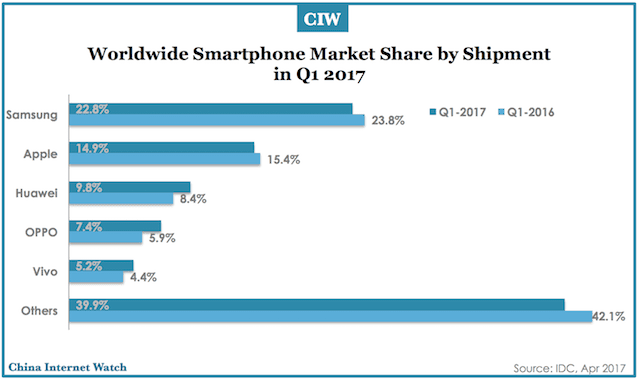
Apple will halve its iPhone X production target for the first three months of the year, prompted by slower-than-expected sales in Europe, the United States and China. Verizon said  its postpaid device activations were lower as people were keeping phones longer. Apple isn’t only not innovating the product, it’s losing marketshare to hungrier Asian smartphone rivals. Leaks reveal the iPhone X will be discontinued because of a lack of interest by the Chinese consumer.

Jan 29, 2018

The Advent of the Coherence Economy

The optimal value of technology and data will accrue to those who can make their impact coherent. JL


Uri Sarid reports in MIT Sloan Management Review:

In the coherence economy, your  needs will be automatically aligned across transportation, lodging, dining, and entertainment services, so you can be anywhere at any time and live your life or conduct your business seamlessly. At every layer, the building blocks in the layer below are cohered into higher value capabilities. The broader the scope, the more dynamic the information becomes. efficient integration of best-of-breed offerings to provide all-in-one offerings.

Apple's iCloud Ransom Notes To Users

The company provides limited 'free' iCloud storage. Free is in quotation marks because Apple charges so much more than its rivals for its products, let alone storage services that customers are understandably annoyed by its demands for additional payments.

Which does not stop them from paying because what's the alternative? Switching to Samsung? The power of the electronic ecosystem is one of the most valuable intangible assets in existence. JL


Joanna Stern comments in the Wall Street Journal:

Apple sends notifications to millions of customers when they need more storage space so their information remains backed up in iCloud. I call them iCloud ransom notes. Don’t pay Apple for storage and the threats will persist and your data will be unsafe. Pay and the messages will end.  Apple offers only 5 gigabytes of free iCloud storage space. With the amount of photos and videos we take today, I’d expect it to match Google’s 15GB of free cloud storage—or beat it. If you do need more, Apple charges you: $1 a month for 50GB, $3 for 200GB, $10 for 2 terabytes.

Is Pharma's Data Problem Technical or Cultural?

Cultural and organizational. As in many, if not most organizations, the issue is sharing data and respecting the opinions of colleagues from different disciplines rather than the quality of the information itself. JL

David Shaywitz reports in Forbes:

“Biomedical informaticians and clinical investigators view each other as intellectual peasants providing rote/mechanical services.” In most pharmas, drug development is driven by bench scientists and clinical investigators. Analyses are performed, but in predefined ways, trying to answer specific questions. “Every biomedical organization has data spread across multiple (sites). The real work is curating it into a form that can be cross-analyzed.”Ideally, those doing analysis work in partnership with those leading drug development.

Why Strategy Chiefs Succeed or Fail

Experience and skill sets matter, but increasingly, cultural fit can be a make or break proposition. JL

Jo Whitehead and colleagues report in Harvard Business Review:

Success comes from a good fit between the capabilities of the head of strategy and the ongoing stream of corporate strategy work to be done, the capabilities of the rest of the senior team, and the broader context. CEOs should avoid creating an all-encompassing wish list and focus on the most-important capabilities they need to ensure that candidates complement the team and fit in with the organization. They should customize the job to capitalize on the strengths and minimize the weaknesses of the best candidate.

As Cars Go Robotic, Manufacturers Find New Partners and Consumers Find New Brands

Just as consumers have learned to pay for certain components made by specific manufacturers in their smartphones or laptops, so they may do so with the next generation of cars.

And that doesnt even begin to address marketing alliances with entertainment, media, consumer packaged goods or even soft drink companies. JL

Jack Stewart reports in Wired:

As cars learn to drive themselves, they require components from companies, many of them startups. "The entire value chain is now screwed up." This sounds like the business equivalent of an interpersonal arrangement made at Burning Man. For consumers, that could mean a new way of thinking about purchases (if we still buy cars at all in the future). Instead of loyalty to a certain German brand, or Japanese marque, you may search cars with specific silicon chip brains, or bespoke software.

How To Launder $530 Million In Hacked Crytocurrency

It's not all that hard to do. The volume of stolen cryptocurrency in last week's heist could be an issue but given the amounts of digital currencies that have already been stolen and will likely continue to be, it is prudent to assume that models for processing the illicit take are already available to the cognoscenti.

The irony is that the best safeguard for protecting cryptos may be the one they were established to evade - regulation. JL


Pavel Alpeyev, Andrea Tan and Yuji Nakamura report in Bloomberg:

Because transactions for Bitcoin and the like are all public, it’s easy to see where the NEM coins are -- even though they’re stolen. Coincheck has identified and published 11 addresses where all 523 million of the stolen coins ended up. Trouble is, no one knows who owns the accounts. The thief may be able to shake surveillance by going through a service that offers cryptocurrency trading without collecting personal data. Converting coins into a more anonymized currency, like Monero, could conceivably launder them.

Jan 28, 2018

In Praise of Slow Thinking For the Internet Age

Speed kills in many ways. JL

Ephrat Livni reports in Quartz:

The way we talk online is constant and limitless. So if we don’t resist the impulse to reach a conclusion fast, all our energy is wasted on debates with few rules of engagement, no end, and unintended consequences. Exchanges are aggressive, fast, loose, and polarizing. That’s why slow thinking is a revolutionary act. Responsiveness rather than reactiveness is a rejection of the internet’s perpetual call to action. Deliberate undecidedness, refusing to choose and know it all, is a rebellion against the pressure to get with the socially appropriate program

Winemakers Turn To MIT To Save Pinor Noir From Warming Temperatures

Even northerly Oregon may soon become too hot for pinot noir and other grapes that require a cooler climate to bring out their optimal flavor.

Scientists are working on ways to help the grapes adjust. JL


Elin McCoy reports in Bloomberg:

Pinot needs average growing-season temperatures ranging from 57F to 61F, a very narrow niche. If, as predicted, global temperatures shoot up two degrees in a couple of decades, some regions, including Oregon, may get too hot for cool-weather-loving pinot. Weather that’s too hot changes the character of the grapes and boosts sugar content, which translates into higher alcohol and lower acidity—making wine taste dull and flat.

Are Demonized Smartphones Just Our Latest Technological Scapegoat?

Just because people accuse you of being paranoid about smartphones doesn't mean there aren't issues with them. JL

Zachary Karabell reports in Wired:

Is today’s concern about smartphones any different than other generations’ anxieties about new technology? Alarm at the corrosive effects of new technologies is deeply rooted. In ancient Greece, Socrates cautioned that writing would undermine the ability of children and adults to commit things to memory. The printing press led Church authorities to caution that the written word might undermine the Church’s ability to lead. Technophobia recurred with the gramophone, telegraph, radio, and television.

How the Telecom Industry Is Changing the Shape of Cities

Given past consumer responses to the trade-off between technology and other factors, most would reflexively choose tech. Unless the new installation is in front of their dwelling. JL 

Eillie Anzolotti reports in Fast Company:

To roll out new high-speed 5G wireless networks, companies like AT&T have to install  refrigerator-size transmitter boxes that, rather than the antennas atop tall towers, sit closer to the ground and reach a service area of only two blocks. The companies have to install  thousands of these boxes. There’s no way for cities and counties to ensure that the providers are installing the networks equitably, nor is there any way for the cities to generate revenue off of the land usage.

The Follower Factory: Why Social Media Fraud Is Rising

Some brands and celebrities think purchasing fake followers is just part of the self-promotional media attention game: 'everybody does it.'

But advertisers are being cheated, budgets are falsely skewed, legacy media companies suffer as the perception grows that 'the public' is mostly online while the realization grows that substantial portions of social media traffic are fake may ultimately damage digital marketing and commerce themselves. JL


Nicholas Confessore and colleagues report in the New York Times:

48 million of Twitter’s active users- 15% - are automated, designed to simulate real people. Small design changes over  years has placed an greater focus on user engagement with replies, retweets and likes in Twitter’s timeline. “We’re working with completely unregulated, closed ecosystems that aren’t reporting on these things. They have a perverse incentive to let it happen. They want to police it to the extent it doesn’t seem obvious, but they make money off it.”

Who Is Your Real Boss?

The costs of digital distraction to productivity, efficiency and other forms of performance are being quantified - and the price is steep. JL

Kristian and Mikkel Sorenson report in Behaviorial Scientist:

If you work in a typical office, there’s an overwhelming chance that your answer to the question, “Who’s Your Real Boss?” is your smartphone. You probably won’t even finish this article without checking your phone at least once. It takes about 23 minutes and 15 seconds to fully refocus on a task after being distracted, depending on the complexity. Placing your smartphone in your field of vision potentially reduces your IQ without you even being aware of it.