A Blog by Jonathan Low


Dec 3, 2022

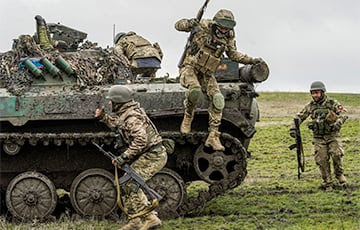
Elite Russian Airborne, Spetsnaz Units Suffering 30-40 Percent Casualties In Ukraine

It is not just hapless Russian mobiks - the recently conscripted, poorly equipped and trained Russian troops who are suffering extraordinary casualties in Ukraines. 

Reports indicate that elite airborne, armor and special forces units are experiencing casualty rates in the 30 to 40% range, an almost unheard-of slaughter for trained and battle-hardened veterans. The impact on Russia's professional military will be felt for years as such core troops are difficult to replace. JL 

David Brennan reports in Newsweek:

Troops from elite Russian military units based along NATO's borders have suffered casualty rates of 30 to 40% in Moscow's ongoing invasion. The 76th Air Assault Division - part of the famed Russian Airborne Forces - (and) two other units are thought to have suffered similar casualty rates: the 2nd Special Purpose Brigade, a Spetsnaz special forces formation, and the 25th Separate Guards Motor Rifle Brigade. 80% of the 30,000 Russian troops positioned along Baltic and Finnish borders have been diverted to Ukraine. It could take "one to three years," for Russian units to return to pre-invasion strength.

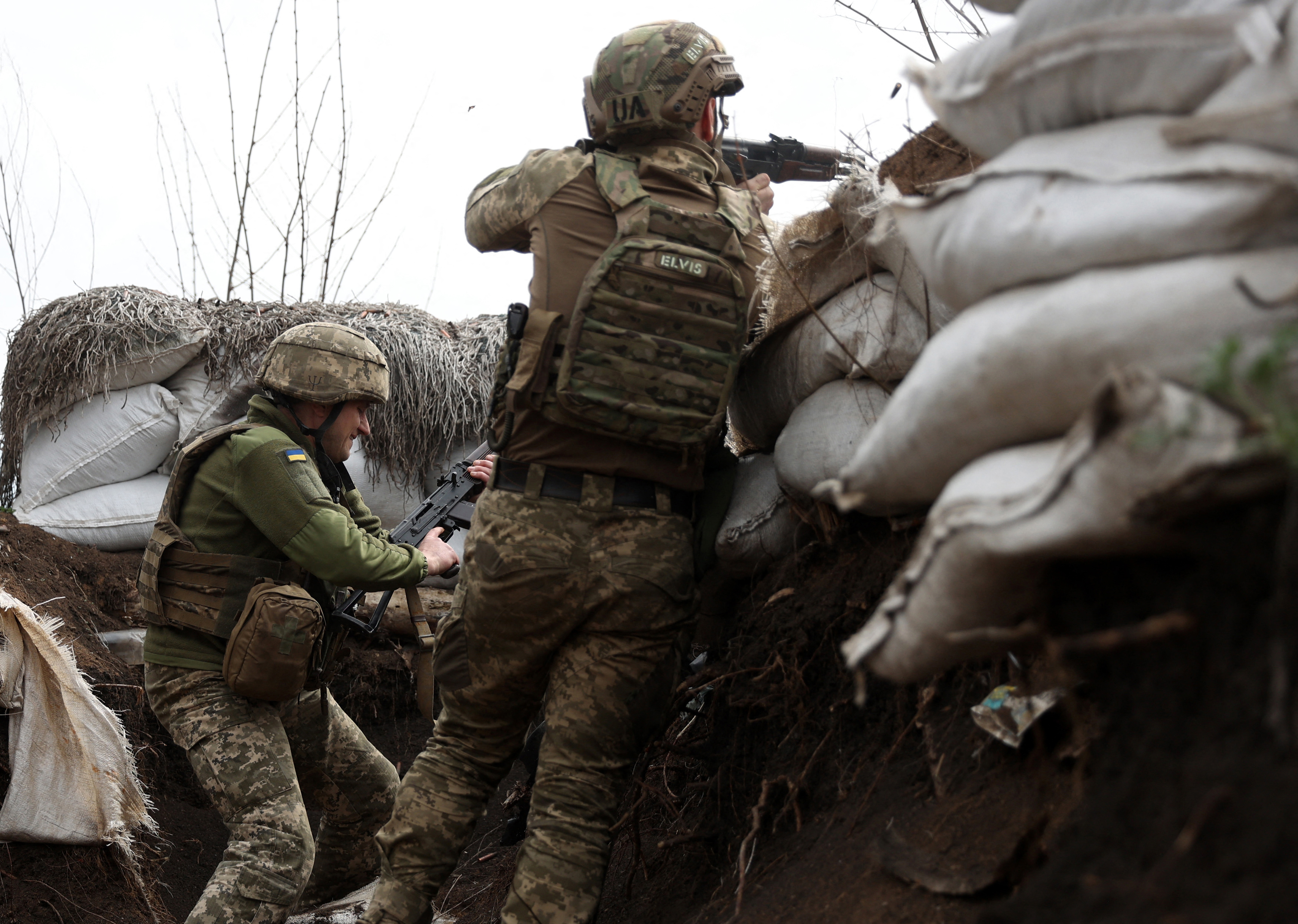
Why Ukraine Troops Really Want NATO Infantry Rifles To Replace AK-47s

NATO rifles are more accurate at longer ranges than is the AK-47. 

The more NATO standard infantry weapons the Ukrainians can get, the more effective they can be at attacking and deterring attacks - the more of their lives will be saved and the more quickly the war is likely to end. JL 

Sean Spoonts reports in Sofrep:

Even if you are a good shot, the AK-47's 762.x39mm round doesn’t reward skill and effort the way the NATO 5.56x45mm does. With the M-16A1 the effective range is 450 meters and reaches 800 meters for the M-16A2.  Even the M4 carbine can zap you at 500 yards for single targets and 600 for a mass of Russian infantry. Getting Ukraine switched over to the NATO 5.56x45mm round will save the lives of their infantry by allowing them to engage Russian soldiers at a standoff range between 100 and 400 yards. Russian troops would be forced to close that range on foot by advancing in the open. It would also allow Ukrainian forces to suppress the fire of Russian troops in preparation for their own assaults.

The Reason Your Next Landlord Might Be An Algorithm

Tech and Wall Street have again combined to identify opportunities for themselves but limiting them for everyone else. Algorithms buy homes or apartments in areas where the opportunity for profit margins and other metrics can produce financial goals set by the algorithms. 

The algorithms then manage everything from rent collection to repairs. This has become such a force that Congress is now considering legislation to limit the practice because it is reducing the available housing stock for first time buyers. JL

Nick Keppler reports in Motherboard:

Imagine Homes is an example of an “automated landlord,” a company that uses new data tools and technologies to minimize the costs of on-site human labor while collecting profits from rental properties. They are essential to the new and growing sector of companies backed by Wall Street investment firms that buy up thousands of single-family rental homes across several states. Imagine has 50 to 200 estimated employees all to manage 1,500 houses across four Midwestern states and gobbling up more in post-industrial metro areas where there are plenty of cheap single-family homes. It outsources and automates most of the tasks that traditional landlords do.

As the Winter Ground Hardens, Ukraine Considers Attacking South or East or Both

The most logical assumption is that the Ukrainians will do what they did last summer - take the least expected course in order to surprise and overwhelm Russian forces. JL

Samantha Schmidt and Serhii Korolchuk report in the Washington Post:

Attention is now shifting to the southern front line less than 100 miles north of the Azov Sea, where Ukrainians are eager to sever the “land bridge” connecting mainland Russia to Crimea, which Russia invaded and illegally annexed in 2014.One of the Ukrainian military’s long-term goals is an offensive that cuts south to occupied Melitopol.  "The Ukrainians are looking at a couple of areas where they can counterattack. Zaporizhzhia is the most obvious one, which probably means it might not happen there. "

Nobody Can Now Claim Ignorance About Putin's Attempt At Ukrainian Genocide

In every liberated area, the evidence of murder, torture, rape and destruction is strikingly similar, revealing that this was the result not of a few rogue Russian army units but of Kremlin policy. JL 

Peter Dickinson reports in The Atlantic Council:

The atrocities committed by Russian troops in occupied regions of Ukraine are only one part of a wider genocidal agenda that defines the invasion unleashed by Vladimir Putin on February 24. This grim process has been repeated in hundreds of liberated towns, and cities throughout Ukraine. Retreating Russian troops have left behind a vast crime scene of mass graves, torture chambers, sexual violence, and traumatized communities. Those who avoid execution face forced deportation to Russia. Accounts of civilian suffering are similar from region to region, indicating these crimes are the result of deliberate Kremlin policy rather than the rogue actions of individual Russian units.

Ukrainian Advances In Donetsk Around Svatove, Kreminna Sustained, Bakhmut holds

Increasing numbers of reports indicate Ukrainian forces are advancing along the key Highway P66 axis in Donetsk, suggesting they have identified Russian troop weakness in that area. 

If reconfirmed, this advance leads the Ukrainians directly east. JL 

Mark Sumner reports in Daily Kos:

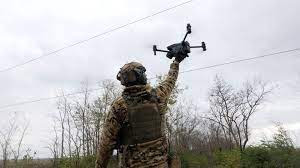
 Earlier today,  a group of Russian’s surrendering in the area west of Svatove near Kolomyichykha, one of the few locations that Russia still holds on the west side of the highway. Mediation was reportedly carried out using a consumer-grade quadcopter drone, which then led the Russians to a location to lay down the arms and wait for Ukrainian troops. there are even more reports of Ukrainian movement toward both Svatove and Kreminna. Ukraine is in control of Chervonopopivka along the P66 highway north of Kreminna. While there has been no official announcement of the liberation of this location, the Ukrainian military on Friday reported that they had repelled a Russian assault on Chervonopopivka, indicating that this area is under the control of Ukrainian forces.

Dec 2, 2022

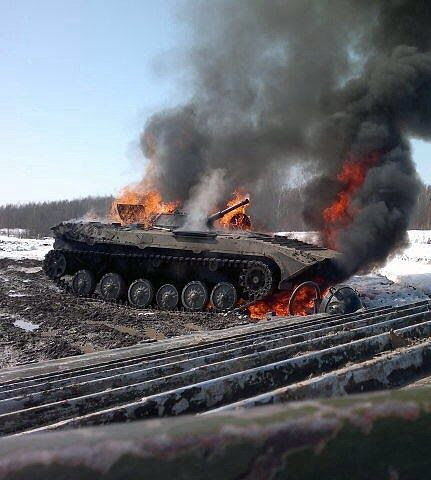
Newly "Upgraded" Russian T-72 Tank As Likely To Blow Up As Earlier Model

It's called "the jack-in-the-box" effect: when Russian tanks, especially T-72s, are hit by a Javelin, NLAW or other man-portable guided missile, their turrets tend to blow off because that's where the ammunition is stored. 

It's a well known design flaw and one that has apparently not been fixed in the latest upgrades because that would entail designing an entirely new tank. When the blown turret lands with its gun barrel sticking in the ground, NATO troops call it "a Russian lollipop." JL 

Peter Suciu reports in 19fortyfive:

Newly upgraded Russian T-72BM3 main battle tanks been deployed to Kremlin forces so it is a matter of time before some are abandoned and captured.The Cold War-era designed T-72 is noted for having a serious design flaw – where up to forty rounds of ammunition for the main gun is stored in the turret. The ordnance could be set off even by an indirect hit to the MBT’s hull, and this flaw had been known for decades after it was first encountered in the 1991 Gulf War. Russia did little to address the “jack-in-the-box effect,”  and that is still likely with the upgraded model.

Turkey Launches the Drone Aircraft Carrier of the Future

From curiosity to capability in less than a year. The future of war is happening faster than anyone imagined. JL 

Olli Suorsa and Brendan Cannon report in War On the Rocks:

Ankara is now pursuing the development of fully-fledged “drone carriers,” a class of light carriers carrying several dozen remotely piloted aircraft. Turkey looks to be the first country with flat-deck ships replacing manned aircraft with unmanned systems. While by no means the only state developing carrier-borne drone capabilities, Turkey is the lead power pursuing “drone motherships” equipped with long-range armed drones as the ship’s primary aviation. Turkey (could) deploy amphibious-landing capable carriers to battlefields like Libya or Somalia for surveillance counter-insurgency and close air support.  This is part of a broader trend of countries developing carriers for unmanned systems

Ukraine and Russia Are Now Fighting the World's First Full Scale Drone War

Drones have gone from being curious but exotic pieces of equipment to being the key to success or failure on the battlefield and, arguably in the war. 

And the war in Ukraine is giving both sides - as well as foreign observers - the opportunity to determine the tactics on which future wars will be won or lost. JL 

Isabelle Khurshudyan and colleagues report in the Washington Post:

Ukrainian and Russian commanders used to be skeptical of drones. Now, they are rushing to train thousands of pilots.  In the battle between Russia and Ukraine, drones are integrated into every phase of fighting, with extensive fleets, air defenses and jamming systems on each side. It is a war fought at a distance — the enemy is often miles away — and nothing bridges the gap more than drones, giving Russia and Ukraine the ability to see, and attack, each other without ever getting close. “Two developments are going to impact future war. The availability of combat drones for longer-ranged, more-sophisticated operations, and the necessity to have cheap tactical drones for close-support operations.”

Russia's "Maginot Line" Defending Crimea, Has Same Vulnerability As the Original

Speaking of fighting the last war: in the 1930s France built an 'invulnerable' defensive barrier to thwart any German attack as it had in WWI. The problem was they did not anticipate that the Germans would bypass the fortified areas and attack from the flanks.

New Russian fortifications south of Kherson, built to defend occupied Crimea appear to have the same problem: they are built close to the roads the Russians tend to hug, but ignore the fields through which tracked vehicles and infantry can attack and surround them. JL 

Jake Epstein reports in Business Insider:

Russian defensive positions have been built along critical ground lines of communication like roads and highways and connect Russian forces at the Dnipro River with other occupied areas to the southeast. But instead of connecting across the battlefield, the positions appear like "elaborate roadblocks" that don't stray far from roads or into fields. (But) while Russia is focusing on defending roads, it is ignoring the real possibility that Ukraine could advance across open terrain. Tanks and tracked vehicles could cut through fields and bypass or assault the Russian positions from their more vulnerable flanks.

The Battle Lines Around Svatove, Kreminna and Bakhmut In Donbas Are Shifting

Ukrainian forces appear to be advancing along the front they have occupied since liberating Lyman earlier in the fall. 

And this may be due to their strategy of allowing Russia's Wagner Group to keep attacking Bakhmut at the cost of 'colossal' casualties, even ceding some ground, so as to wear them down. JL

Mark Sumner reports in Daily Kos:

North of Kreminna near the P66 highway, there are multiple sources reporting that Ukraine is pressing forward, with fighting reported south of the city, as well as to the north. Some of those reports suggest that Ukraine is moving to surround Kreminna, or cut the highway north and south. Over the last two weeks, Russia has reportedly been making advances south of Bakhmut (which) has been so static analysts have suspicions Ukraine wants it this way; pinning down Wagner Group in futile efforts to capture this well-fortified area, designed to chew through Russian forces and keep experienced commanders stuck (as) worthless troops hurl through a World War I-style no man’s land to  inevitable deaths.

Why More Americans Choose To Live Alone As They Age

Over one third of Americans over the age of 50 now live alone. Part of the reason is that many more are now divorced or separated. Women have had more financial independence and are more likely to live alone as they age. A percentage of older adults are gay. 

But another contributing factor is available housing, which has gotten larger and more expensive, making it harder for retired people to move, given their legacy property tax status and the lack of affordable alternatives. JL 

Dana Goldstein and Robert Gebeloff report in the New York Times:

One of the country’s fastest-growing demographic groups is people 50 and older who live alone. For US households headed by someone 50 or older, is 36%. People 50-plus today are more likely to be divorced, separated or never married. Women have had professional advancement, homeownership and financial independence that were out of reach for previous generations. 60% of older adults living by themselves are female. (And) the nation’s housing has grown out of sync with these shifting demographics. Many solo adults live in homes with three bedrooms, but find that downsizing is not easy because of a shortage of smaller homes.

Dec 1, 2022

Russia's "Colossal Losses" at Bakhmut Show It Has "Failed To Learn"

Russia's military continues to waste scarce human and operational resources on "insignificant" settlements, suggesting that it has failed to learn any lessons from its earlier military humiliations in Ukraine. 

Russian losses around Bakhmut in the past two weeks may be as many as 9,000 killed and wounded. JL 

Scott McDonald and Zoe Strozewski report in Newsweek:

"The costs associated with six months of brutal, grinding, and attrition-based combat around Bakhmut far outweigh any operational advantage the Russians can obtain from taking Bakhmut. Russian offensives around Bakhmut are consuming a significant proportion of Russia's available combat power, facilitating Ukrainian counteroffensives elsewhere. Russian troops, in their current degraded state, are likely unable to accomplish this task. (And) Russian efforts around Bakhmut "suggest Russian forces failed to learn from previous costly campaigns focused on operationally insignificant settlements."

US, Germany Build Ukraine Artillery Repair Depots In Poland, Slovakia

The artillery with which the US, Germany and other NATO countries have supplied Ukraine is superior to that being used by the Russians. 

The problem is that the Ukrainians are firing them at a far higher rate than anticipated. And though that has helped turn the tide of battle, it has led to breakdowns such as worn-out howitzer barrels. As a result the US and Germany have set up repair facilities in nearby countries both to fix the problems - and to train Ukrainians in doing so. JL 

Guy McCardle reports in Sofrep, image Laurent Van der Stockt, Le Monde:

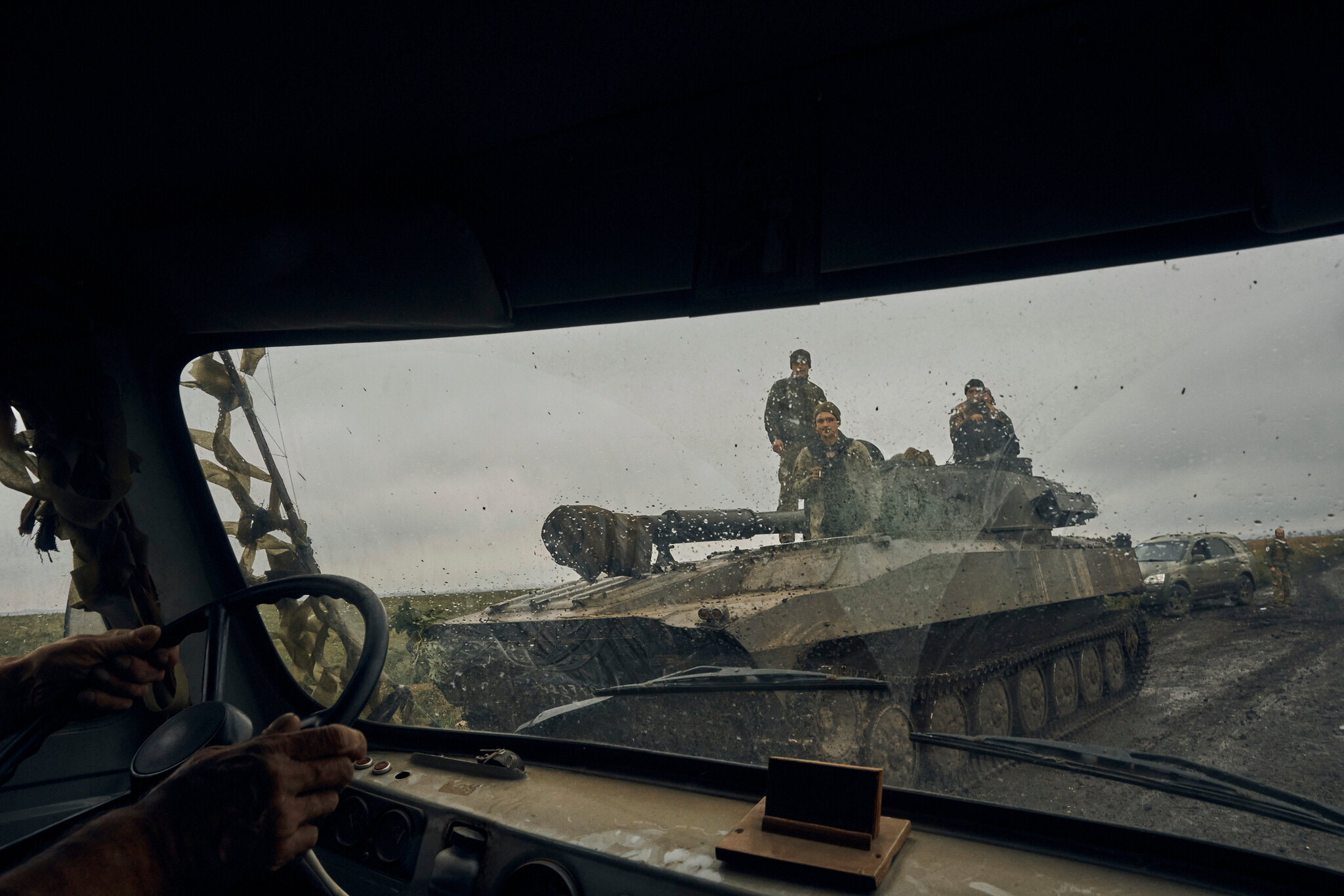
The war in Ukraine is seeing artillery exchanges the likes of which have not occurred since the war in Korea. Russia is shooting an almost unbelievable 20,000 rounds a day. The Ukrainians are returning fire with 4,000 to 7,000 shells of their own. To fire that many rounds, the weapons, as with all things mechanical, break down and need repair. Some of the artillery in use by the Ukrainians are being pushed to their limits. The Pentagon set up a 50-member repair team in Poland. The team has trained Ukrainian armed forces to service and repair US-supplied weapons. Germany set up a repair hub in Slovakia to work on the equipment that nation has sent to Ukraine to support its war effort.

Are Current Chinese Protests the Beginning of the End For Zero Covid?

The Chinese government's zero Covid policy has failed. And in doing so it has disrupted lives, damaged the economy, hurt China's reputation for stable management - and released a lot of pent-up anger about other issues, from surveillance and repression, to squelched tech growth and declining living standards. 

China will presumably use its standard, heavy-handed repression playbook. But it will also come to the realization that quietly changing its approach to Covid is probably less threatening to its hold on power than continuing to insist upon it. JL 

Jonathan Guyer reports in Vox:

Workers, students, rural residents, and middle-class people have joined protesters. It’s that diverse mix of people across so many locales that has some calling these protests the biggest threat to China’s ruling Communist Party since Tiananmen Square in 1989. Opposition to the lockdown is a kind of umbrella. It has affected all Chinese people in one way or another. Within that, people are raising all kinds of other demands. The workers at Foxconn were concerned with pay. The people in Xinjiang have big concerns about the repression of minorities. Students who are oppose censorship and demand free speech.

The Reason Trench Warfare Still Works For Ukraine in 2022

Prepared defenses in depth - lines of trenches and fortifications in series that go back miles - are very difficult to overcome. That is why the Russians have made so little progress around Bakhmut. 

Even with drones and precision 'smart' munitions, deep, well-prepared trench systems are hard to eliminate. Which is why Ukraine has used them against attacking Russians who find it hard to survive - and then Ukraine attacks in other locales, hitting the Russians where they arent as well prepared, as they did around Kharkiv and Kherson earlier this fall. JL 

Nicholas Slayton reports in The Drive:

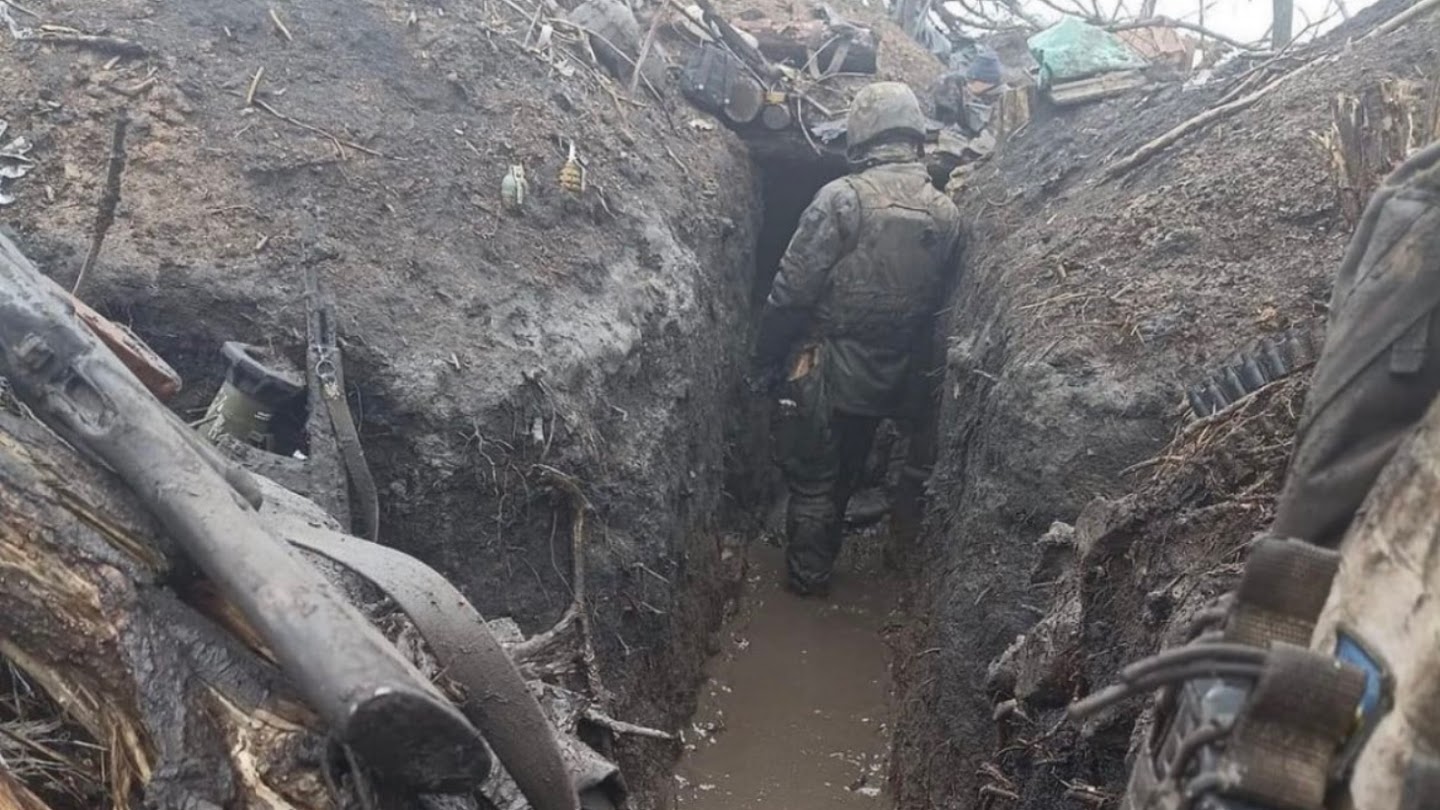
The reason for the prevalence of trench warfare is that It’s easier to dig in than to attack. Soldiers instinctively dig in. By the time Russia launched its full-scale invasion of Ukraine in February, Ukrainian soldiers had years of experience in that tactic. The trenches in the Donbas are in the same war as anti-radar munitions, military drones, and high-tech sensors. (But) even with advances in technology, breaking through a fortified position remains a challenge. Drones can fly over and bomb dug outs, forcing troops to dig in deeper. But as trench warfare escalates, the counter move is to bring more drone jammers to the front. The closer drones fly to enemy lines, the higher the risk they’ll be disabled.

Why Russia's Ukraine Infrastructure Attacks Having Opposite From Intended Effect

This should come as no surprise. Studies of indiscriminate German bombing of London and Allied bombing of Germany and Japan in WWII indicate that it did little to cause the civilian populations to waver in their support of their governments. 

The same results appear to be obtaining in Ukraine now as Russians target energy and infrastructure while its army continues to lose on the battlefield. JL 

Matthew Luxmoore reports in the Wall Street Journal:

Moscow’s bombardments will produce the opposite effect to what it banks on. Faced with losses on the battlefield, and with its forces stalled in their campaign to take further Ukrainian territory, Russia has stepped up the missile volleys in a bid to deprive Ukrainians of comfort and weaken support for the defense effort. But so far there have been no protests in Ukraine and no new mass exodus from the country. "This year we are without power. Next year we will be without Russians."

What Happens When Ukrainian Forces Reach Pre-2014 Borders With Russia?

This is no longer in the realm of fantasy: in many parts of Donbas Ukraine and Russia are fighting from trenches that date back to 2014. 

Ukraine will not invade Russia, though it could take back Crimea. Achieving that would be a such a humiliation that it would probably signal Putin's removal. Russia might never give up and an uncomfortable South Korea/North Korea - Israel/Lebanon,Syria cold war could ensue. Whatever the details, the equation is no longer about Ukraine's survival, but how it is integrated into NATO and what becomes of what's left of Russia and its next government. JL

Peter Olandt reports in Daily Kos:

I am optimistic they will be reached before the end of 2023. What does that mean?  It first means the Russian Army has been soundly defeated and is in poor shape.  Second, it means Ukraine switches back to the defensive.  They will not march on Moscow.  Artillery duels might continue, but if Ukraine has gotten this far their artillery is most likely far superior to Russia’s.  Once borders are reclaimed, air defenses can be focused.  I expect more new dedicated anti-drones systems. More expensive anti-missile systems can focus on cruise and ballistic missiles.  Decreasing Russian stocks combined with better Ukrainian defenses will cut the rate of successful strikes.

Nov 30, 2022

Russian Warfighting Capabilities After 9 Months In Ukraine Assessed As Incompetent

The formal military assessment echoes what most people have seen on their phones, laptops and TVs: a corrupt culture that reinforces failure has led to tactical and strategic incompetence. JL 

Mykhailo Zabrodskyi and colleagues report in the Royal United Services Institute:

The operational security that enabled the (initial) deception led Russian forces to be unprepared at the tactical level to execute the plan. The plan’s greatest deficiency was the lack of reversionary courses of action. When speed failed to produce desired results, Russian forces found their positions degraded as Ukraine mobilised. The tactical competence of the Russian military proved significantly inferior. The Russian force generation model is flawed. There is a culture of reinforcing failure. Capabilities and formations are prone to fratricide. They are culturally vulnerable to deception because they lack the ability to rapidly fuse information, are culturally averse to providing those who are executing orders to exercise judgement, and they incentivise a dishonest reporting culture.

Ukraine Is Adapting Soviet Weapons To a 21st Century Digitally-Driven Battlefield

Ukraine is adapting digital media and technology to be used in conjunction with Soviet-era artillery and tanks in order to make the latter faster and more accurate in targeting the enemy. 

And so far, this creative improvisation is working quite well. JL  

Mick Krever and colleagues report in CNN:

All along the eastern frontlines, in basement command centers hidden behind unmarked metal doors, bookish Ukrainian soldiers direct artillery fire. This is a real-life testing ground for shoestring, innovative 21st century warfare. The men use cheap, commercially available drones and consumer chat programs to identify and communicate targeting for weaponry that in many cases is multiple decades old.

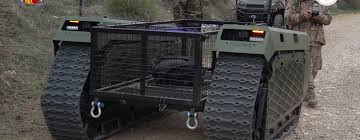
Ukrainian Military Getting Unmanned Robotic Vehicles From German, French Suppliers

Ukraine is getting unmanned robotic vehicles for a variety of tasks including casualty evacuation and mine clearing. 

It can be configured to mount a weapon but that isnt the immediate application planned. JL 

European Defense Review reports:

The leading European robotics and autonomous systems developer, Milrem Robotics, and the German defence company (KMW) have signed a contract to deliver 14 THeMIS unmanned ground vehicles (UGV) to Ukraine. Of the 14 vehicles, seven will be configured for casualty evacuation (CASEVAC). The other seven will be configured for route clearance with payloads. THeMIS is a multi-mission unmanned ground vehicle with an open architecture that enables it to be rapidly configured from having a transport function to being weaponized, performing ordnance disposal or supporting intelligence operations

Ukraine's 'Surrender Hotline" For Russian Troops Getting 100 Calls A Day

It's also known as the "I want to live" project, which explains why so many Russian soldiers are using it. JL

James Waterhouse reports in the BBC:

By calling a hotline or entering details through messenger apps, Russian troops can arrange the best way to surrender to Ukrainian forces. (It) is getting up to 100 enquiries a day. There's been an increase since Russian President Vladimir Putin mobilised hundreds of thousands of Russian men, and since the city of Kherson was liberated. "We especially want to target the mobilised who not only can't fight but are thrown in as cannon fodder.  This project was created so their lives will be guaranteed if they surrender voluntarily."

How Ukraine - and NATO - Have Cut Russia's Artillery Advantage

Ukraine is increasingly using better quality NATO standard artillery with smart munitions - and they have proven very effective at deploying the weapons they have in creative, accurate ways. 

Also, the Russians are running low on everything. JL 

Howard Altman reports in The Drive:

As both sides continue to fire thousands of artillery rounds at each other every day, Russia’s vast numerical superiority is diminishing. “The Russian ability to outpace the Ukrainians in artillery has decreased in the ratio at which the Russians have been able to out-shoot the Ukrainians. Part of that is due to Russian munitions numbers. It's also due in to Ukrainian effectiveness with the employment of their artillery and to identify Russian artillery and radars."

Why Is Venture Capital Not Catching Frauds Growing In Number and Expense?

Theranos, WeWork and now, FTX. The frauds just keep on coming - and they're getting bigger - despite the stern warnings, public embarrassments and sincere apologies. 

And they are not happening to Joe Schmo, except by extension; they're happening to ostensibly sophisticated investors. And the fundamental reason may hearken back to dotcom: if you're a VC who wants to be taken seriously and you ask too many questions, you could be accused of - gasp! - being someone "who doesn't get it."  Because all those on the outside always doubt tech genius. So if you want to be on the inside and get the excess returns, you keep your mouth shut. So the failure here is not because the investors didnt have Stanford computer science PhDs, it's because they avoided asking basic questions about where the money actually comes from, where it goes, who oversees it and what controls are in place, eg, Accounting 101. And this will not stop until the cost of losing exceeds the cost of not catching the next Apple or Google. JL

Rohit Krishnan reports in Noahopinion:

Theranos 'only' burned $700 million of investors' money. Neumann at WeWork burned $4 Billion, but mostly from Softbank. FTX incinerated $2 Billion of investors' money and another $6-8 Billion of customers’ money in hours. This might take down multiple other firms, and create a 2008 moment for crypto, which used to be a $2 Trillion asset class. This isn’t Enron, where extremely smart folk hide beautifully constructed fictions in their financial statements. This is Dumb Enron, where someone “trust me bro”-ed their way to a $32 Billion valuation. What they should  have known are the basic red flags - does this company have an accountant? Is there actual management? Do they have a back office? (But) a VCs' job is not to avoid failure; it's to avoid missing out on the biggest success.

Nov 29, 2022

How Ukraine Is Switching Tactics As Winter Descends

The Ukrainians have been training for this. They understand that what worked under the cover of leafy trees may not in the snow and bleak, unsheltered winter landscape. 

So they are changing tactics to adapt, hoping their better equipment, morale and planning will enable them to use the cold weather to their advantage. JL 

Nathan Rott reports in NPR:

Winter requires more stealth. Artillery and vehicle tracks will be easier to see in the snow. Leafless trees will offer less cover. War in the winter depends on effective reconnaissance and effective artillery. "You have to move with more secrecy, a bit faster. You have to move with your eyes open, more work with drones, more observing, more planning." Who will be more effective in this part? That one will be much better in the battlefield. Cold-weather gear, coveralls and coats, sleeping bags and blankets (has been) donated to the territorial defense.Winter typically favors the aggressor. And right now that's Ukraine.

Cold, Mud, Wet, Rats, Exhaustion, Stalemate: Trench War Hasnt Changed In 105 Years

It was miserable on the western front in WWI and it's miserable in the trenches of the Donbas now. 

But the Russians continue to throw troops at deeply entrenched and well armed Ukrainian forces, which means they have literally turned their troops into cannon fodder. JL 

Peter Beaumont reports in The Guardian:

Over the weekend, images emerged of Ukrainian soldiers in flooded, muddy trenches and battlefields dotted with the stumps of trees cut down by withering artillery barrages. The fighting in the Bakhmut sector has descended into trench warfare reminiscent of the first world war. With little obvious strategic value, and a series of well-defended cities beyond the Bakhmut sector, the Wagner-led efforts have become more about the prestige of Wagner in the Kremlin’s inner circles than military thinking. Ukrainian forces appear determined to hold their lines and inflict heavy casualties on the Russian attackers.

In Desperation, Musk Attacks Apple - From His iPhone, Of Course

Elon Musk's increasingly desperate attempts to keep Twitter alive while his ownership policies chase advertisers away has now led him to attack Apple, the world's most valuable brand.

His reason is that Apple's content protection contravenes his desire to let misinformation and hate speech thrive on Twitter. Counting how many other companies have won battles against Apple, prudent analysts believe this is not likely to be a battle Musk can or will win. JL 

Kate Conger and Tripp Mickle report in the New York Times:

Musk has been poised to confront Apple since taking over Twitter. His business plan is predicated on shifting its revenue from a dependence on advertising to subscription sales. But any new subscription revenue will be subject to Apple’s practice of taking as much as a 30% cut. Mr. Musk set the stage for a power struggle with Mr. Cook, who holds immense influence over other tech companies through Apple’s dominance. Apple app reviewers protect customers’ privacy and security, as well as prevent them from being subjected to fraud.  “I don’t think anyone wants hate speech on their platform, so I’m counting on them to continue to do that,” Mr. Cook said.

How Ukraine's Drone Hunters Track and Kill Their Russian Prey

It's a high tech war, using lasers and thermal sensors, fought increasingly at night as the Iranian-made Shahed drones proved too easy to shoot down during daylight.  

Michael Miller and Anastacia Galouchka report in the Washington Post:

Russia initially deployed the Shaheds at all hours, the drone hunters said. But the noisy, slow-moving machines were easily shot down in daylight, so they now fly mostly between midnight and dawn. Anti-drone units rotate night shifts, moving between firing points — each carefully chosen to minimize the chance of accidentally injuring a civilian. One unit member normally uses a gunlike thermal sensor to spot the Shahed, before switching on a laser beam to illuminate it so others can shoot it down. When they spot a Shahed, multiple teams often fire at the drone at once.

NATO Actively Considering Providing Ukraine With MiG-29 and F-16 Fighter Jets

As Russia is increasingly branded a terrorist state, NATO is becoming less worried about possible repercussions and more interested in dealing the Russian army a knockout blow. JL 

Yahoo News reports:

NATO leaders are again considering the idea of providing Ukraine with MiG-29 and U.S. F-16 fighter jets, James Stavridis, a retired U.S. Navy admiral and former supreme allied commander of NATO. “Leaders in NATO capitals are also revisiting an idea that was discarded in the early days of the war: providing either MiG-29 Soviet-era fighters (the Poles have offered to transfer them to the Ukrainians) or even U.S. surplus F-16s, a simple-to-learn multi-role fighter.”

How the Gap Between Putin's Goals, Russia's Incapability Led To Ukraine Failure

When people take too much food on their plate and then are unable to finish, the saying goes "their eyes were bigger than their stomach." 

Putin wanted to conquer Ukraine but his military was unequal to the task due to failures that continue to plague Russia: corruption, poor leadership, stubborn adherence to outmoded doctrine, inadequate equipment and training. And virtually all analysts agree that is unlikely to change no matter how many prison convicts and older men are conscripted. JL 

Lawrence Freedman reports in Comment Is Freed:

There has long been a gap between Russia’s war aims and its ability to achieve them. After nine months of fighting Russia has yet to achieve a single aim through force of arms. Russia will continue to struggle in the land battle while mounting strikes against Ukraine’s society and economy, but this is only intensifying Ukraine’s determination. Putin’s army are unable to solve his Ukraine problem, and their efforts to do so have made the situation worse. For now, Russia lacks a credible concept of victory whereas it is possible to see how Ukraine might prevail. The gap between Putin's desired ends and available means has grown wider over the past nine months. The war was lost long ago.

Nov 28, 2022

US Considering Approval of Missile Doubling Ukraine's Strike Range

Less powerful than the ATACMS which the US has so far refused to provide Ukraine, but with double the range of HIMARS, the new Boeing missile could significantly enhance Ukraine's rear area strike capability. JL 

Thomas Newdick reports in The Drive:

Ukraine’s next long-range precision strike weapon could be the Ground-Launched Small Diameter Bomb. The GLSDB would provide a significant boost to Ukraine’s capacity to strike in Russian rear areas. The GLSDB has a range of 94 miles, or 150 kilometers.  The guidance system not only ensures accuracy to within 3 feet, but is also resilient to electronic warfare jamming. GLSDB would give Ukraine an available weapon that can more than double its standoff precision strike range capability, compared to the current MLRS/HIMARS.

Kremlin Reported To Have Conscripted 23,000 Prison Inmates To Fight In Ukraine

A drop in Russian incarceration numbers captured in other data noted that there was a drop of 23,000 in Russian prison inmates in September and October 2022, the height of Putin's "recruitment" drive. 

It is believed that literally all of those prisoners ended up in the Wagner Group or Russian army units. JL 

Guy McCardle reports in Sofrep:

It’s not hard to get thrown into prison in Russia for minor infractions and the average Russian might be minding his Ps and Qs,  not doing anything to get in trouble with the law. “In September and October 2022, the number of prisoners in Russian correctional colonies decreased by 23,000. One third of inmates are serving time for the wrong reason, one third for no reason at all and one third for the crimes they really did commit." In a recorded video shared on Russian Telegram channels, Prigozhin addresses prisoners ironically standing under a poster that reads, “Choose Life.”  

Ukrainian Infantrymen Explain What They Need To Defeat Russia

American optics with four times magnification would help a lot. So would M4 carbines or German G36 assault rifles because NATO ammunition and weapons are more reliable than captured Russian AK47s and/or Chinese and Soviet bloc models. 

But the single most important foreign assistance, according to the troops, is intensive NATO training. JL

Stefan Korshak reports in the Kyiv Post:

Without exception, in their view as infantry soldiers, by far the most effective foreign assistance they have seen, more even than Western weapons, has been basic military training for new Ukrainian recruits by NATO instructors. Particularly-praised were training courses led by British instructors in England. New Ukrainian troops are now arriving at combat units, not just well-trained in weapons and basic infantry skills, but even more important, “they think like NATO soldiers.”

Bakhmut Remains A Bloody Vortex of Dubious Value For Russian Military

Russia continues to throw its remaining forces at the militarily insignificant city of Bakhmut, in Donbas, apparently driven by Kremlin pressure to demonstrate any possible sign of progress. 

But the Ukraine appears to be using the Russian obsession as a death trap, bleeding Russian forces further, providing enough artillery and troop support to decimate those Russians foolhardy enough to continue attacking. JL 

Thomas Gibbons-Neff and Natalia Yermak report in the New York Times:

The intensity of Russia’s attempts to seize the city has baffled military analysts. “The Russian military is still dealing with unrealistic political demands to show progress. Given poor quality of available forces and decreasing stocks of ammunition, they are unlikely to be successful, because once again the Russian military appears to be feeding units piecemeal without adequate support.” The mobilized Russian troops “are just taking a rifle and walking right down like in Soviet times. He gets killed and the next one comes the same way.”

Russian Soldiers Dying of Hypothermia In Donbas Reaches Epidemic Proportions

Numerous videos are appearing online of Russian troops apparently dying from hypothermia as winter conditions affect their underequipped troops. 

These reports are bolstered by Ukrainian military intelligence which suggest that freezing frontline soldiers are building bonfires which not only reveal their location but are inadequate to keep out the cold and rain. The question is how long they can continue to endure as better equipped Ukrainians prepare for winter warfare. JL 

Mark Sumner reports in Daily Kos:

As temperatures in Ukraine drift lower, forces on both sides are dealing with half-frozen muddy slush, saturated clothing, spitting snow and icy rain.  Ukrainian forces seem to be doing a better job at obtaining what they need to fight under these conditions, where people can temporarily get out of the freezing mud, to warm up and have a hot meal. (But) Russia seems to be doing little to assure decent conditions for its troops. It’s not just outdated helmets and summer-weight uniforms, (they) need to bring their own sleeping bags. They make tents out of plastic wrap. (Videos show) men freezing to death. Their body temperatures lowered to the point where they are incapable of motion. Even a bomb landing in their midst isn’t reason to stir. And it's only November.

Fearless: Crypto Has A Cult Leadership Problem

Crypto is not the first industry to generate leaders who develop cult-like followings. And these might fairly be said to be a second generated spawned by technology, wealth creation and the attention they inspire.

But while tech survived the dotcom crash and appeared to learn, to some degree, that 'paths to profitability' were necessary for sustainable survival, crypto still seems enamored of messianic leadership styles that not only generate devotion, but intolerance of criticism. And assaults on objective analysis have resulted in precisely the sort of wealth destruction about which so many have warned for so long. It is still possible that cooler, more realistic leaders will emerge from the current carnage, but until they do, investment as religion will stymie further attempts to truly legitimize the industry. JL  

Matthew reports in mhb.xyz:

Crypto has a cult problem. Cults of personality flood the industry. They rapidly rise in popularity, achieving god-like status to the point where it seems they can do nothing wrong, until they do. These personalities grow tremendous followings, dwarfed only in size by the net worth they accumulate. While many of their actions are dubious, they’re given the benefit of the doubt time and again. Criticism of them is met with aggression and ridicule from their following. The damage done to crypto this year is measurable; $44bn in lost funds in 2022. The reputational damage can’t be quantified so easily. "Now, more than ever, we need adults in the room."

Nov 27, 2022

Iranian Drone Experts Training Russians In Crimea Killed By Ukraine

In the contemporary, connected, world there are few secrets and even fewer actions for which there are not consequences. JL 

Julian Borger reports in The Guardian:

Ukraine’s top security official has confirmed that Iranian military advisers have been killed in Crimea, and warned that any other Iranians on occupied Ukrainian territory in support of Moscow’s invasion would also be targeted. “They were on our territory and if they collaborate with terrorists and participate in the destruction of our nation we must kill them.”

Where Will Ukraine Attack the Russians Next?

The Russians are digging in south of Kherson and in eastern Donbas. The question is which front is less likely to put up a stiff defense in the short term while providing optimal strategic value in the long term. 

Either way, the Russians do not appear to have sufficient forces to defend for long once the Ukrainians decide. JL 

Stavros Atlamazoglou reports in 19fortyfive:

In the south, the Ukrainian military is setting up the conditions for the liberation of the eastern bank of the Dnipro River after the liberation of the western part of the Kherson province and its capital, Kherson City. The south of the Donbas is the only place in the entire battlefield where the Russian military retains some sort of offensive initiative. But Moscow hasn’t been achieving anything with that initiative. The Russian military is desperately trying to hold its ground in the east and prevent the Ukrainians from advancing forward and liberating more territory.

How This World Cup's High Tech Tracking Ball May Change Soccer

By providing lots of new performance data to measure for players, teams, tactics, games. JL 

Ben Dowsett reports in Five Thirty-Eight:

All tournament long, match balls will contain a sensor that collects spatial positioning data in real time — the first World Cup to employ such a ball-tracking mechanism. This, combined with existing optical tracking tools, will make VAR (video assistant referees) and programs like offside reviews more accurate. Any time the ball is kicked, headed, thrown or tapped, the system picks it up at 500 frames per second. Data is sent in real time from sensors to a local positioning system. Teams and players could use the data for next-generation tactical analysis; broadcasts could use it to visualize the game and draw in new viewers. Fans could have access to new stats

How Ukraine Fighting Is Determining the Future of US Warfare

US interventions in Vietnam, Afghanistan and, to a lesser extent, Iraq, are regarded as wasteful and ineffective, if not total failures. 

The US support for Ukraine, by contrast, is proving to be a hallmark of success. The US and its allies are providing their clearly superior weaponry and tactical guidance, but without having to commit their own troops. This may be a model for the future: only supporting those peoples who demonstrate that they are willing to fight for themselves. JL

Phillips O'Brien reports in The Atlantic:

American military aid to Ukraine has been remarkably effective, especially in comparison with the U.S. intervention in Afghanistan. America providing a high level of military support without deploying American forces is not just the best way to help Ukraine and thwart Putin. (And) the US intervention has helped reinvigorate NATO. It offers a model for how the U.S. should define (future) military involvement. The US should avoid direct fighting overseas to the extent possible and intervene in wars only to support peoples and nations that want to fight for themselves. Ukraine proves the U.S. can provide more effective strategic aid than any other country without having to rely on its own troops. 

Ukrainian Hospital In Kherson Stymied Russians With Fake Covid Outbreak

The story of unarmed resistance at Tropinka hospital in Kherson has been repeated in many areas that were under Russian occupation. 

Though there were some collaborators, most Ukrainians appear to have found ways to stymie the Russians. JL 

Ian Lovett reports in the Wall Street Journal:

A battle for control of the hospital raged through the entire occupation. The Russians detained two doctors, banned Ukrainian symbols and put hand-picked people in charge. To thwart them, the staff faked a Covid-19 outbreak, hid equipment and spied for Ukrainian forces. Before the Russian withdrawal from Kherson, officials showed up at the hospital, eyeing equipment to steal. Employees took computers home so the Russians couldn’t swipe them. The staff’s resistance was part of an eight-month, mostly unarmed campaign by Kherson residents to keep the city out of Moscow’s full control

As Combat Pace Increases With Winter Freeze, Russia Doesn't Have Enough Troops

Mud season in Ukraine in ending and the ground is beginning to freeze, making it easier for heavy military equipment to maneuver. This will likely lead to an increase in combat, especially in Donbas.

But Russia doesn't have enough troops either to attack or to defend against Ukrainian forces, raising questions about what they will do against the better-equipped and trained Ukrainians. JL 

Khaleda Rahman reports in Newsweek:

The overall pace of military operations in Ukraine may increase in the coming weeks but as temperatures drop and the ground freezes." (But) Russia is unlikely to be able to gather forces of sufficient quality to capture the Donetsk region in eastern Ukraine. Russia has ramped up its attacks on Ukraine's critical infrastructure after suffering a series of battlefield setbacks nine months into its invasion. "However, Russia is unlikely to be able to concentrate sufficient quality forces to achieve an operational breakthrough."