Russia Dropped 250 Glide Bombs On Ukraine Sumy Line - But Its Attack Still Failed
In their desperation to achieve something - anything - that resembles an advance for their winless summer offensive, Russian forces dropped a record 250 glide bombs on a 3 kilometer section of Ukrainian trench near Andriivka in the Sumy sector.
It made no difference (probably because the Ukrainians had advance warning and pulled back). The subsequent Russian attacks - all by dismounted infantry with no armor and limited artillery support due to degraded supplies - were defeated, and more Russians killed. The Russian motorized infantry and naval infantry units involved were then forced to retreat in order to 'reorganize,' and Russia ended up with even less of Sumy than the sliver it held a few days before the attack. JL
David Axe reports in Trench Art:
The Russian air force recently dropped 250 glide bombs on a single treeline near Andriivka in Sumy Oblast, making that 3-km-long copse the most bombed place on Earth at the time. It didnt help. Instead, the Russians - two motor rifle regiments and a naval infantry brigade - retreated last weekend, marking the latest setback for the 50,000-strong Russian force in Sumy. Heavier Ukrainian units - The 79th and 95th Air Assault Brigades and the 225th Assault Regiment, equipped with German-Marder and US Stryker and Bradley fighting vehicles - shrugged off the record bombardment, then flanked and defeated the armor-less Russian units. The end result is that the Russians control less of Sumy now compared to a week ago.
The Russian air force recently dropped 250 glide bombs on a single treeline near Andriivka in Ukraine’s Sumy Oblast, potentially making that roughly 3-km-long copse the most bombed place on Earth at the time.
It didn’t help. The Russian regiments and brigades the air force was supporting with its intensive—some might say “insane”—aerial bombardment have been defeated and forced to withdraw from the area.
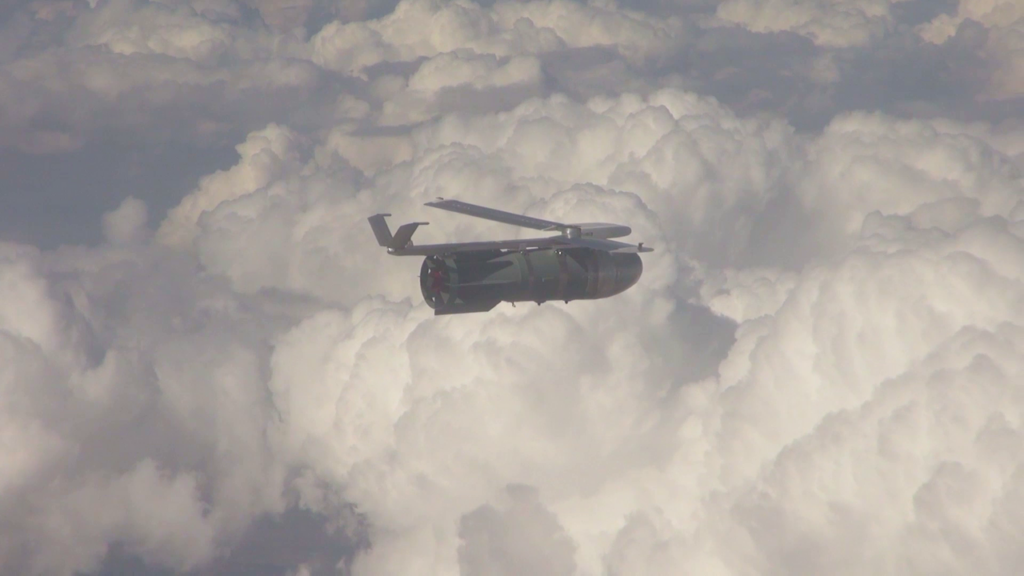
The Russian KAB glide bombs, which range 25 miles or farther under pop-out wings and satellite guidance, rained down as a trio of Russian units—the 22nd and 30th Motor Rifle Regiments and 40th Marine Brigade—were “really struggling near Kindrativka,” just outside Andriivka three miles south of the border with Russia, according to analyst Moklasen.
A week ago, the Russians were in danger of being surrounded and cut off from their supply lines and reinforcements. Instead, they retreated last weekend, marking the latest setback for the 50,000-strong Russian force in Sumy.
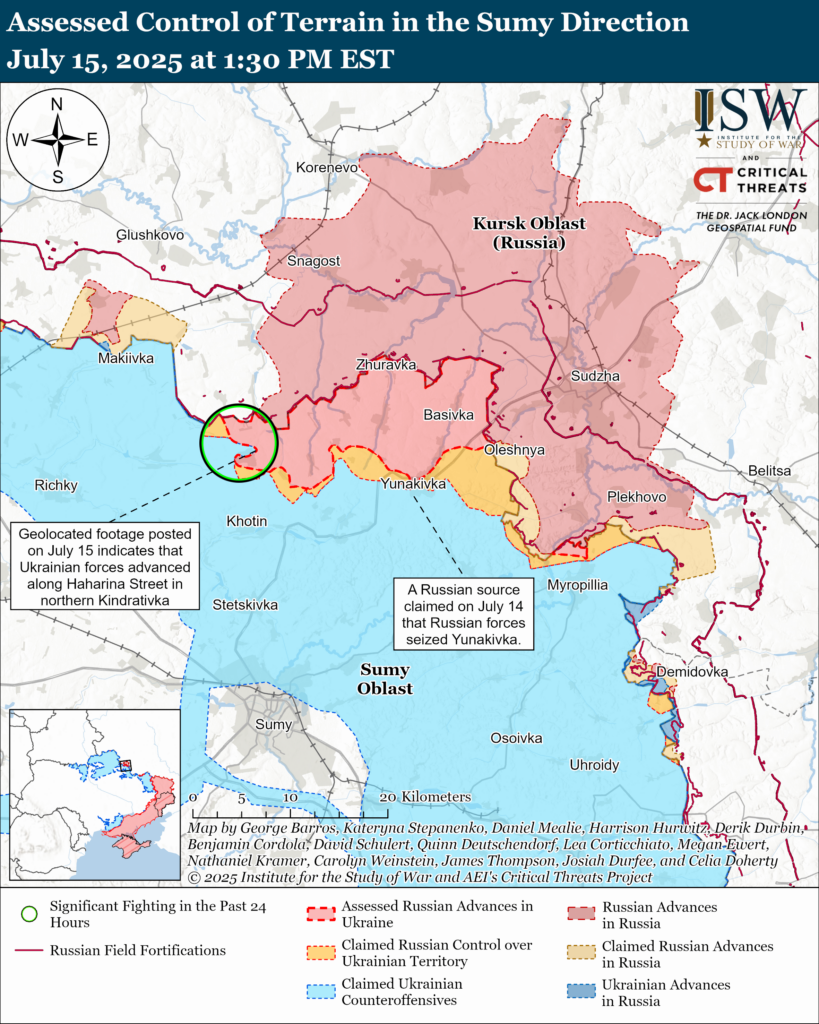
Assessed control of terrain in Sumy Oblast. Photo: ISW maps
Shortly after drone-harried Ukrainian forces retreated from western Russia’s Kursk Oblast in mid-March, bringing to an abrupt end a controversial seven-month Ukrainian incursion, Russian units including the 22nd and 30th Motor Rifle Regiments and 40th Marine Brigade counterattacked—and crossed into Sumy.
But they counterattacked on foot, bringing with them virtually zero combat vehicles. While far from unusual as the Russians hold back their surviving armor, the Sumy operation underscored the risks that accompany infantry-first tactics.
Having lost more than 20,000 armored vehicles and other heavy equipment, the Russians made a deliberate decision in recent months to pull back their surviving armor—and send regiments and brigades into battle on foot or on motorcycles.
KAB glide bomb.
The shift to infantry and bike tactics preserves a vanishing resource (armored vehicles) by replacing it with an abundant resource (infantry and bikes). With generous cash bonuses sometimes equaling three years of pay, the Kremlin has managed to recruit 30,000 fresh troops a month—enough to replace the roughly 30,000 troops who are killed or wounded in Ukraine every month.
The downside is apparent in Sumy. “It certainly becomes much harder to achieve any sort of … call it a big and beautiful breakthrough,” explained Ukrainian-American war correspondent David Kirichenko.
Worse for the Russians, heavier Ukrainian units have been able to defeat lighter Russian units in some sectors, even though the Ukrainian formations are desperately short of trained infantry—and the Russian formations have infantry in abundance.
The Ukrainian 79th and 95th Air Assault Brigades and the 225th Assault Regiment, equipped with German-made Marder and US-made Stryker and Bradley fighting vehicles, faced off against the vehicle-less 22nd and 30th Motor Rifle Regiments and 40th Marine Brigade in Sumy.
If the Russians had an advantage, it was in the air. Despite heavy losses in the 41 months since Russia widened its war on Ukraine, the Russian air force still has 10 times as many warplanes as the Ukrainian air force has—and many more glide bombs.
Ukrainian crew of the US-supplied M2 Bradley IFV, which took part in the liberation of Robotyne, Zaporizhzhia Oblast. Credit: Ukrinform
For years, the Russians have been dropping around 100 KABs a day all along the 1,100-km front line. In recent weeks, many of those KABs fell on that isolated treeline in Sumy. It’s possible the Ukrainian 79th and 95th Air Assault Brigades and the 225th Assault Regiment had positioned infantry or artillery in the treeline. It’s also possible the Russians simply believed the Ukrainians had placed forces under those trees.
In any event, the Russians bombed and bombed with what Moklasen described as an “insane” number of KABs. How many, if any, hit anything of value is unclear. Ukrainian jamming can throw the KABs off course.
German-made Marder fighting vehicle in Ukraine. Photo: General Staff
Shrugging off the bombardment, mechanized Ukrainian troops flanked the de-mechanized Russians near Kindrativka last week. The Ukrainian Center for Defense Strategies noted Ukrainian counterattacks in Sumy that could “complicate the enemy’s advance and threaten the encirclement of Russian troops operating in Andriivka.”
But the Russians escaped just in time, fleeing northeast and straightening the Russian line in Sumy. The end result, however, is that the Russians control less of Sumy now compared to a week ago. Even a record number of glide bombs pummeling a tiny fragment of forest hasn’t been able to reverse the Russians’ declining fortunes in the oblast.
As a Partner and Co-Founder of Predictiv and PredictivAsia, Jon specializes in management performance and organizational effectiveness for both domestic and international clients. He is an editor and author whose works include Invisible Advantage: How Intangilbles are Driving Business Performance. Learn more...




1 comments:
Looking for a reliable web agency near me was a game-changer—finally found a team that understands both design and strategy! Highly recommend going local for faster communication and better results.
Post a Comment