Ukraine Hit 4 Russian Air Bases In 1 Wave This Week. The Fires Burned For Days
With one wave of attacks on four Russian air bases and air force logistical depots, Ukrainian drones destroyed a number of combat aircraft, bombs and missiles, fuel and other key components of Russia's terror bombing of Ukrainian civilian targets.
These attacks were in additions to strikes on drone and bomb manufacturing plants inside Russia. Ukraine's strategic attacks on Russian military capabilities are hitting deeper in the country as well as closer to Moscow and are expected to continue. JL
Euromaidan Press reports:
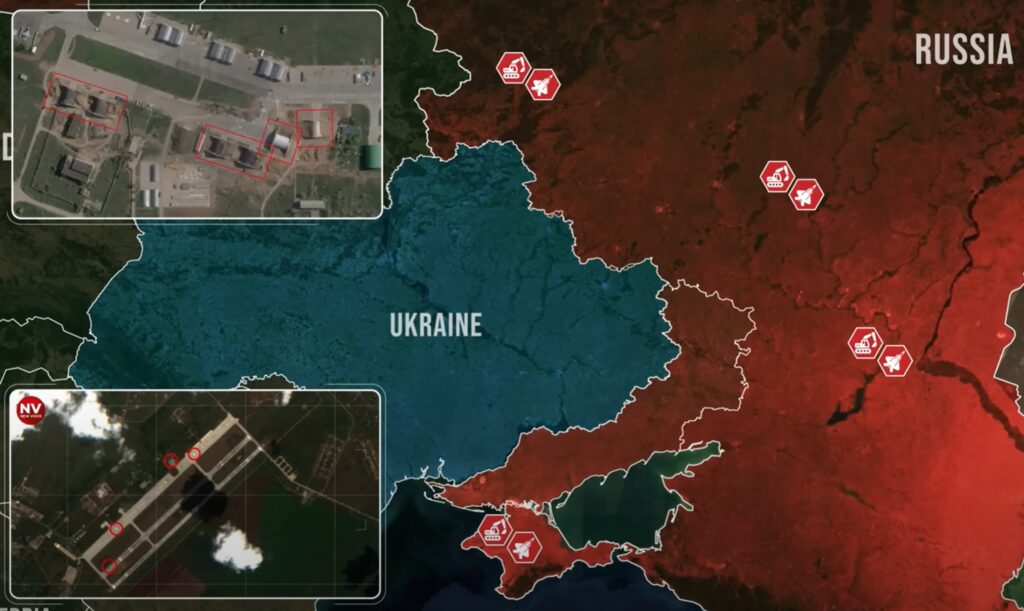
Ukrainian forces executed a series of precision strikes underminingRussia’s air strike capabilities, delivering blows tostrategically significant Russian airfields and ammunition storages. In strikes on Borisoglebsk airfield in Voronezh, Khalino air base in Kursk, the 1060th Logistics Support Center in Bryansk multipleRussian munition depots full of rocket fuel, lubricants, and air-launched KAB guided aerial bombs and missileswere destroyed. At theMarinovka airbase in Volgograd Oblast,four advanced Su-34 fighter-bombers were destroyed—Russia’s key tactical planes for strikes on Ukraine.
Today, there is big news from the Russian Federation. Ukrainian forces executed a series of precision strikes aimed at critically undermining Russia’s air strike capabilities, delivering powerful blows to several strategically significant Russian airfields and ammunition storages.
By limiting Russian air power, Ukraine aims to leave Russian ground forces without fire support, making their attacks much more vulnerable. One of the most impactful attacks occurred at the Borisoglebsk airfield in Russia’s Voronezh Oblast, home to advanced Russian jets including Su-34, Su-35S, and Su-30SM aircraft.
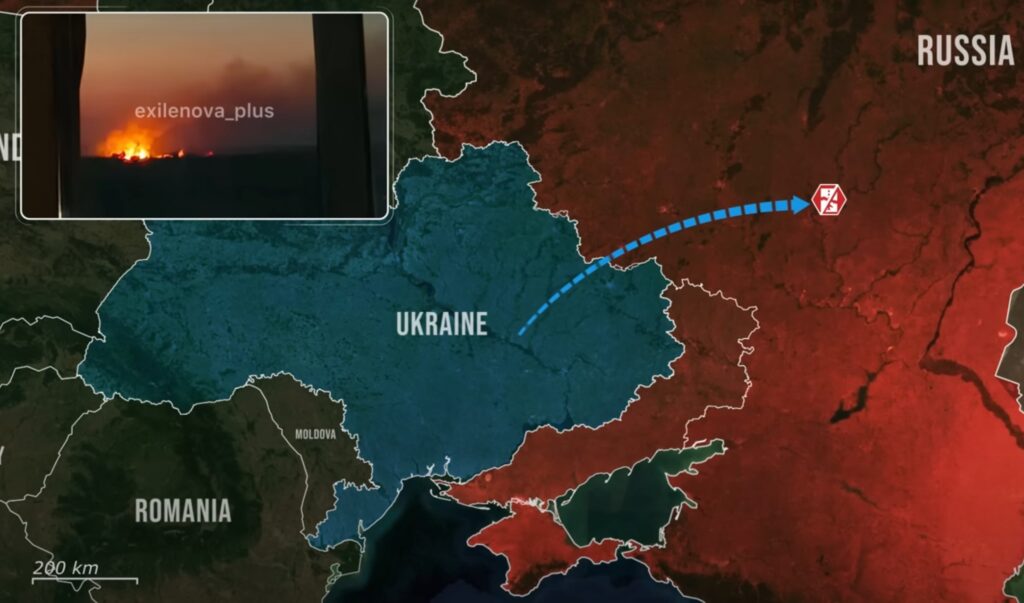
The attack resulted in massive fires, destroying a critical depot containing KAB guided aerial bombs and severely damaging at least one combat training jet—with likely several more jets destroyed. Damage assessments are ongoing, but preliminary reports suggest substantial impairment of Russian aerial offensive capabilities.
One of Ukraine’s most significant strikes hit Borisoglebsk airfield in Russia’s Voronezh Oblast. Photo: Screenshot from the video
Ukrainian drones destroy bomb depots and air defense in Kursk and Bryansk
Another successful strike targeted the Khalino airbase in Kursk Oblast. Ukrainian munitions precisely hit a storage facility housing aerial bombs and missiles, destroying a Russian Pantsir-S1 air defense system guarding the site.
Ukrainian intelligence also coordinated a devastating strike on the 1060th Logistics Support Center in Bryansk Oblast, triggering extensive fires and secondary detonations. Multiple Russian munition depots full of rocket fuel, lubricants, and air-launched bombs and missiles were destroyed.
Su-34 fighter-bombers destroyed in Marinovka airbase attack
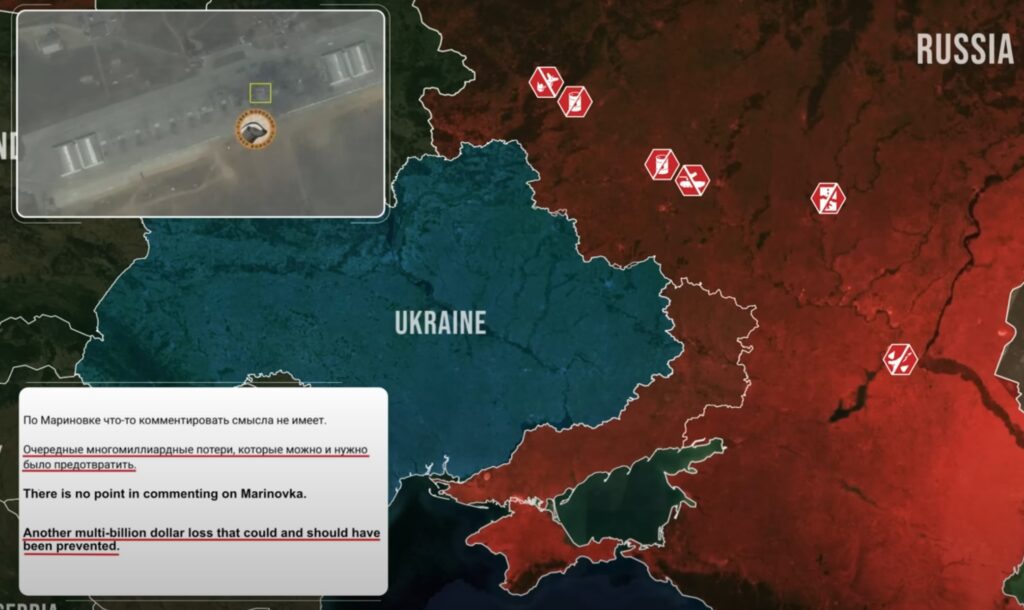
The most painful strike for Russia occurred at the Marinovka airbase in Volgograd Oblast, where Ukrainian Special Operations Forces confirmed the destruction of four advanced Su-34 fighter-bombers—Russia’s key tactical aircraft for strikes on Ukraine.
Satellite imagery shows extensive damage, including multiple craters, indicating the destruction of several ordnance storage sites. A former Russian military pilot and aviation analyst called this strike a multibillion-ruble loss that could have been prevented, citing serious operational security failures.
Ukraine’s most costly blow to Russia came at Marinovka airbase, where four Su-34 strike aircraft were confirmed destroyed. Ukraine’s most costly blow to Russia came at Marinovka airbase, where four Su-34 strike aircraft were confirmed destroyed. Photo: Screenshot from the video
Tires on jets? Russian bases use ineffective defenses
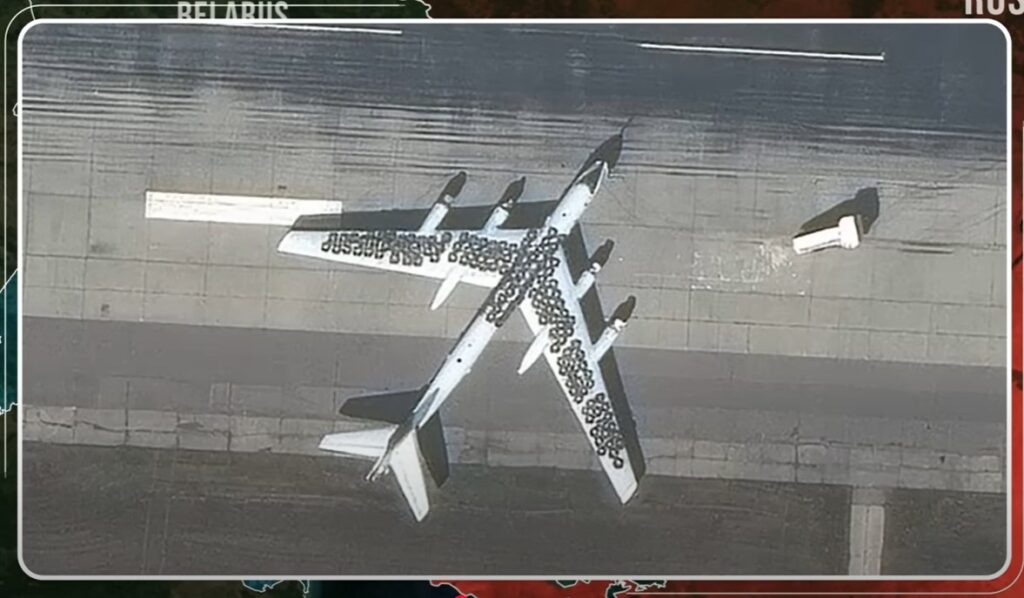
Despite mounting losses, Russian airbase personnel continue placing tires over jet aircraft as a defense against drone strikes—a tactic repeatedly proven ineffective. This futile measure adds strain to Russian maintenance crews, further reducing operational readiness.
Ukrainian drones and missiles, unaffected by these rudimentary barriers, continue to destroy Russian aircraft on the ground with alarming precision.
Russia still puts tires on jets—despite failures and added maintenance strain. Photo: Screenshot from the video
Ukraine targets Russian air-ground strategy at its core
Ukraine’s strikes follow a clear strategic logic. Russian ground tactics depend heavily on air and artillery support, typically locating Ukrainian positions by using waves of low-skilled infantry to draw fire.
By destroying aircraft, ammo depots, and air-defense systems in rear areas, Ukraine disrupts Russia’s ability to coordinate ground assaults, easing pressure on frontline troops and forcing Russia into riskier air operations with fewer assets.
Accidents rise as Russia pushes overworked aircrews
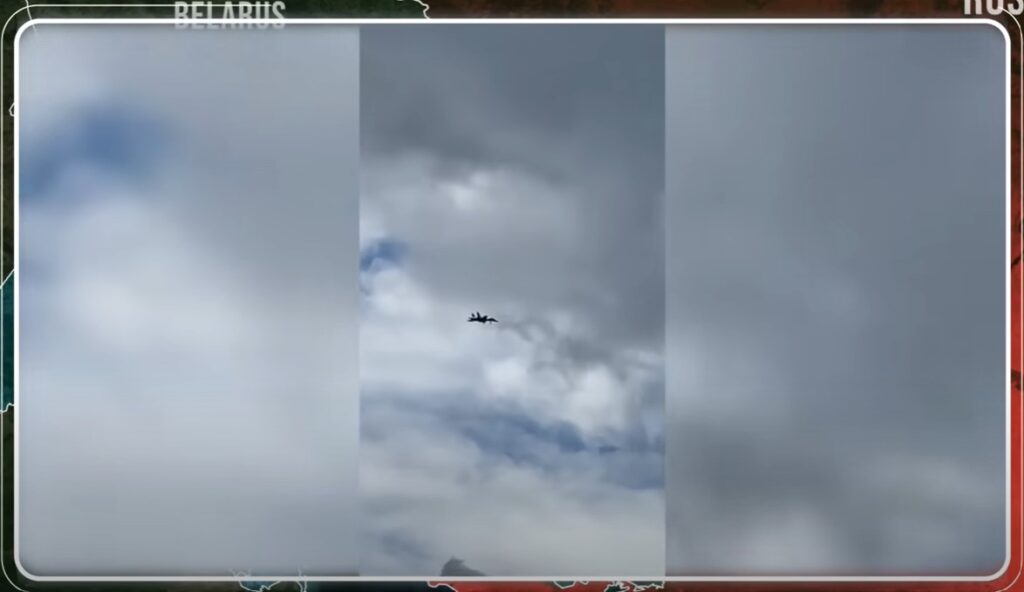
With fewer aircraft and an increasingly strained maintenance workforce, Russian aviation is suffering from higher accident rates. A recent crash of a Su-34 due to a landing gear malfunction killed an experienced pilot.
These self-inflicted losses, combined with the depletion of skilled personnel, are worsening Russia’s battlefield attrition.
Strained crews and fewer aircraft are driving up Russian crash rates, including a deadly Su-34 landing gear failure. Photo: Screenshot from the video
Russian airbases left vulnerable as protective measures stall
To reduce turnaround time, Russia has moved many aircraft dangerously close to the front line. While earlier efforts were made to build concrete protective shelters, satellite evidence suggests this work has stalled or been abandoned.
Russia moved jets near the front to cut delays, but shelter construction has largely stopped. Photo: Screenshot from the video
Without public or military pressure to resume fortification, Russia risks further devastating losses in future Ukrainian strikes.
Ukraine’s sustained campaign is strategically critical—weakening Russian air power, protecting civilians, and degrading offensive potential during the decisive summer months. Neutralizing Russian air superiority remains key to Ukraine’s battlefield success.
As a Partner and Co-Founder of Predictiv and PredictivAsia, Jon specializes in management performance and organizational effectiveness for both domestic and international clients. He is an editor and author whose works include Invisible Advantage: How Intangilbles are Driving Business Performance. Learn more...




0 comments:
Post a Comment