


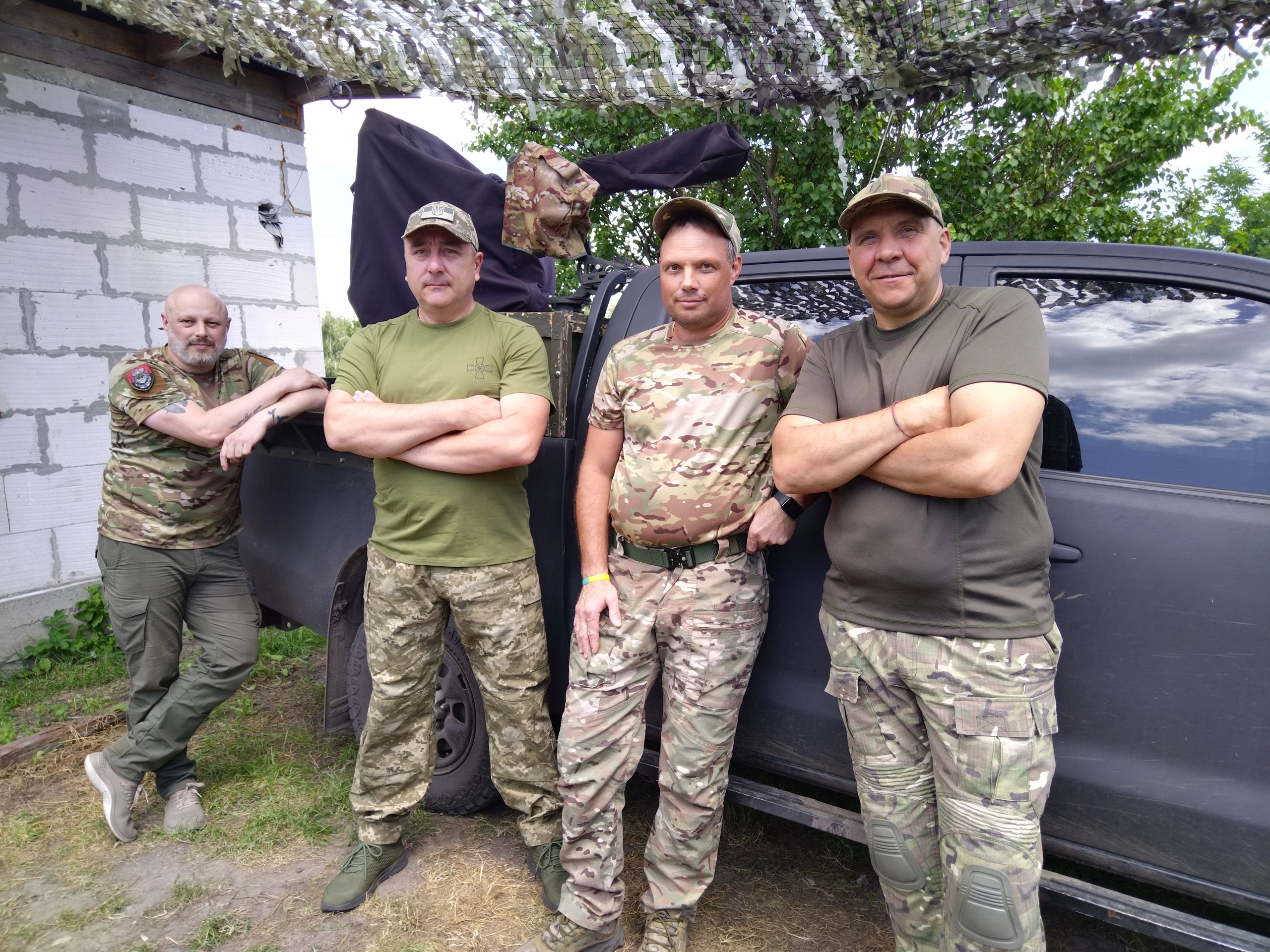
A Ukrainian air defense unit is made up of volunteers: craftsmen, construction workers, warehousemen and entrepreneurs. They do 20 days of paid work and five days of service. For the commander, it’s a full-time job. The Ukrainian army provides weapons and ammunition. Vehicles, night vision devices and other materials are sourced through donations. 5 groups totaling 20 men are on duty in this sector, between Kyiv and the Russian border. “When a missile or a Shahed enters a zone of five kilometers, we can hear it. We determine where it’s going and search the sky using thermal imaging goggles. If it enters the hit zone in our sights we open fire.” Experience is what matters most: the men claim they can discern the flight altitude and direction of these weapons by sound.The sun is brooding over the village. It’s the kind of day when you seek refuge in the shade and long for the evening – hoping that the sun will finally hide behind the horizon.Lyuda, a woman of around 60, stands in the small field behind her house. She pushes the dry soil aside with a shovel and collects potatoes for dinner. Her plan is to cook young potatoes with bacon, sour cream and dill. Here she grows corn, cucumbers, carrots, beets, onions and garlic. She wipes the sweat from her forehead, points to the northeast and says, “That’s where they come from.” Then she points west. “That’s where they fly to – every night.”
She referring to the drones, rockets and cruise missiles that Russia has been sending into Ukraine recently, almost every night, by the hundreds. And when they are shot down, they fall from the sky.
Last night, she says, pointing in one direction, there were two loud bangs: “Somewhere over there.” The night before, she stopped counting. And the night before that as well.
The village sits between Kyiv and the Russian border. It is precisely through this area that the vast majority of drones fly, particularly at night when Russia launches hundreds of them at cities such as Kyiv, Lutsk, Lviv and Chernivtsi. It is here that the Ukrainian air defense is making its first attempts to minimize this madness, if only to some extent.
In a tiny house somewhere in the middle of nowhere stands “Starshiy Sergeant,” a 41-year-old man with short hair, a beard with gray roots and tattooed arms. Before Russia’s full-scale invasion, he was an entrepreneur running a small furniture business, a musician and a travel enthusiast. Today, he is above all a volunteer, yet still somehow an entrepreneur. “But that has to take a back seat for now,” he says. Priority goes to fighting off the drones, rockets and cruise missiles that Russia sends day after day, night after night.
“Starshiy Sergeant” is the commander of a Ukrainian air defense unit. The unit is made up of volunteers like him, from various backgrounds, such as craftsmen, construction workers, warehouse workers and entrepreneurs. There are four people in this position. The arrangement is 20 days of paid work and five days of service, except for the commander. For him, it’s a full-time job. The Ukrainian army provides weapons and ammunition. Private weapons are not permitted. Vehicles, night vision devices and other materials are sourced through donations. “Starshiy Sergeant” commands 5 groups totaling around 20 men who are on duty in this sector, which is located somewhere between Kyiv and the Russian border.
He stands, holding a paper cup of cold water in one hand and pointing at a tablet leaning against the crumbling wall with the other. The tablet displays a map of the region. On the other side of the border, there are small red silhouettes of aircraft moving slowly. These are the Russian jets and drones. “For some reason, they’re flying around over there,” he says, pointing to the city of Kursk. Further south, Russia is now bombing Sumy.
Things get serious when the red silhouettes on the tablet move towards this area or a fighter bomber is spotted on the other side of the border. For now, though, it’s quiet. Outside, the sounds of birds, insects and dogs can be heard. Even roosters crowing in the distance.
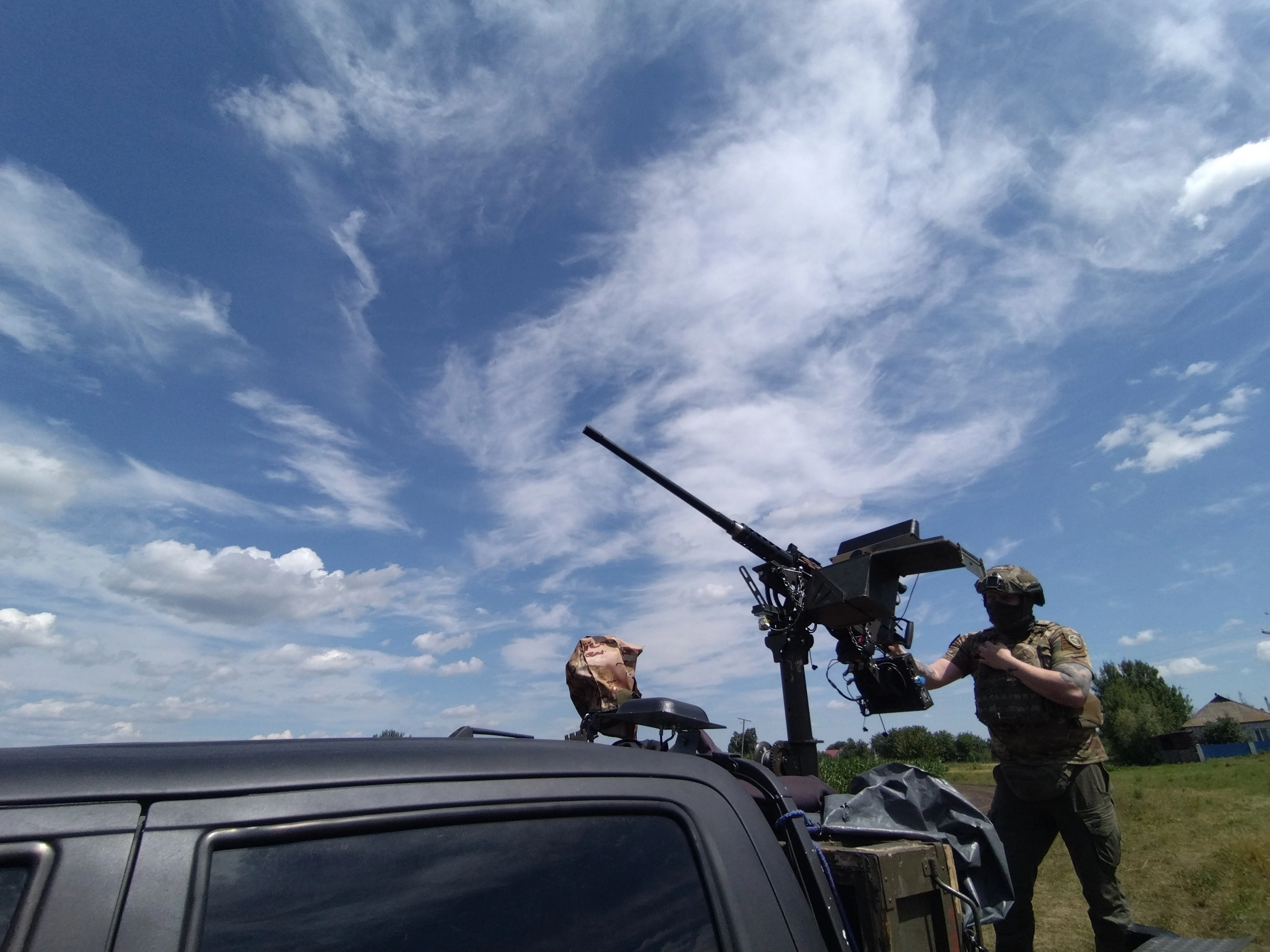
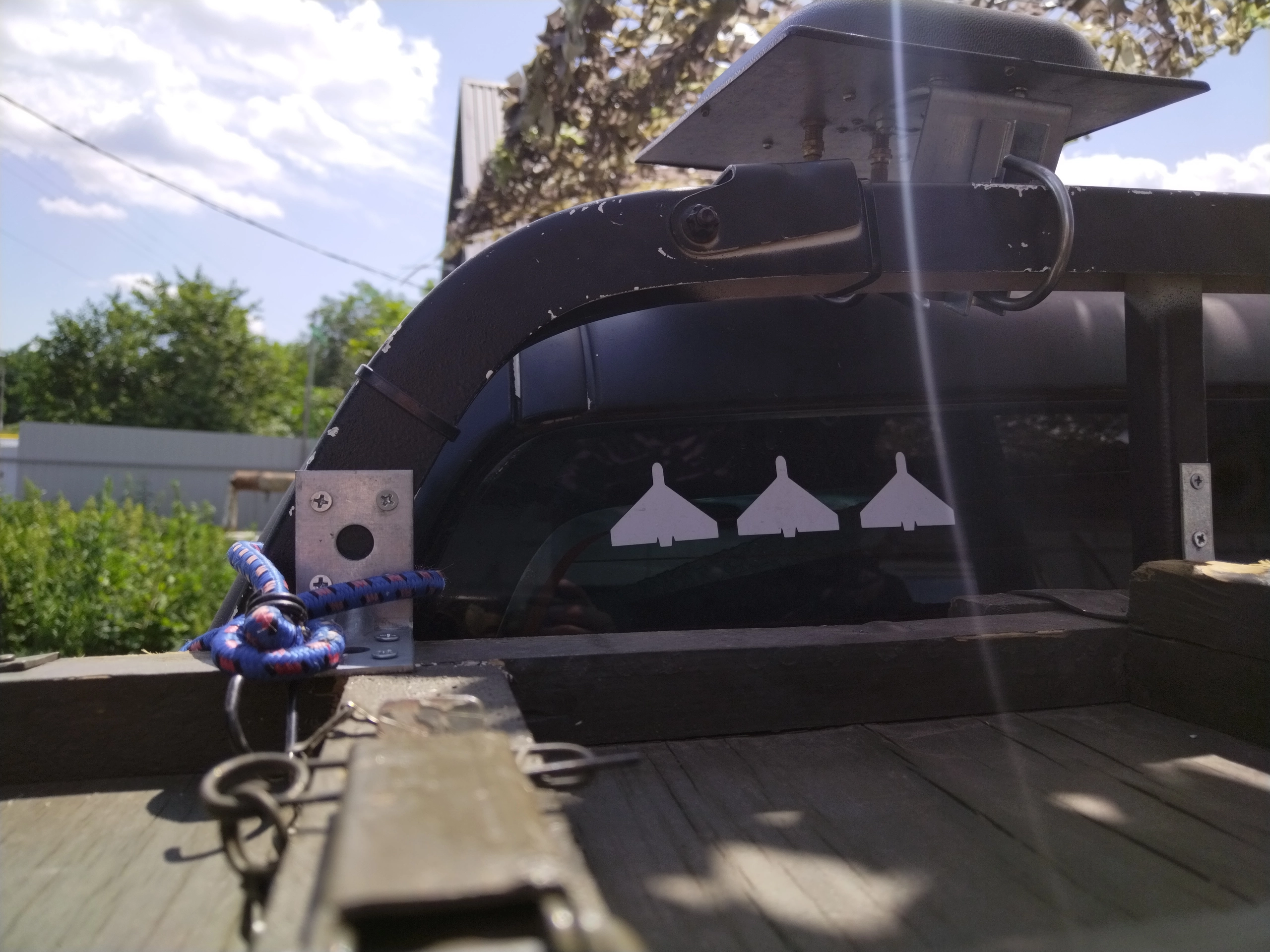
But in the yard in front of the house stands the pickup truck. Mounted on the truck is a heavy machine gun. When the order comes, they have 15 minutes to prepare, drive off and set up the equipment between the fields of sunflowers and corn and the bushes. Once in position, they must wait and remain calm. “Firing wildly around does nothing,” says the commander. It only puts everyone within several kilometers in danger. He says, “Everyone knows the drill.”
And this is how it goes: “When a missile or a Shahed enters a zone of five to six kilometers, we can hear it,” says Starshiy Sergeant. “Then we can determine where it’s going and search for it in the sky using thermal imaging goggles. If it enters the hit zone – and we have it in our sights – we open fire on command.” And then some of these propeller- and jet-powered flying bombs fall from the sky. The ones that get through are intercepted by the sector further up the line. Others make it through.
Air defense is a race on many levels, where factors such as altitude, speed, calculations, reaction time, technology and experience all play a part. It’s a race between the quantity of missiles Russia launches and the capabilities of the Ukrainian ground forces. Recently, this imbalance has been extreme. Russia has clearly increased production, possibly with the help of China, based on components found in downed drones, such as chips, electronic modules and motors. Ultimately, it is also a race between technological developments. Russian drones now often fly faster and higher than they did just a few months ago, making them harder to intercept. Sometimes, however, they fly very low, around a hundred meters above the ground. This makes them harder to detect on the radar, but they are then well within the range of air defense systems. Yet only for a very short time.
AdvertisementMeanwhile, a newly developed interceptor drone has reportedly been successfully tested by the Ukrainian army. Work is also underway on digital targeting systems that calculate the distance and therefore the flight time of missiles, as well as the speed of the drone when aiming. Nevertheless, experience is what matters most, claims one of the men at the base.After spending numerous nights in the dark, these weapons can be identified by their distinctive buzzing and humming flight sounds: the Shahed-131 and Shahed-136 surveillance drones, which fly at high altitudes, as well as the cruise missiles and rockets. One man claims to be able to tell whether it is a two-stroke or a three-stroke engine. “Starshiy Sergeant” claims that he can even discern the flight altitude and direction of these weapons by sound alone. “Some people just hear better than others,” he says.
He himself is one of those who hear well. He used to be a musician and a sound technician, and was about to embark on a professional career in this field. “Romantic classic rock” is what they played, he says. They recorded four albums. But that was before the war. Back then, when he still travelled the world, visited Barcelona and Madrid, Rome and Vienna, and frequented all these opera houses. Back when the war was, if anything, just a movie plot. He likes early operas: music from the 15th and 16th centuries. He speaks of that time in his life – just a few years ago – as if it were centuries ago.
In fact, the band sang in Russian back then. He grew up with that language. Today, he says in Ukrainian: “These lunatics think they have to protect people like me. I don’t want to be protected by Russia.”
He plays a music video on his phone, which features a young man with long brown hair. That was him before the war. With a cigarette in his mouth, he laughs surrounded by friends. Then he shows a photo of a boy with medium-length brown hair, grinning broadly and standing barefoot in a muddy puddle, smeared with mud. His son, three years old. He says, “Children see the world so much differently.” After the war, he plans to travel with his son, drink nothing but Prosecco, eat spaghetti and pizza, sunbathe on the beach and enjoy every moment. One day. Someday.
“Starshiy Sergeant” stands at the intersection of two dirt roads. On one side is a cornfield and on the other, sunflowers. That’s one of their positions. This is where they stand and fire when the buzzing and humming starts at night. But now, only bees are buzzing. He talks and outlines their procedures. Soon, Lyuda, the woman in the field, calls over: “Boys, would you like to join us for lunch? Are you hungry? I have far too many potatoes.” The sergeant pats his belly, bows slightly and shouts back through the bushes: “No, but thanks a lot. Enjoy your meal – and have a safe night.”


1 comments:
I love exploring graphic design portfolio websites — they’re such a great source of inspiration and creativity! Each one reflects the designer’s unique style and skill
Post a Comment