Ukraine's Faster, More Accurate, Deadlier Armored Brigades Gut Russians
Adapting to the growing dominance of drones on the battlefield - and the ever shorter time between detection and engagement - Ukraine is reorganizing its armored brigades to make them faster, deadlier and more accurate. In practical terms this means fewer. more lethal tanks with better training and equipment to complement a growing number of infantry fighting vehicles and armored personnel carriers which greater mobility and firepower.
The result has become evident on a variety of fronts, including Kupiansk, Kharkiv, Sumy and Pokrovsk, where sniper tanks, IFVs and APCs are making opportunistic attacks on Russian positions and on attack formations before Russian commanders know what is happening. This change in both tactics - and organization to support it - has had a significant effect on disrupting Russia's summer offensive. JL
Espreso Global and Euromaidan Press report:
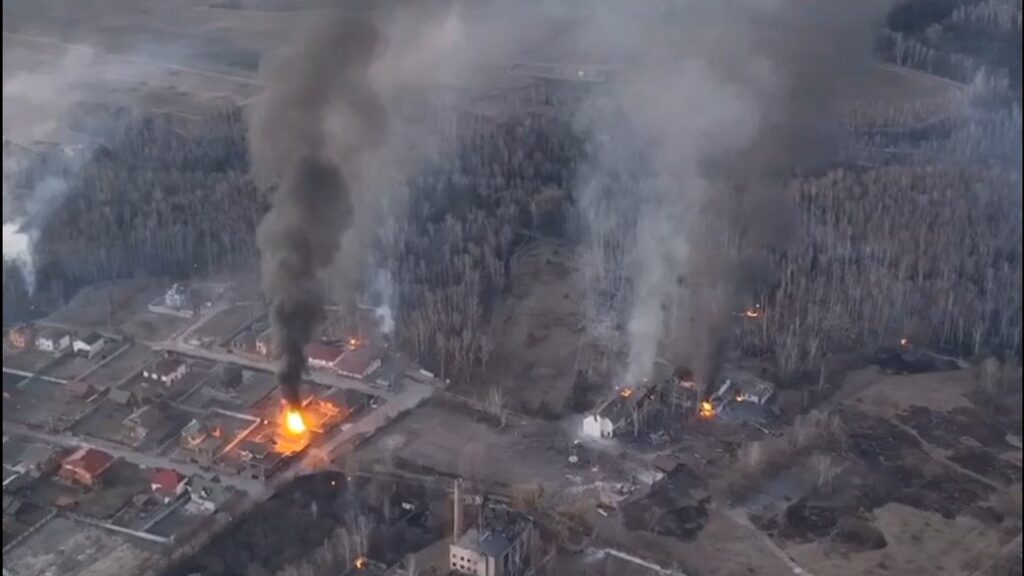
At dawn, a tank crew with Ukraine's 3rd Tank Brigade closed in a destroyed a Russian position in a forest strip on the Kupiansk front. "Our tank, working in tandem with an armored personnel carrier, led the attack. They then moved into the forest, where the enemy had gathered, engaging them at close range and clearing the position." Tanks are assuming a secondary role as infantry—and the armored trucks and tracked vehicles that speed them to and from their trenches—take on the lead role in this new era of ever-present drones and the reduced time between detection and engagement.
At dawn, the tank crew with Ukraine's 3rd Tank Brigade closed in and destroyed Russian positions in a forest strip on the Kupiansk front
Ihor Romanenko, press officer of the 3rd Separate Tank Brigade, shared the information on Espreso TV.
"The situation is hot in the Kupiansk sector. The enemy is constantly trying to storm the positions of all the brigades holding the defense in this area. From 5 to 10 assault actions take place daily," noted Romanenko.
According to him, the Ukrainian Defense Forces are holding their positions in the Kupiansk sector and putting up strong resistance.
"Today, around 5 a.m., in one of the areas where the enemy had made a slight advance, our tank, working in tandem with an armored personnel carrier, repelled the attack. They then moved into the forest strep where the enemy had gathered and engaged them at close range, clearing the position," Romanenko said. "We’ll soon share footage of this spectacular episode on our social media."
Big, cumbersome, easy-to-spot tanks are just too vulnerable to the tiny first-person-view drones that are everywhere all the time all along the front line. “The reduced time between detection and engagement, driven by real-time drone surveillance and the high velocity of FPV attack drones, has created a hostile environment for traditional armored platforms on the battlefield,” Ukrainian analysis group Frontelligence Insightexplained.
Prior to reorganization, the brigade operated T-64 and T-72 tanks and BMP fighting vehicles. Its equipment may change as its structure changes. The autoloader in the three-person T-64 and the Ukrainian army’s superior training made the most difference in the chaotic early fights around Chernihiv. “The first days of fighting saw numerous meeting engagements in forests at around 100 m to 200 m range, where restricted movement limited the Russian ability to bring their mass to bear against a specific tactical situation,” Zabrodskyi, Watling, Danylyuk and Reynolds wrote.
“Better crew training combined with short-ranged engagements where their armament was competitive, and the faster autoloader on the T-64, allowed Ukrainian tank crews to achieve significant damage against surprised Russian units.” Tanks are even more cautious now than they were last fall. “Overall, there is less armor being deployed to the front, especially compared to 2023,” Kirichenko said. “So we are still in the era of the cautious tank, or we could say that it has even gotten more cautious now.”
Chernihiv during heavy Russian shelling, March 2022. Photo: Suspilne Chernihiv
The Ukrainian army responded to the changing environment. The 17th Tank Brigade reorganized in October or November, reducing its tank inventory to become the first of the Ukrainian army’s new heavy mechanized brigades. The 5th Tank Brigade underwent its reorg in December.
The Ukrainian ground forces are also adopting a new corps structure that places similar brigades fighting in the same sectors under a single command. It’s possible these corps—there should be 13 of them—will each have just one separate tank battalion.
The forces for these battalions—the tanks and crews—could come from the tank brigades, some of which “may be disbanded,” Militaryland reported. Meanwhile, the tank battalions in the mechanized, motorized and mountain brigades “will be reduced in size.”
Today, the Ukrainian military should have 30 or so tank battalions with around a thousand tanks. The possible reorganization could cut that structure in half. Fewer battalions—and many more tanks in reserve to replace losses from drones.
The tanks are assuming a secondary role as infantry—and the armored trucks and tracked vehicles that speed them to and from their trenches—take on the lead role in this new era of ever-present drones and cautious tanks.
As a Partner and Co-Founder of Predictiv and PredictivAsia, Jon specializes in management performance and organizational effectiveness for both domestic and international clients. He is an editor and author whose works include Invisible Advantage: How Intangilbles are Driving Business Performance. Learn more...




1 comments:
Exploring graphic design portfolio websites is always inspiring! They’re a perfect showcase of creativity, skill, and personal style—essential for any designer looking to make a strong impression in today’s competitive market.
Post a Comment