


Brendan Cole reports in Newsweek:
Ukrainian engineers are developing drones which replicate the impact of HIMARS to hit Russian targets. Kyiv is drawing on midrange unmanned aerial vehicles in response to Russia’s countermeasures against HIMARS rockets which renders them less effective. Ukraine is working on midrange drones controlled over tens or even hundreds of miles and carry warheads weighing 220 pounds. These drones have more complex navigation systems and use a communications channel that can operate beyond 20 miles. They use a live connection and stay in contact with the operator. Mass deployment of such drones could replicate the HIMARS effect in striking Russian command posts, logistics and equipment.
Ukrainian engineers are developing drones which can replicate the battlefield impact of the U.S-supplied HIMARS (High Mobility Artillery Rocket Systems) to hit Russian targets, it has been reported.
Ukrainska Pravda and its defense news affiliate Oboronka reported that Kyiv is drawing on the midrange unmanned aerial vehicles (UAVs) in response to Russia’s countermeasures against HIMARS rockets which renders them less effective.
In an article for the Ukrainian news outlet, open-source intelligence (OSINT) analyst Illia Bolharyn wrote Ukraine had been forced to produce other ways to attack Russian forces at the same distance and accuracy as the American systems by using drones which can cause the "HIMARS effect."
Newsweek has contacted the Ukrainian defense ministry for comment.
Why It Matters
U.S.-supplied HIMARS have been a cornerstone of Ukraine’s long-range strike capability, since Kyiv received its first system in June 2022 and has since taken delivery of at least 38 others, although this figure could be higher.
Mounted on trucks, the highly mobile systems can strike targets up to 80 miles away, and have proved effective in hitting Russian logistical hubs, command posts and ammunition depots.
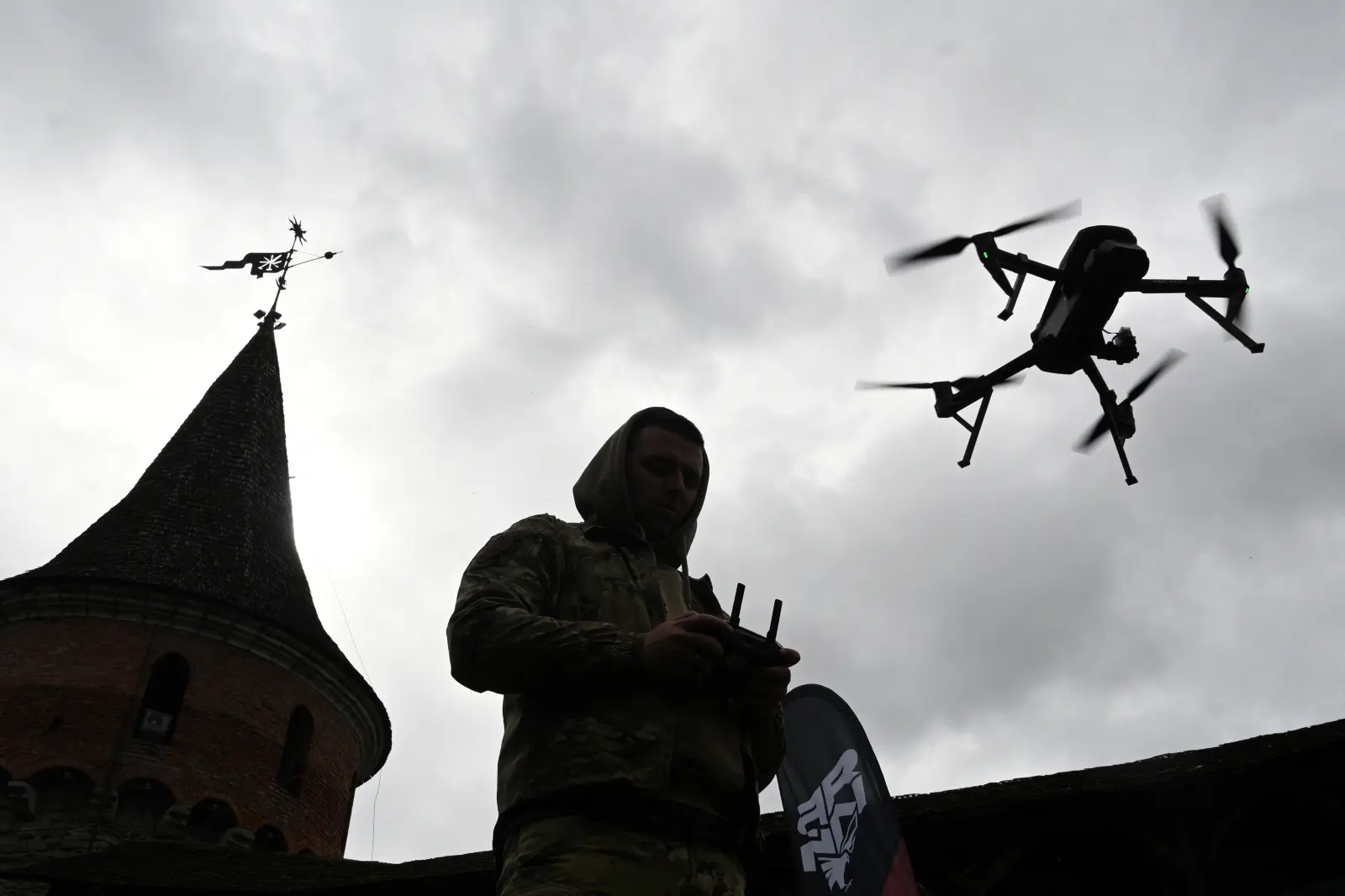
Faced with Russian HIMARS countermeasures and ammunition shortages, Ukrainian weapons engineers are working on midrange drones that could be controlled over tens or even hundreds of miles and can carry warheads weighing up to 220 pounds, Ukrainska Pravda reported.
A mass deployment of these drones could partly replicate the HIMARS effect in striking Russian command posts, logistics and equipment.
Ukraine’s drone sector has experienced rapid growth and since last year, especially in midrange UAVs, which sit between a short-range FPV (first-person view) drone and a long-range drone capable of hitting targets hundreds of miles away.
Midrange strike drones have more complex navigation systems and use a communications channel that can operate at ranges beyond 20 miles. They use a live connection and stay in contact with the operator, as opposed to long-range UAVs which are guided to their targets solely by GPS.
Ukrainian manufacturers have developed various models, including FP-2, Bulava, and RAM-2X, each with unique capabilities. Over 400 midrange drones were used by Ukraine in April and May this year but supply remains insufficient to meet military demand. Another challenge is creating a standardized warhead for the midrange UAVs.
What People Are Saying
A representative of a major Ukrainian drone manufacturer to Ukrainska Pravda: "Russian forces in the strike zone are well camouflaged and dispersed. A midrange strike drone allows us to hit them where they don't expect it and where they are concentrated."
What Happens Next
The development of midrange strike systems is linked to Ukraine's Unmanned Systems Forces whose crews are expected to grow in number with the aim of Kyiv to expand the "kill zone" where movement of infantry or equipment risks destruction, Ukrainska Pravda reported. However, as developers are tasked with trying to develop mass production, there are concerns over cost and scalability and state procurement


1 comments:
Unleash chaos on the racetrack in Smash Karts 76 as you outdrive, outshoot, and outsmart opponents from around the world.
Post a Comment