Ukraine Has Stalled Russia's Pokrovsk Assault As Air Force Overcomes Weather
One of Ukraine's most effective defensive maneuvers in recent days has come from an unexpected source: the Ukrainian Air Force.
With bad weather rendering some smaller drones less useful, Ukrainian Air Force jets armed with technology and enhanced munitions that are not dependent on sight have targeted Russian troops and logistics. The result has slowed the Russian advance to the point where it has affected the timeline significantly and causing the consequences for the Kremlin's plans to be termed 'uncertain.' JL
David Axe reports in Trench Art and the Institute for the Study of War reports:
Ukrainian forces have disrupted Russian logistics and vehicle use in Pokrovsk, significantly slowing the pace of Russia’s forces. Ukraine’s interdiction efforts are stopping Russian troop buildup, slowing their advance. The rate of Russian advances in Pokrovsk began to decrease in early November, affecting the timeline. Consequences remain uncertain. Air-delivered firepower have blunted Russian advances operations. Ukrainian air force Sukhoi Su-27s have dropped precision glide bombs. Fire Point FP-2 drones flown by Ukraine's special operations command have added to the aerial onslaught. Guided by satellite and an internal inertial system, the American-made GBU-62 sees right throughbad weather
Ukrainian commandos clinging to positions on the northeastern edge of Pokrovsk are getting some powerful support—from the air.
Ukrainian air force Sukhoi Su-27s have dropped precision glide bombs. Fire Point FP-2 drones flown by Ukraine's special operations command have added to the aerial onslaught.
The air-delivered firepower may have blunted Russian advances in and around Pokrovsk in recent weeks.
But the effect is likely to be temporary. Russian troops outnumber Ukrainian troops five to one in Pokrovsk and neighboring Myrnohrad. Even with help from the air, the Ukrainians are losing the long battle for the two settlements in eastern Ukraine's Donetsk Oblast.
Ukrainian forces have disrupted Russian logistics and vehicle use in Pokrovsk, Donetsk Oblast, significantly slowing the pace of Russia’s advance in the city, according to the Institute for the Study of War (ISW). ISW believes Russia is likely to take Pokrovsk and Myrnohrad, but the timeline and consequences remain uncertain.
Amid the ongoing Russo-Ukrainian war, Russia has concentrated its recent efforts on seizing Pokrovsk to fuel its propaganda narrative of allegedly winning the war, despite suffering extremely heavy losses from relentless ground assaults and infiltration attempts by foot soldiers.
Ukraine blocks Russian logistics in Pokrovsk
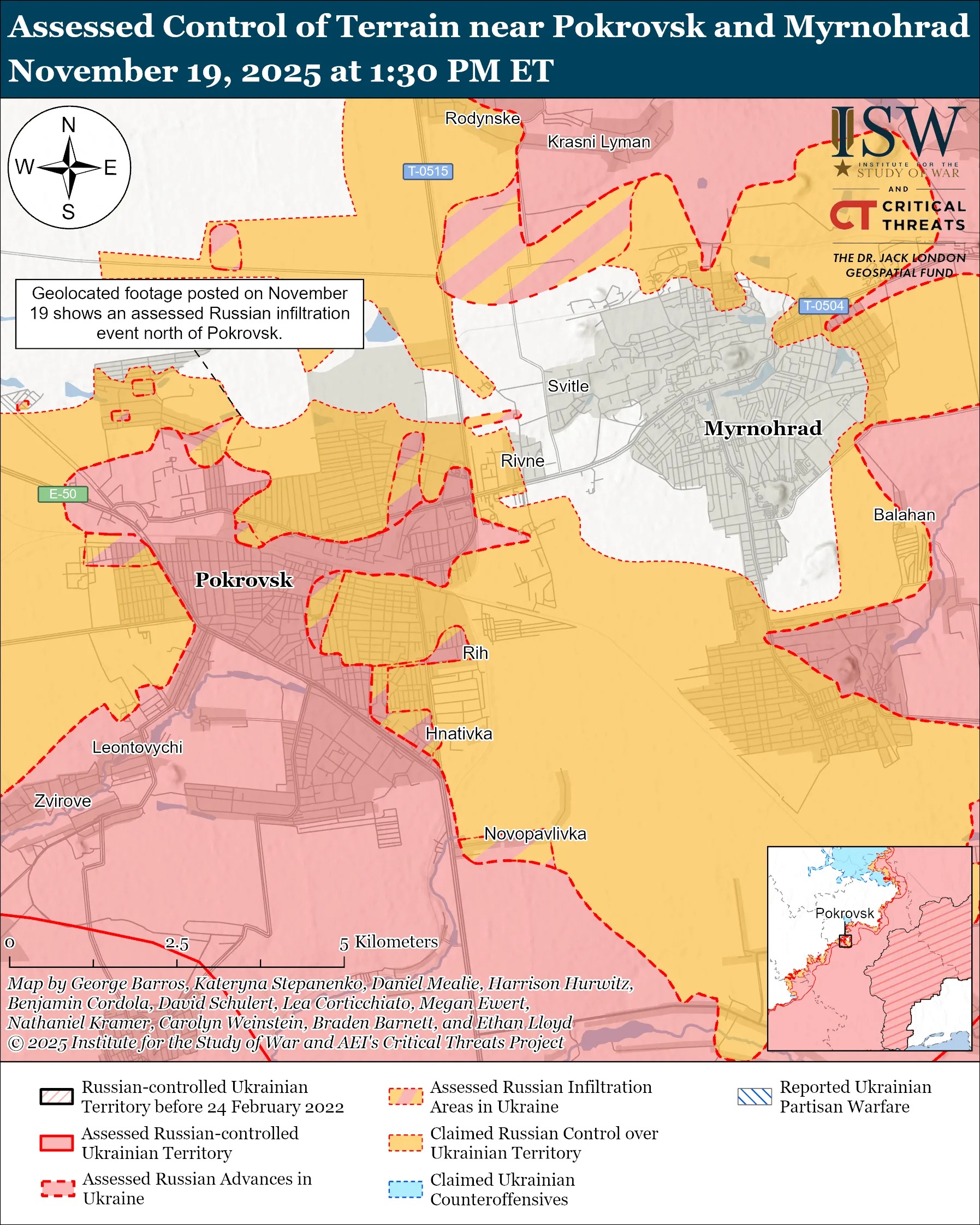
The ISW reported on 19 November that Ukraine’s interdiction efforts are stopping Russian vehicle use and troop buildup in Pokrovsk, slowing their advance, which is likely "slowing down Russia’s rate of advance within the town." The rate of Russian advances in Pokrovsk began to decrease in early November, following several weeks of relatively faster movement into the town.
Map: ISW.
A spokesperson for a Ukrainian brigade operating in the Pokrovsk direction said that Ukrainian interdiction of Russian ground lines of communication into the town has forced Russian troops to carry supplies on foot in teams of just two or three. According to a Ukrainian drone battalion commander in the same area, Ukrainian forces have mined the roads repeatedly used by Russia to move heavy equipment into Pokrovsk. He added that Russian forces now rarely use armored vehicles to enter the town.
Russian forces attempt fog-covered supply runs
Russian forces recently tried to bring in supplies and personnel using vehicles under cover of heavy fog from the south, along the M-30 Pokrovsk–Selydove highway, on 10 and 11 November. Russian military bloggers initially celebrated the attempt, but one later noted that the footage showing Russian forces driving into Pokrovsk had actually exposed them to Ukrainian artillery strikes. This undermined Russia’s ability to rely on vehicle-based logistics into the town.
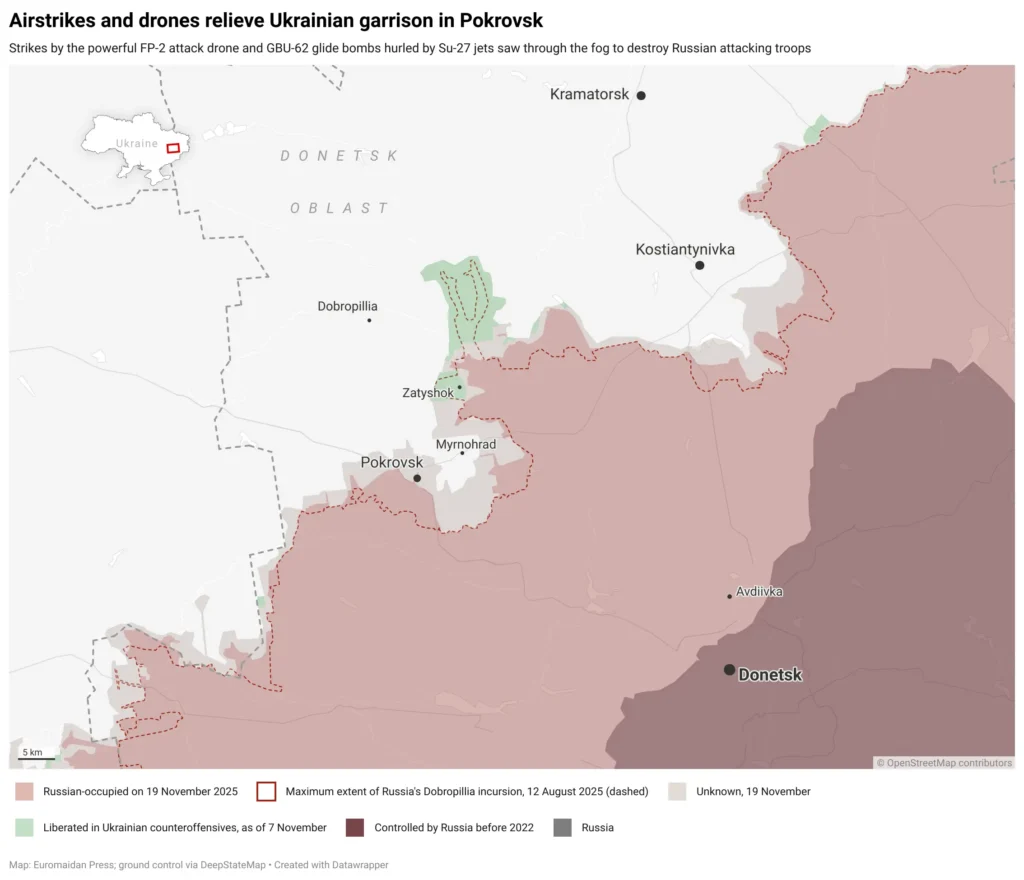
Map of Ukrainian and Russian positions near Pokrovsk, based on Deepstatemap
Russian troops from the Center Group of Forces first infiltrated Pokrovsk, a mining town with a pre-war population of 60,000, from the south in August following a yearlong siege. That same month, a Russian incursion north of Pokrovsk drew away the bulk of Ukraine's reserves. Meanwhile, the Russian 51st Combined Arms Army pushed around Pokrovsk and Myrnohrad from the northeast.
The onset of winter brought bad weather, which grounded and blinded many of Ukraine's drones. The Russians accelerated their bloody march through September, October, and November—creeping into Pokrovsk and Myrnohrad even as the Ukrainian 1st Azov Corps steadily rolled back the Russian incursion north of Pokrovsk.
By mid-November, the Ukrainian 7th Rapid Reaction Corps was retreating in Pokrovsk.
A clutch of elite Ukrainian formations, including the 425th Assault Regiment, the Tymur Special Unit and the 3rd Special Purpose Regiment marched or helicoptered into northeastern Pokrovsk to cover the 7th Rapid Reaction Corps' retreat—and to hold open a corridor for the two brigades still in Myrnohrad, the 38th Marine Brigade and 25th Air Assault Brigade, to eventually make their own escape.
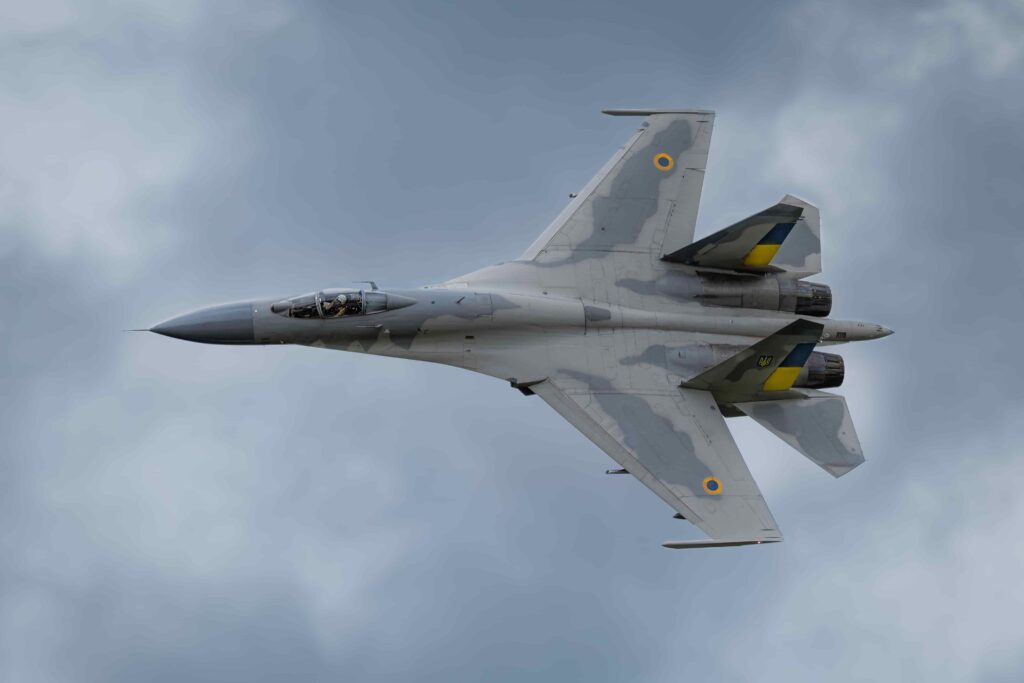
A Ukrainian Sukhoi Su-27. Ukrainian air force photo.
Cutting off the retreat
But the Russians are determined to head off what has, for the most part, been an "orderly" retreat, according to observer Thorkill. Outnumbered and in danger of being outmaneuvered, the Ukrainians called in air support.
Attacking under the cover of winter fog, Russian infantry consolidated in a building in northeastern Pokrovsk on or just before Thursday. A direct counterattack may have been too risky, so the Ukrainian air force handled it.
At least one air force Sukhoi Su-27 braved Russian air defenses and lobbed 1,100-kg GBU-62 precision glide bombs at the Russians' new position.
Ukraine's precision strikes pierce winter fog
Guided by satellite and an internal inertial system, the American-made GBU-62 sees right through the bad weather that can blind smaller first-person-view drones.
On or just before Friday, the Russian 51st Combined Arms Army made a move on the village of Zatyshok, 6 km north of Myrnohrad. With smaller drones apparently still grounded by the bad weather, the Ukrainian special operations command launched FP-2 drones.
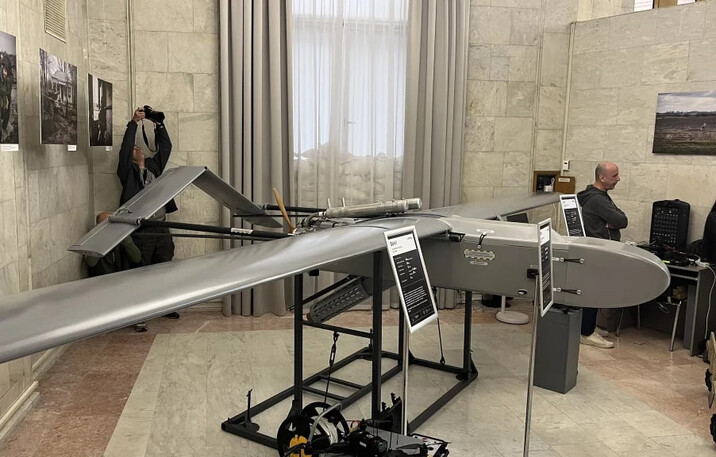
The FP-2 drone, produced by Ukrainian company Fire Point, can carry a 100-kg bomb. Photo: weuaplus.tv
With their forward-looking thermal cameras, the operator-steered FP-2s—each packing a powerful 100-kg warhead—could see just well enough through the clouds and fog to locate the Russians' position near Zatyshok. "Despite adverse weather, SOF drones successfully reached the target,"
The bad-weather strikes were impressive on a technological level, but can't erase the Russians' overwhelming advantage in troops and equipment on the ground. After a year of hard fighting, the outnumbered Ukrainian force in and around the twin settlements are exhausted. The bad-weather strikes were impressive on a technological level, but can't erase the Russians' overwhelming advantage in troops and equipment on the ground. After a year of hard fighting, the Ukrainian force in and around the twin settlements is outnumbered.
As a Partner and Co-Founder of Predictiv and PredictivAsia, Jon specializes in management performance and organizational effectiveness for both domestic and international clients. He is an editor and author whose works include Invisible Advantage: How Intangilbles are Driving Business Performance. Learn more...




0 comments:
Post a Comment