Russia's Kostiantynivka Offensive Ends Before It Begins As Ammo Depots Destroyed
Knowing that the Russians were planning a new offensive against Kostiantynivka, Ukrainian forces targeted the nearest Kremlin ammunition storage depots for each prong of the attack, using missiles and drones, as well as the strategic reserve depot 100 kilometers behind the front.
As a result of those Ukrainian attacks, 200,000 tons of Russian ammunition went up in explosions and fires so devastating that a number of civilian evacuations were required. The result of that loss to Russian forces is a delay of approximately three months until stocks can be resupplied. JL
RFU News reports:
The Russians launched an offensive on Kostiantynivka, which was meant to be the next major effort i Donetsk. But the Russians' plan fall apart before the battle had even started. Ukrainian forces struck an ammunition depot in Russian-controlled Debaltseve. A powerful explosion was followed by large-scale fires and secondary detonations throughout the night. Ukraine also struck Russian ammunition at a strategic depth, targeting the Arsenal of Russia’s Missile and Artillery Directorate in Kostroma. The strike caused a fire significant enough to trigger civilian evacuations.
Today, there is important news from the Kostiantynivka direction.
Here, the Russians launched an offensive on Kostiantynivka, which was meant to be the next major effort in the Donetsk region, launching assaults from several vectors at one. However, the Ukrainian forces acted quickly, cutting Russians at their legs and depriving them of all of their hard-worked preparations, as Russians saw their entire plan fall apart before the real battle had even started.
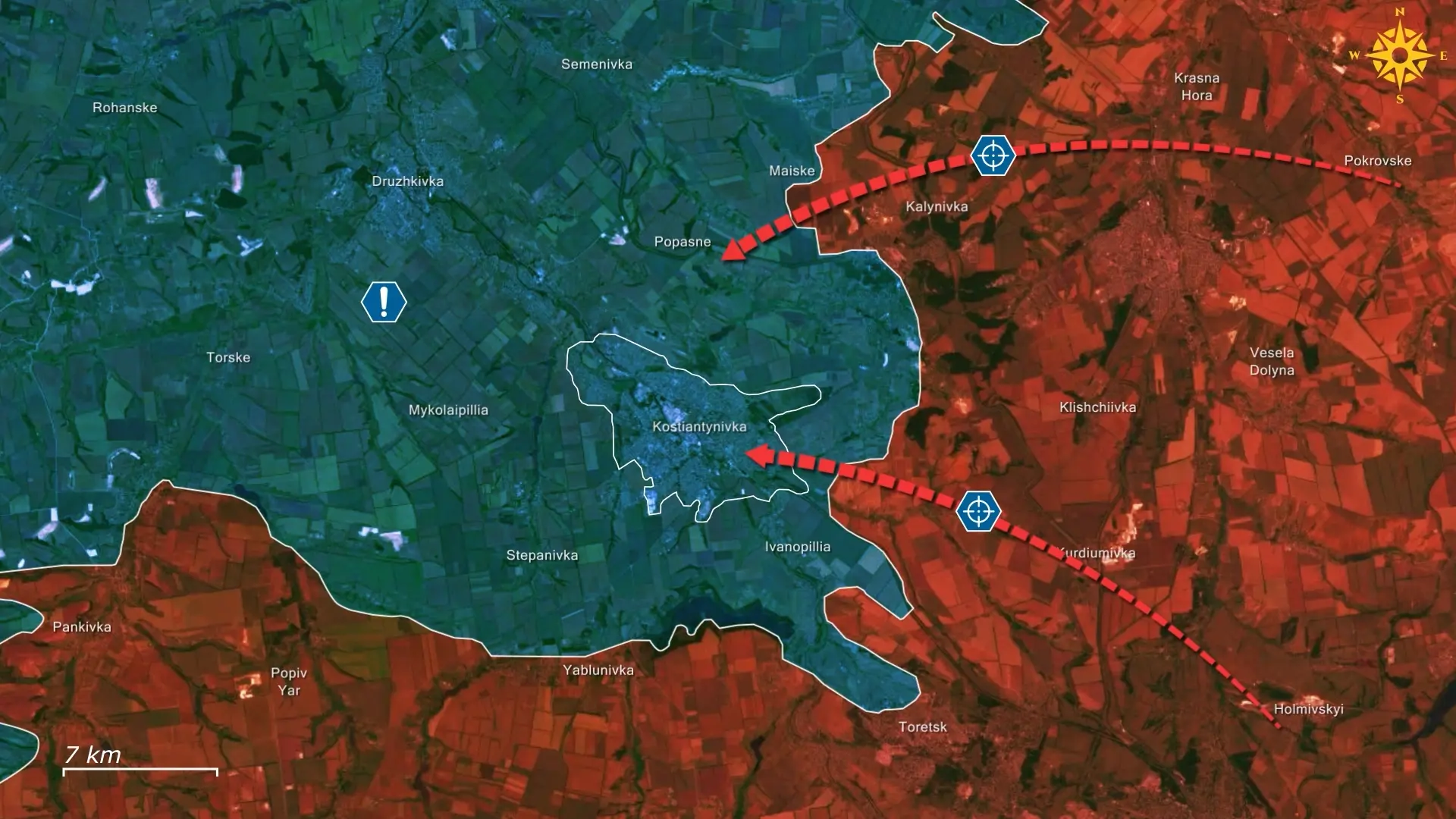
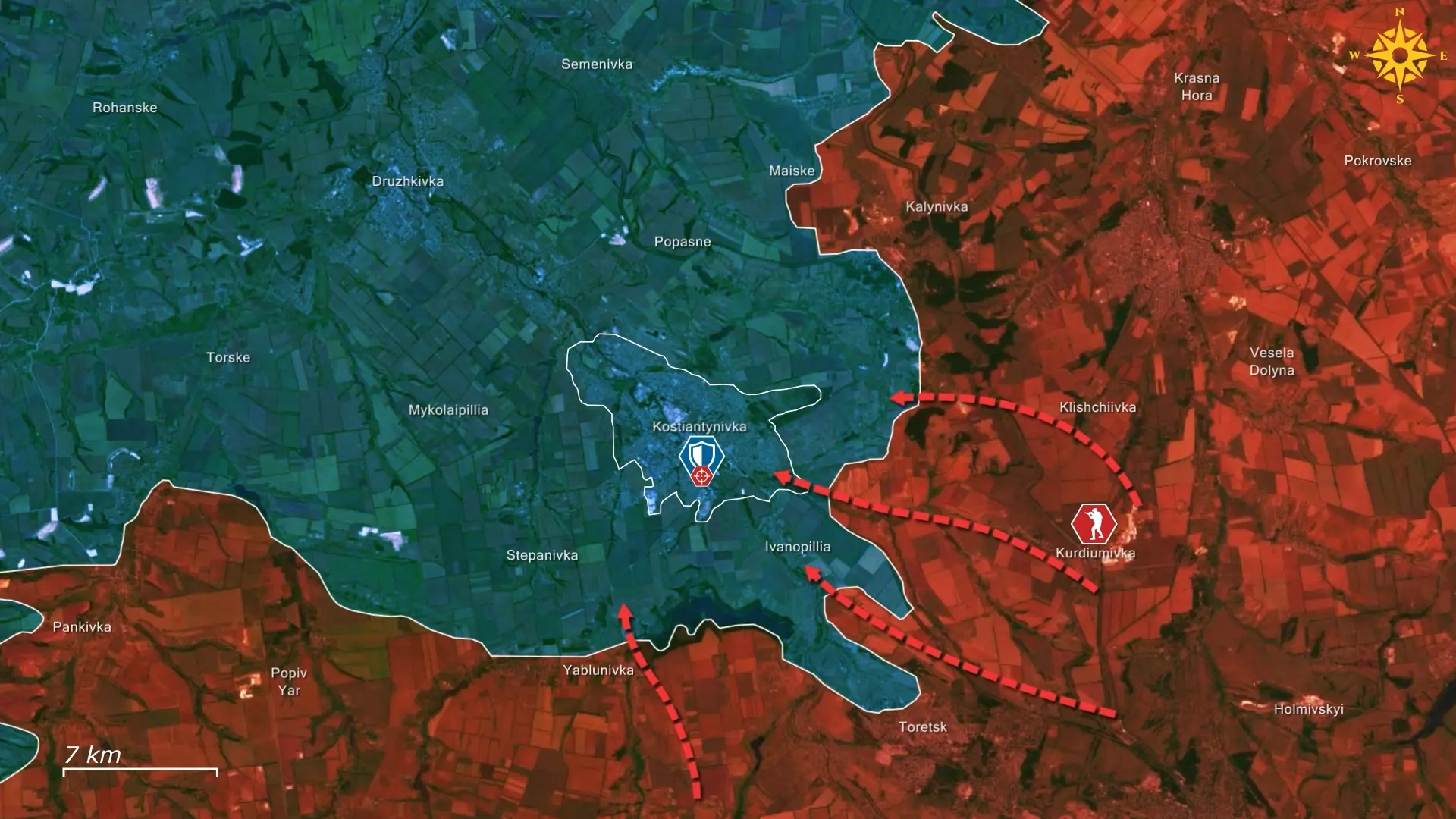
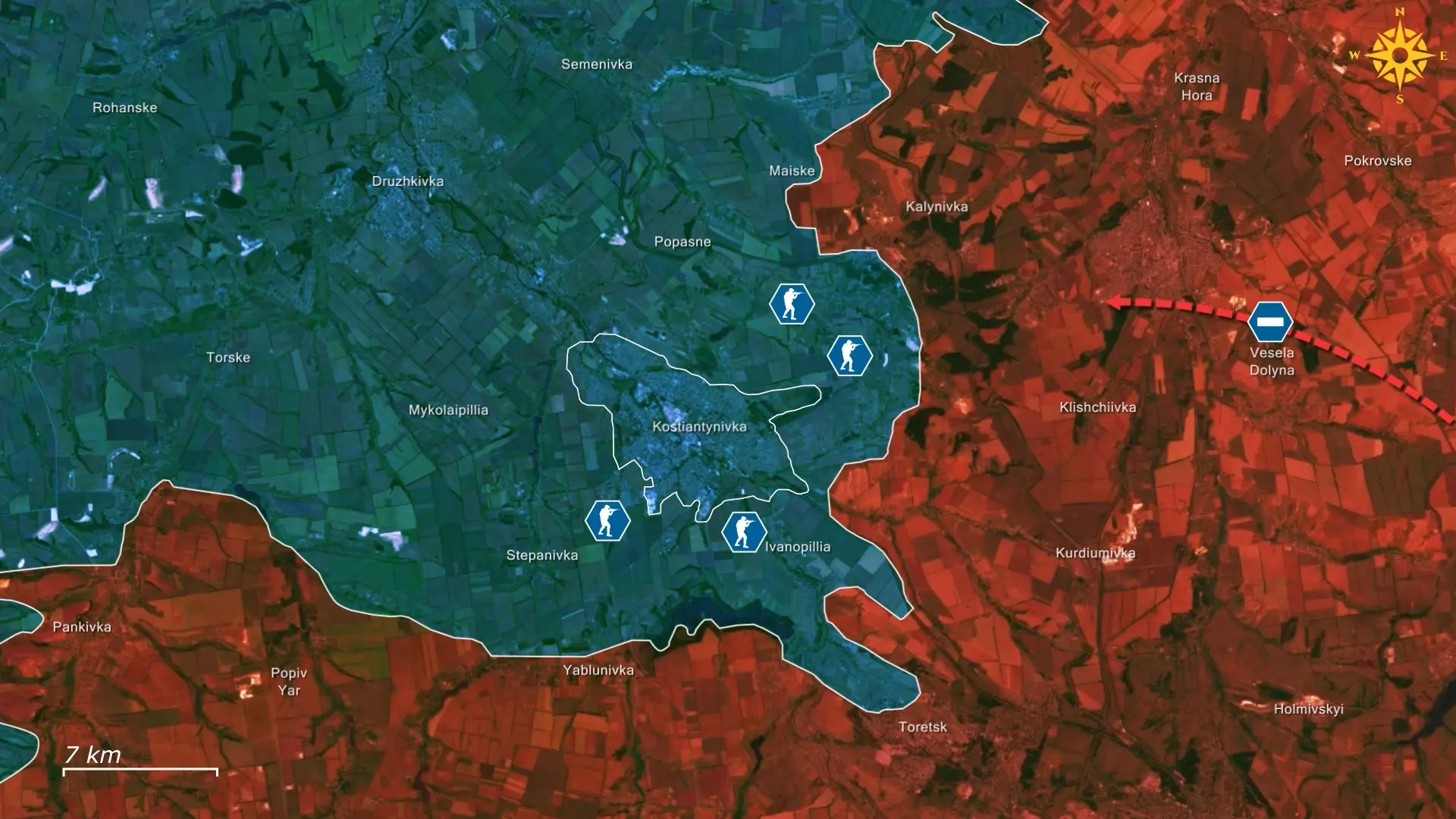
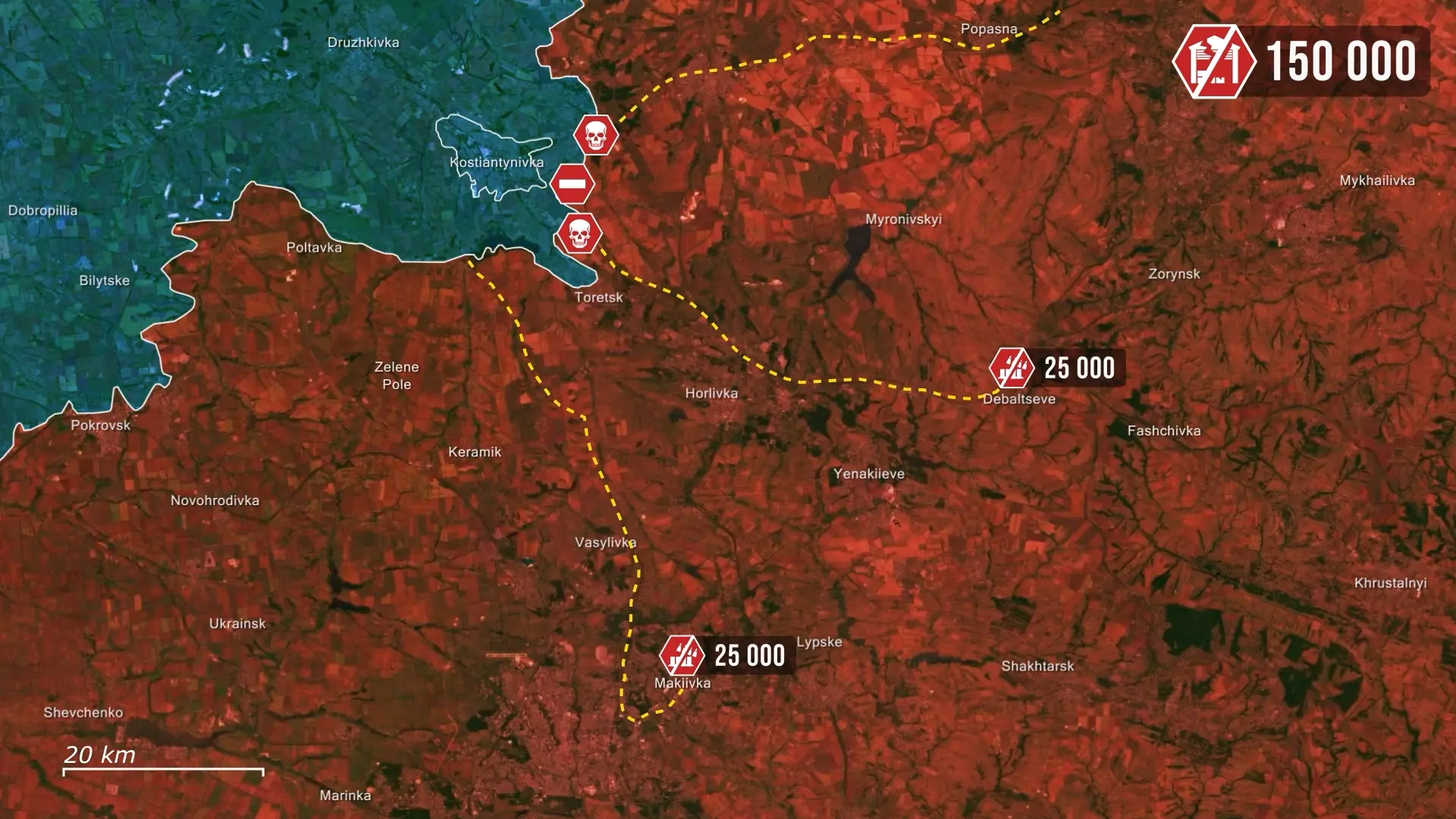
The Russian plan relied on a familiar but resource-intensive approach: a two-pronged pincer maneuver designed to exhaust Ukrainian defenses through constant pressure. One main vector, containing several smaller routes of attack, was planned from the east and southeast, using Kurdiumivka as a staging hub. From there, Russian forces intended to advance along the road connecting several smaller settlements, taking advantage of the more densely packed road network. These asphalt connections were central to the plan, allowing faster reinforcement and resupply while minimizing exposure.
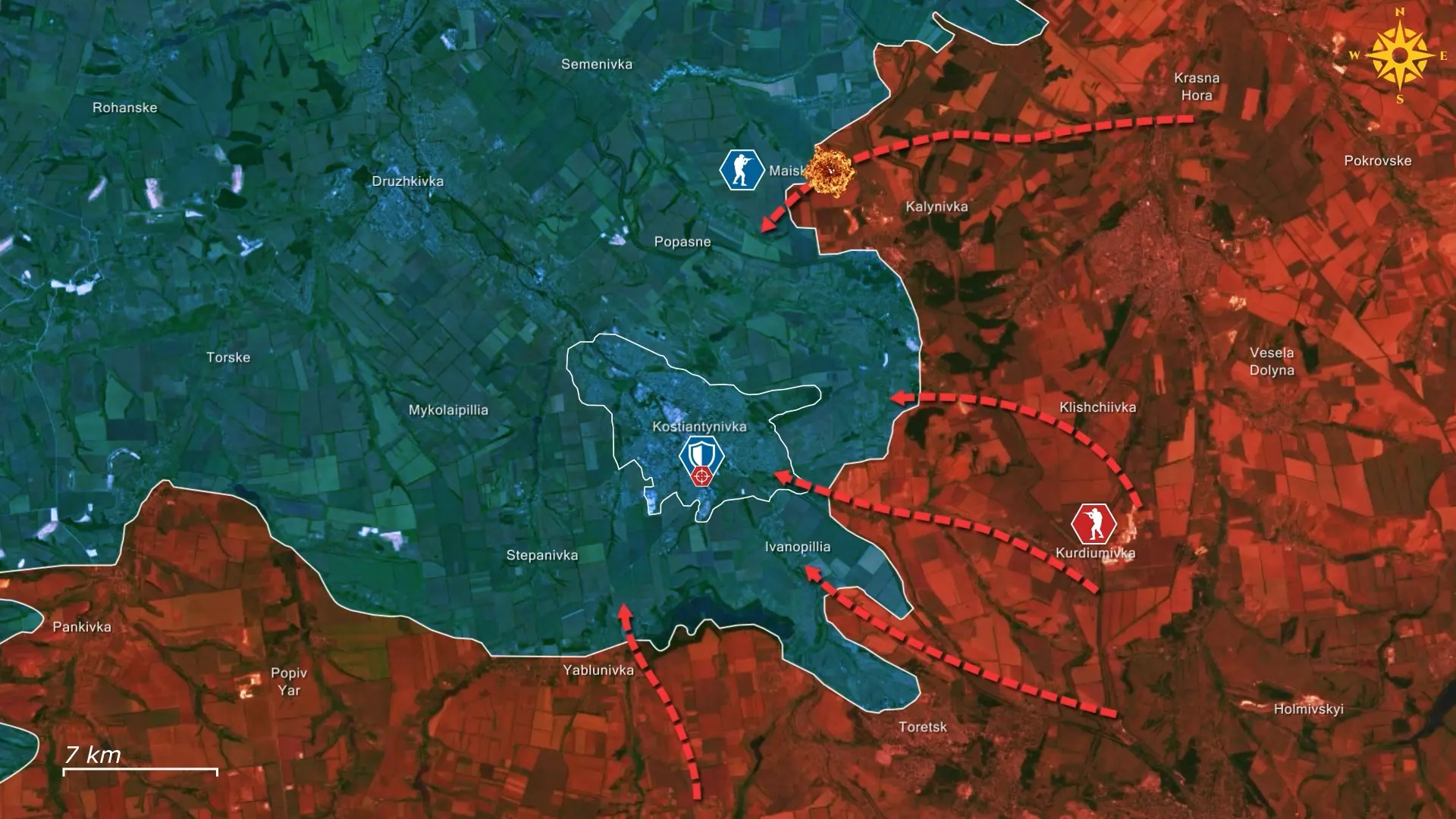
The second attack vector was planned from the north through Maiske. Although Russian forces had repeatedly failed to advance decisively along this axis due to strong Ukrainian resistance, the intent was to keep pressure constant and eventually tighten an encirclement around Kostiantynivka.
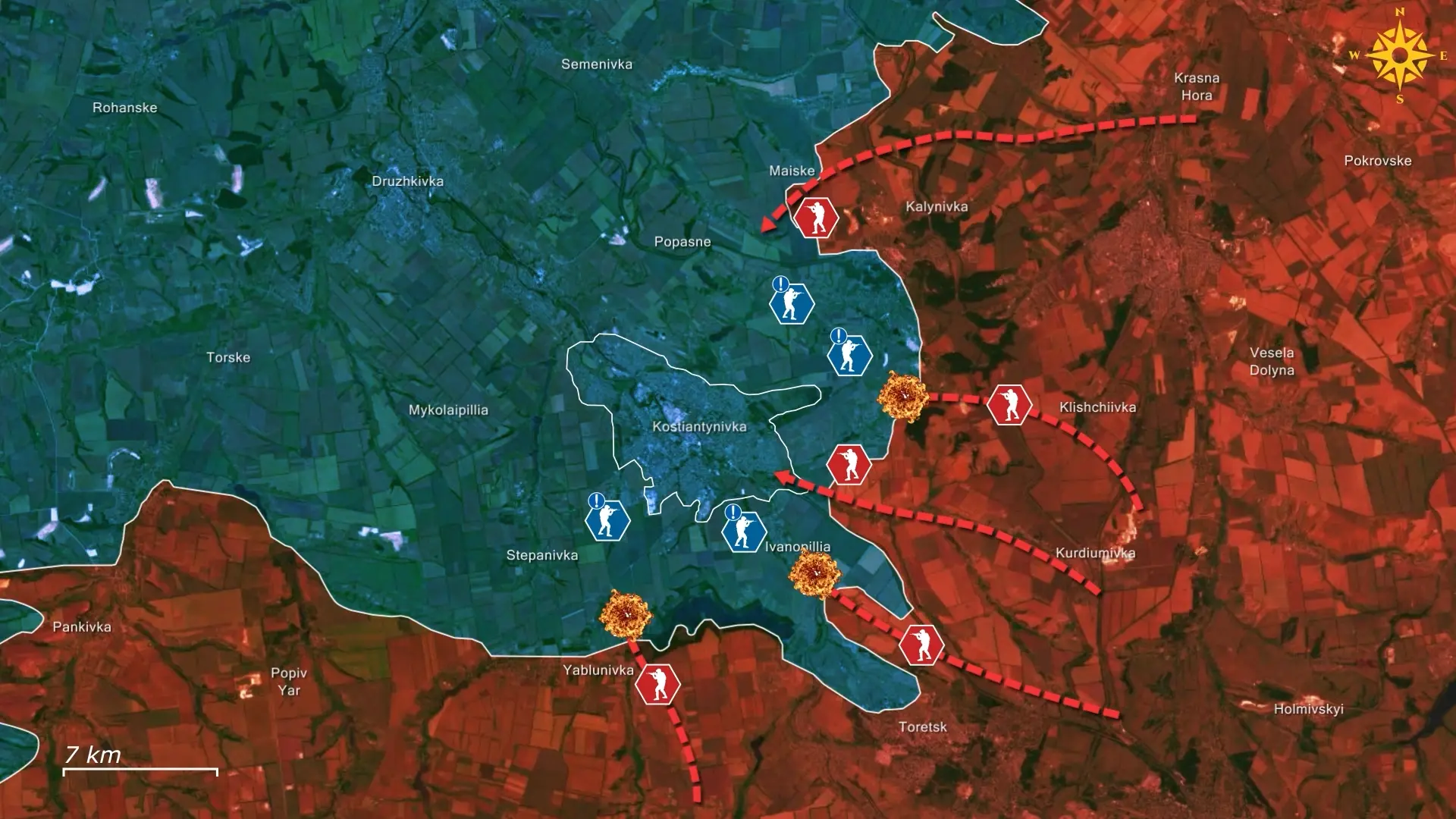
Russian commanders aimed to launch repeated rush assaults, accepting heavy losses, with the goal of pushing small groups of soldiers as far forward as possible. Even if most were killed, any survivors who managed to dig in slightly closer to Ukrainian positions were considered a partial success. Alongside these larger assaults, smaller infiltration groups were sent from multiple directions to stretch Ukrainian attention, dilute defensive fire, and increase the chance of a breakthrough through cumulative pressure rather than decisive maneuver.
However, this entire concept depended on one critical factor: uninterrupted ammunition flow, as the Russian tactic only works if artillery, rocket systems, drones, and infantry weapons can maintain constant, overwhelming fire. Without a sustained ammunition supply, the rush-assault model collapses quickly, as under-equipped troops cannot suppress Ukrainian positions or survive counterfire long enough to gain ground.
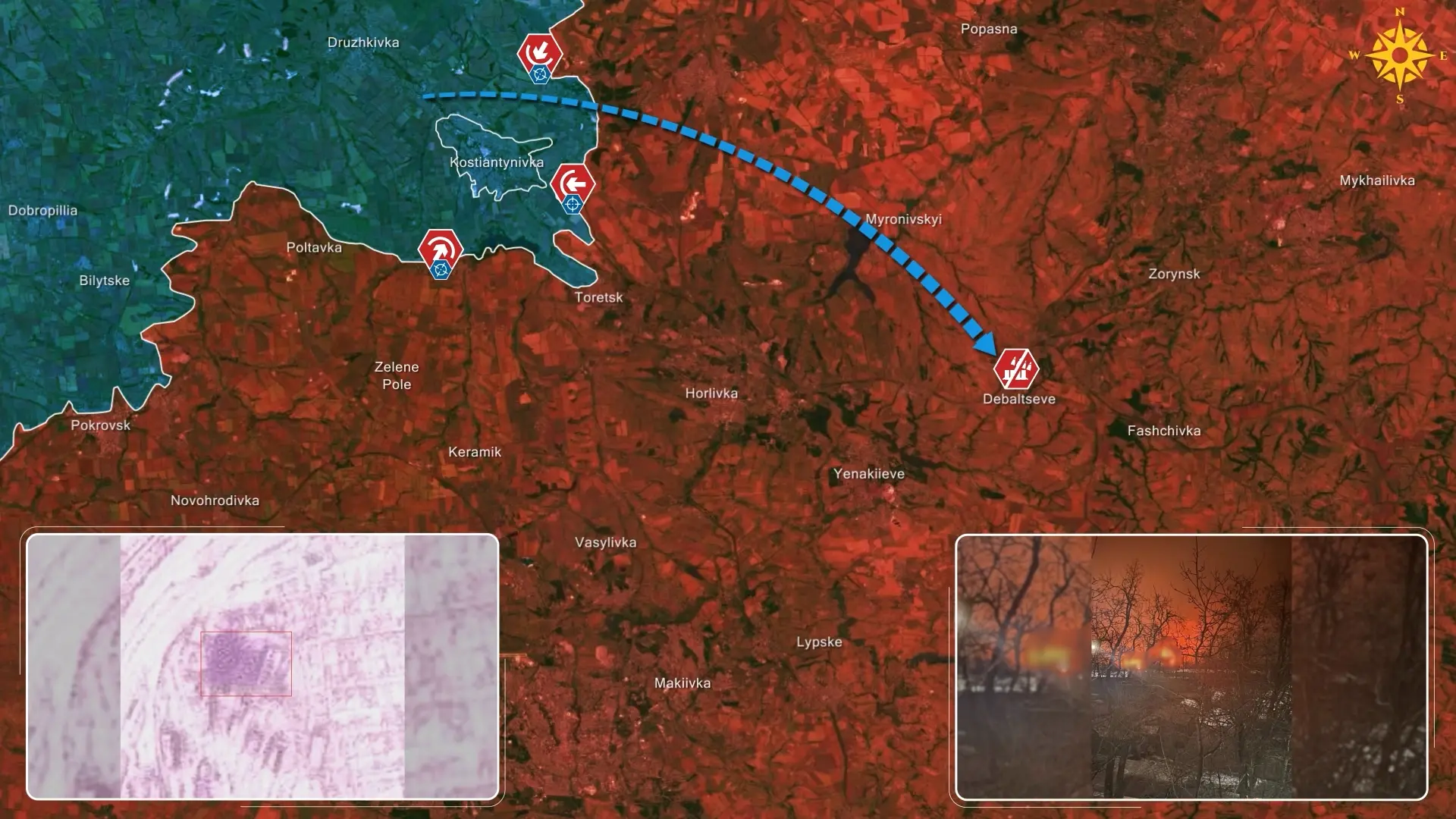
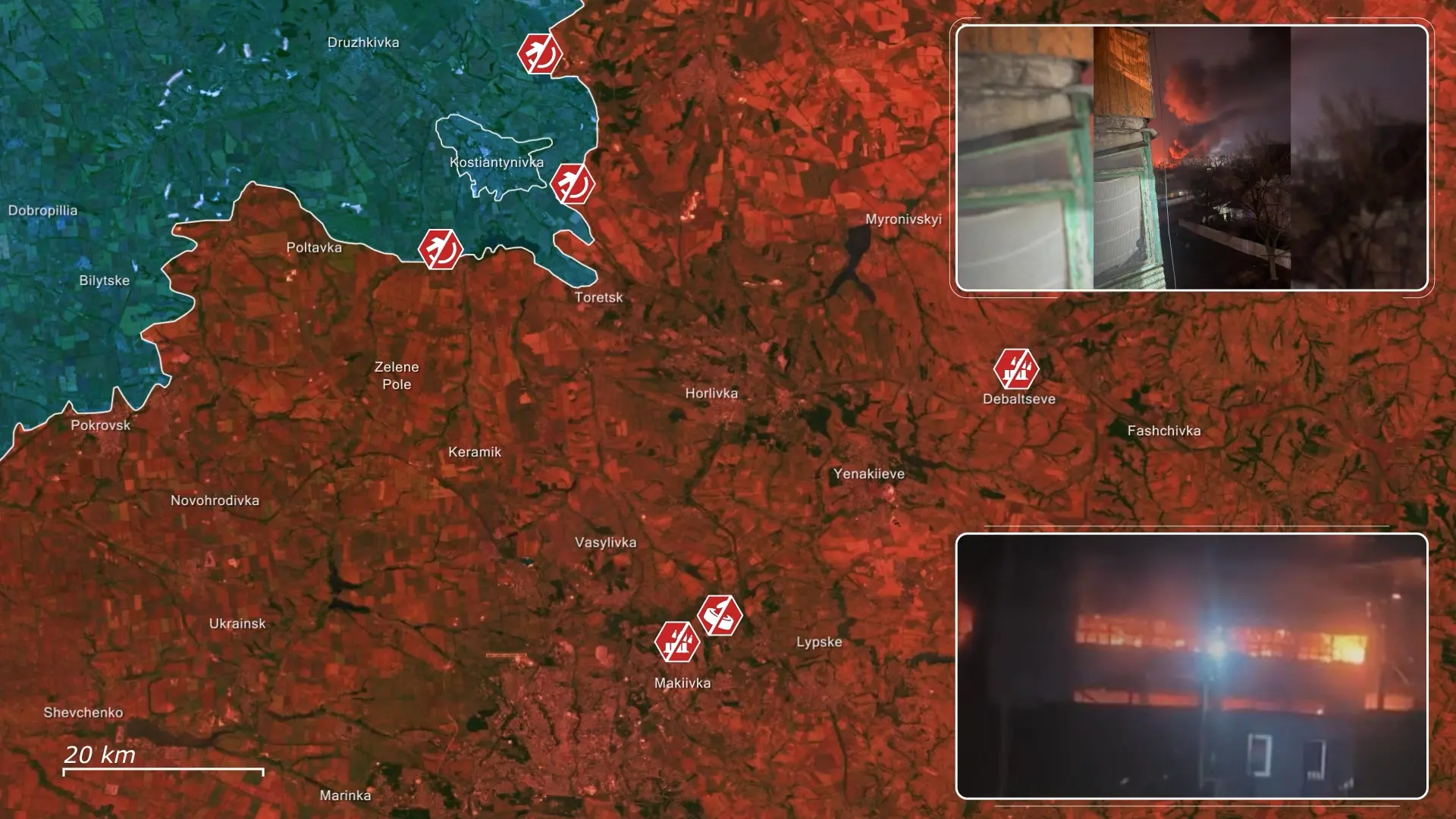
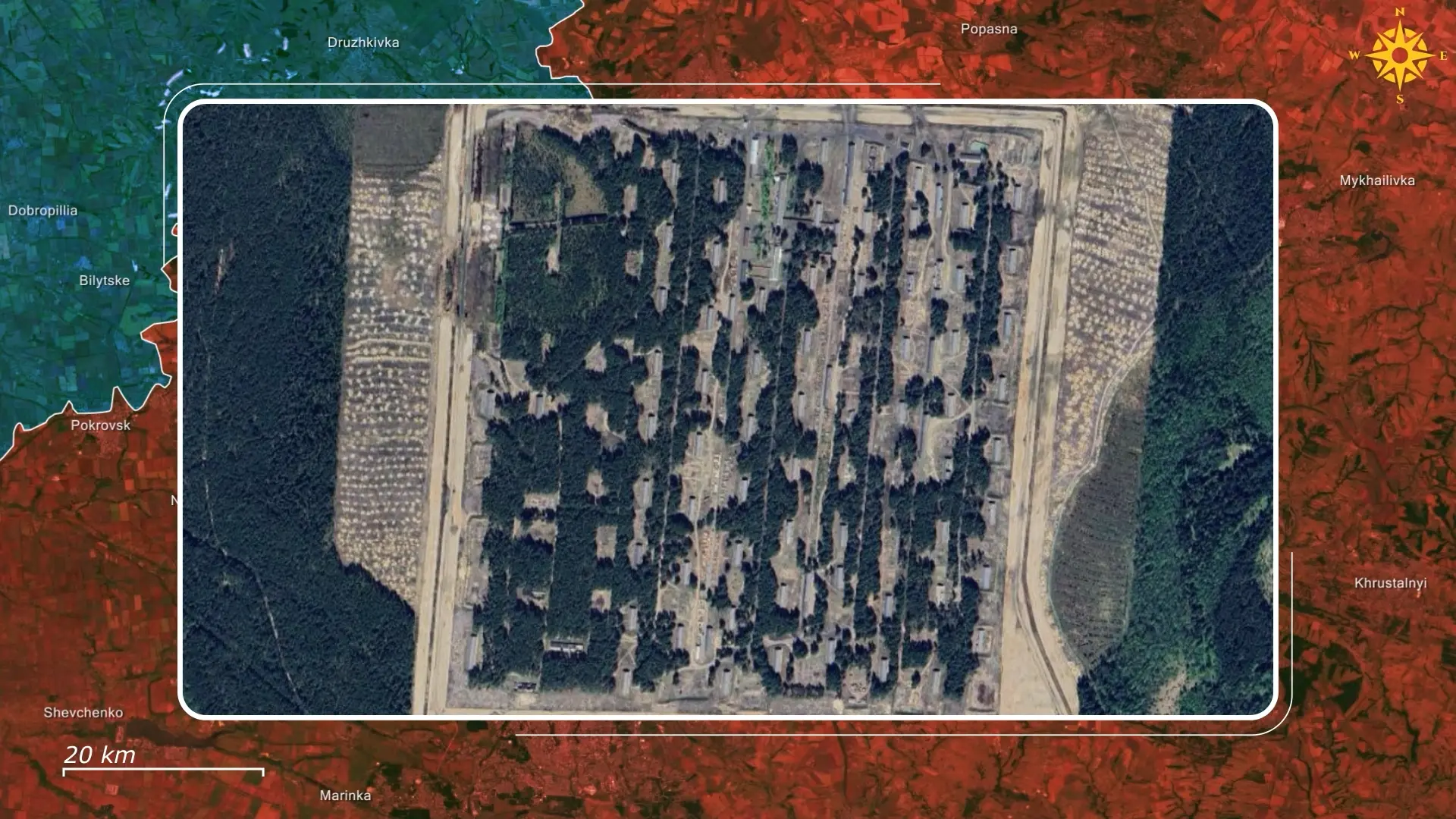
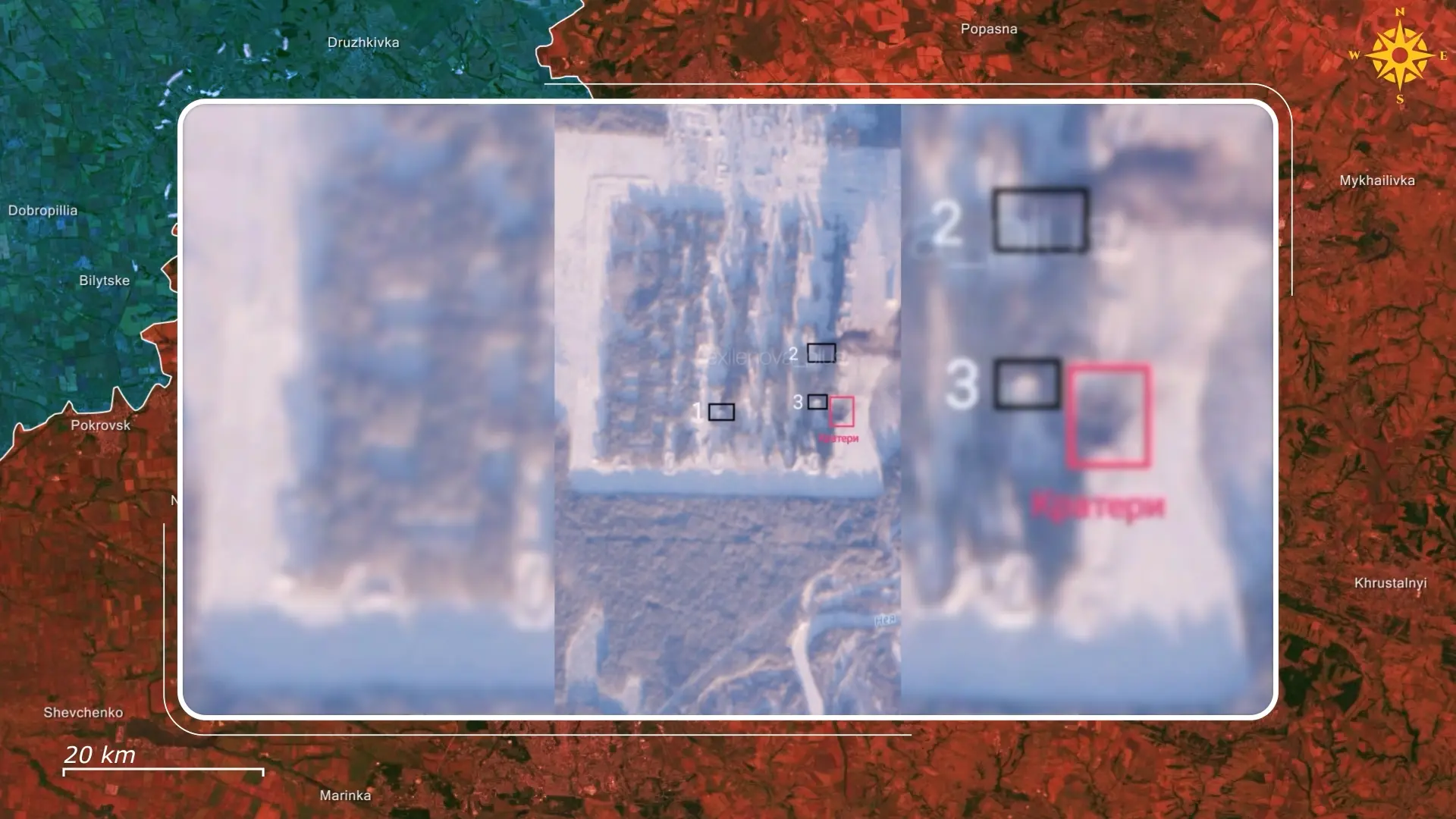
The Ukrainian command identified this dependency and moved to exploit it by launching simultaneous strikes against the depots supplying both pincers and the broader Russian ammunition system behind them. Firstly, to cut off the northern pincer, Ukrainian forces struck an ammunition depot in the Russian-controlled town of Debaltseve in the Donetsk region. Geolocated footage confirmed a powerful explosion followed by large-scale fires and continuous secondary detonations throughout the night. The blast was so severe that the Russian administration urged residents to remain indoors, a clear indicator of the scale of the destruction.
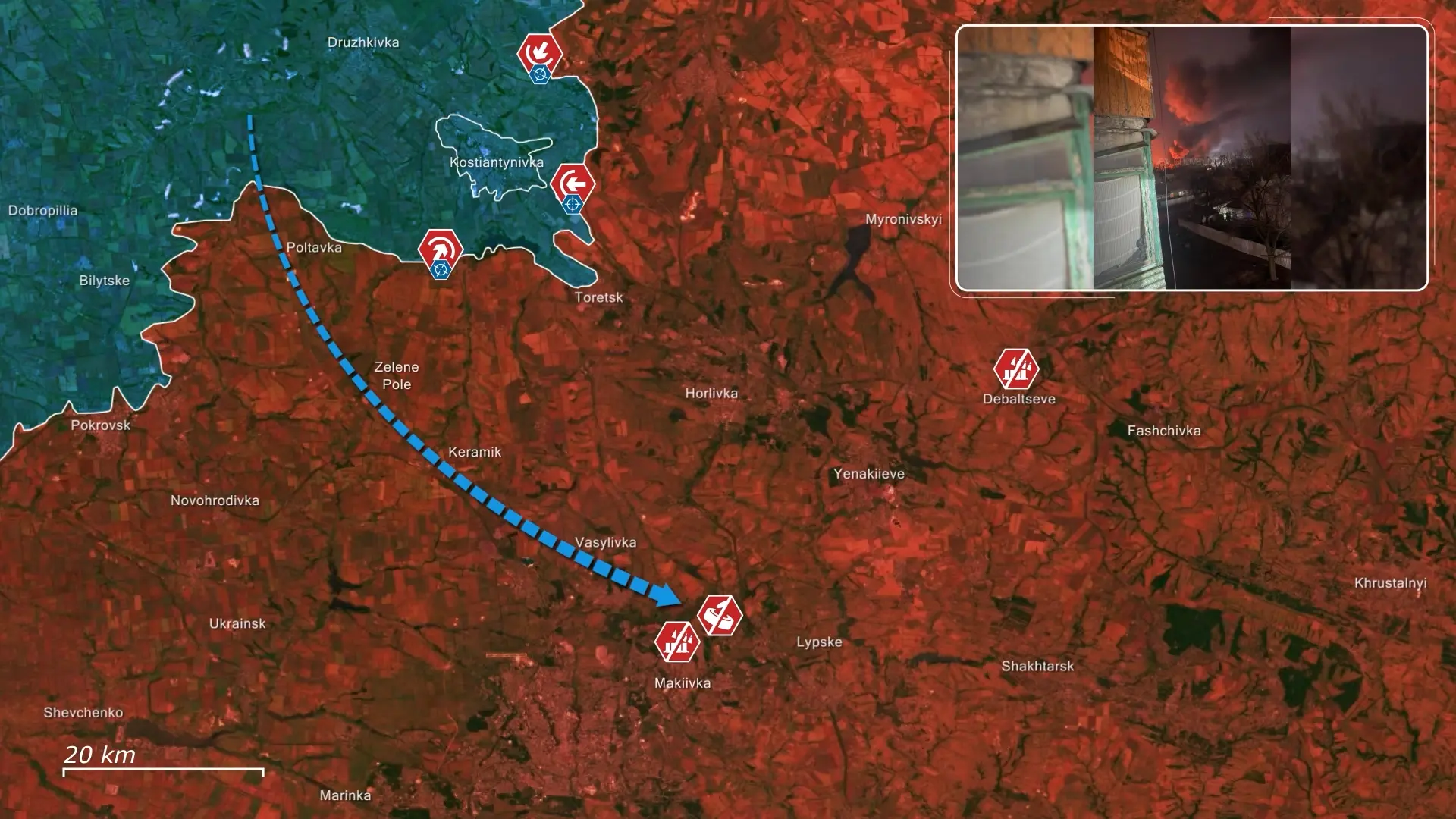
Secondly, Ukrainian drones targeted ammunition facilities supporting the southern pincer. One strike hit a depot in the Russian-controlled city of Makiivka, reportedly containing rocket and artillery munitions. Resident videos showed extensive secondary explosions and prolonged fires, indicating a significant loss of stored munitions.
Another Ukrainian drone strike hit a Russian ammunition depot in the Russian-controlled part of the Zaporizhzhia region the same night, contributing to the overall disruption of southern supply routes, which are feeding Russian forces south of Kostiantynivka.
Simultaneously, Ukraine also struck Russian ammunition capacity at a strategic depth by targeting the 100th Arsenal of Russia’s Main Missile and Artillery Directorate in Kostroma Oblast. This Grau facility is a major long-term storage and preparation site for artillery munitions and missiles serving multiple branches of the Russian military.
The strike caused a fire significant enough to trigger civilian evacuations, disrupted Russia’s ammunition supply chains by creating a bottleneck at the beginning and reduced the combat readiness of frontline units.
The consequences of these strikes are decisive, as field storage sites like those in Makiivka and Debaltseve typically hold around 25,000 tons of ammunition. Destroying even one such site can delay Russian operations in a given direction by one to three months. A damaged Grau arsenal, with a capacity estimated at around 150,000 tons, has even broader effects. Combined, these losses sharply reduce Russian fire intensity, turning planned assaults into under-equipped, poorly supported attacks that are far easier for Ukrainian forces to repel and counter.
Overall, the logistics-focused approach fits Ukraine’s broader strategy of inflicting disproportionate losses to Russian forces. For the defense of Kostiantynivka, systematic destruction of ammunition supplies relieved pressure before the decisive offensive could even begin. Effectively, Ukraine ensured that the battle was decided overnight, without allowing the Russian plan the chance to materialize. Now, Ukrainians must exploit the opportunity the strikes created, striking concentrations of Russian forces waiting for their supply lines to be restored, and delaying the restoration outright by making the strike campaign last longer than the Russians can survive.
As a Partner and Co-Founder of Predictiv and PredictivAsia, Jon specializes in management performance and organizational effectiveness for both domestic and international clients. He is an editor and author whose works include Invisible Advantage: How Intangilbles are Driving Business Performance. Learn more...





1 comments:
Geometry Dash shaped my discipline by punishing unnecessary movement. Precision emerged through limitation.
Post a Comment