Ukraine Risky Counterattack In Zaporizhzhia Paying Off More Than Expected
Elon Musk gave Ukraine a big opportunity and the Ukrainians have seized, despite the risk it entailed.
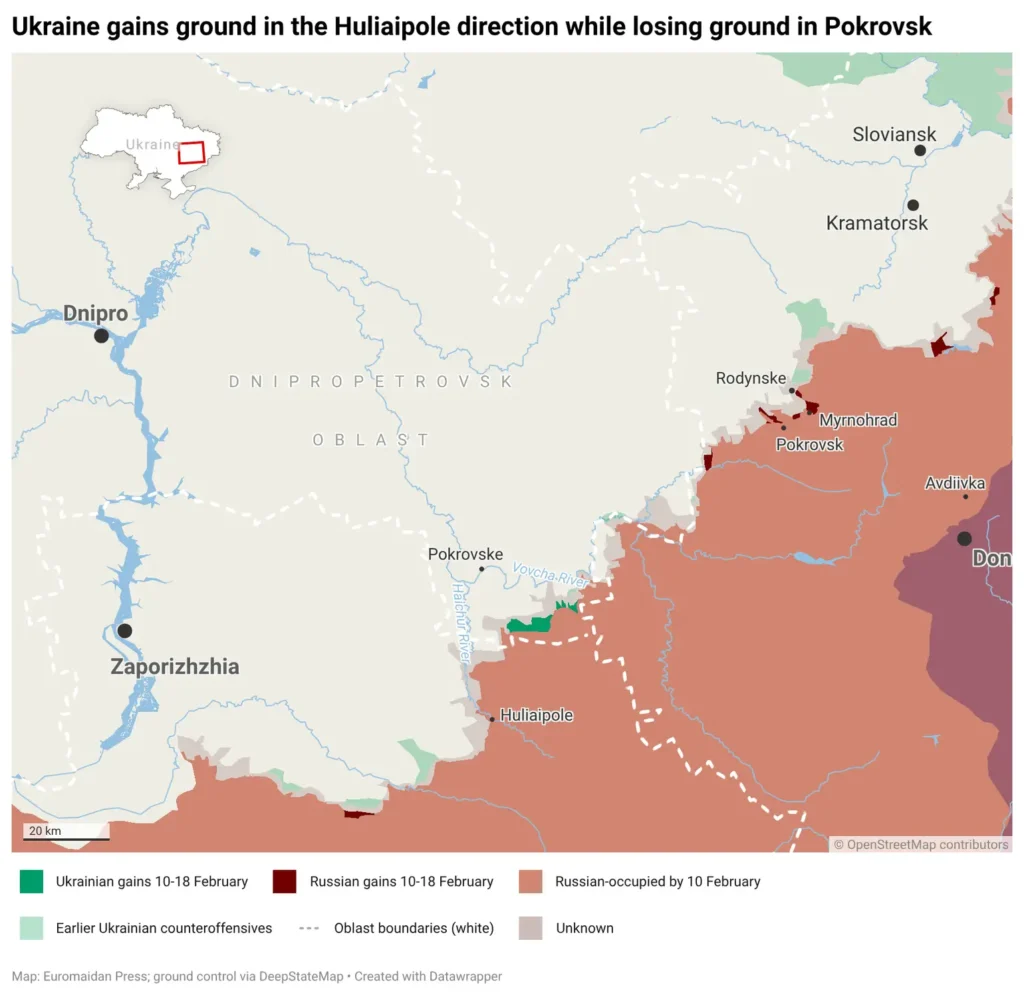
With Russian troops in two southern oblasts disrupted and disorganized by the loss of illegal Starlinks, Ukraine redeployed units from Pokrovsk and sent them south. The result has been significant gains - including the crossing of two rivers which now strengthen Ukrainian lines - while the losses of some settlements north of Pokrovsk have proven unimportant. This is another smart strategic decision by the Ukrainians, who continue to out-think the Russians in this war. JL
David Axe reports in Trench Art:
Ukrainian forces are advancing in Dnipropetrovsk and Zaporizhzhia Oblasts. Kyiv's choiceto pay for counterattacks around Huliaipole by handing the Russians a few villages north of Pokrovskmakes perfect sense. The tradeoff was only possible because, two weeks ago, Elon Musk bricked Russia's smuggled and stolen Starlink terminals, grounding Russian drones and blinding Russian field headquarters. Ukraine's decision has paid off; its forces have cross two key terrain features in Dnipropetrovsk and Zaporizhzhia Oblasts—the Haichur and Vovcha Rivers—are pushing more armored vehicles into the gray zone between areas of Ukrainian and Russian control. The Russians are off-balance and losing whatever control they recently had over hundreds of square kilometers of the southeast.
Ukrainian forces are advancing in Dnipropetrovsk and Zaporizhzhia Oblasts in the southeast. And they seem to have accepted that the southeastern advances come at a cost farther north in Donetsk Oblast, where the Russians are advancing.
The tradeoff makes sense, however. In counterattacking in the southeast, the Ukrainians are taking pressure off Zaporizhzhia City, which came under renewed threat from the Russian Dnipro Group of Forces after the Russians captured the town of Huliaipole, a critical logistical node 80 km east of Zaporizhzhia, back in December.
By contrast, the gains the Russians have made in recent days in and around the neighboring cities of Pokrovsk and Myrnohrad, 100 km northeast of Huliaipole, merely consolidate Russian control over those cities—and don't really help the Russians advance toward their ultimate objectives in Donetsk Oblast: the twin cities of Kramatorsk and Sloviansk, 50 km to the northeast.
Russian forces' path toward Zaporizhzhia was largely open and devoid of major fortifications. All the Russians' paths toward Kramatorsk are, on the other hand, extremely well-fortified.
For that reason, Kyiv's choice—to pay for counterattacks around Huliaipole by handing the Russians a few villages north of Pokrovsk and Myrnohrad—makes perfect sense.
The tradeoff was only possible because, two weeks ago, billionaire Elon Musk finally bricked Russia's smuggled and stolen Starlink terminals, grounding many Russian drones and blinding many Russian headquarters.
At the same time, a paranoid Kremlin, desperate to suppress dissent and open communication, blocked military access to popular social media, including the Telegram app. Many Russian troops used Telegram's messaging function to communicate along the front line.
The effect of the twin moves was to cast Russian surveillance, aerial attack and command and control into disarray all along the 1,200-km front of Russia's 48-month wider war on Ukraine. Sensing opportunity, Ukraine reorganized its forces—and went on the attack in several key sectors.
On the attack
The heaviest counterattacks were in the southeast along a 35-km sector stretching from Huliaipole in the south to Pokrovske in the north. That was, until recently, one of Ukraine's most vulnerable sectors. The Russian Dnipro Group of Forces held a five-to-one manpower advantage in the area and kept finding and exploiting gaps in Ukrainian defenses, resulting from poor coordination of command and control between Ukraine's territorial troops (who defend) and assault troops (who attack).
The Russians were making steady progress toward what was once a secure bastion for the Ukrainians: Zaporizhzhia City. That city is farther from the front line of Russian troops than Kramatorsk is, but there was a time late last year when Zaporizhzhia was genuinely at greater risk of a near-term Russian siege.
That has changed. Rushing forces south toward the Huliaipole sector, the Ukrainians pushed back against the comms-crippled Russians starting two weeks ago. A powerful force of Ukrainian airborne and assault brigades attacked from the west and north, aiming to recapture Huliaipole while also squeezing the Russian 36th Combined Arms Army holding advantageous positions east of Pokrovske.
Map: Euromaidan Press, based on DeepStateMap
A knocked-out ex-Australian M-1 Abrams tank, visible in the video feed of one of the few drones the Russians were able to sortie against the attacking Ukrainians, spoke to the number of elite troops the Ukrainians had sent south. The only known user of the 49 M-1s that Australia donated to Ukraine last year is the 425th Assault Regiment.
The 425th Assault Regiment had, until recently, been fighting an active defense just north of Pokrovsk. Now at least some of the regiment is counterattacking around Huliaipole. Kyiv robbed the Pokrovsk sector to boost the Huliaipole sector.
It was a hard decision but one that has paid off. Ukrainian forces have cross two key terrain features in Dnipropetrovsk and Zaporizhzhia Oblasts—the Haichur and Vovcha Rivers—are pushing more armored vehicles into the wide gray zone between clear areas of Ukrainian and Russian control.
The Russians are off-balance and losing whatever control they recently had over hundreds of square kilometers of the southeast. All it cost Ukraine was a bit of terrain north of Pokrovsk and Myrnohrad that it was probably bound to lose anyway, and which matters little for the outcome of the major battles to come.
Creative Digital Marketing! I really appreciate how you highlighted the importance of blending creativity with data-driven strategies. In today’s competitive online space, brands that focus on storytelling, engaging visuals, and personalized customer experiences are the ones that truly stand out.
As a Partner and Co-Founder of Predictiv and PredictivAsia, Jon specializes in management performance and organizational effectiveness for both domestic and international clients. He is an editor and author whose works include Invisible Advantage: How Intangilbles are Driving Business Performance. Learn more...




1 comments:
Creative Digital Marketing! I really appreciate how you highlighted the importance of blending creativity with data-driven strategies. In today’s competitive online space, brands that focus on storytelling, engaging visuals, and personalized customer experiences are the ones that truly stand out.
Post a Comment