Russian Infiltration Troops Systematically Eliminated By Ukraine's Assault Forces
Russia can no longer accumulate the forces necessary to launch large scale offensives. Instead, they are attempting to infiltrate small groups of soldiers through the drone dominated gray zone in order to establish defensible outposts.
But the problem for these isolated Russians is that Ukraine has developed a counterstrike strategy which relies on an electronic surveillance connected to quick-response assault forces who can be deployed to root out and eliminate the relatively defenseless Russians, who lack sufficient firepower, supplies or access to reinforcement. The result is that the Russians are usually detected and destroyed before they can establish a significant presence. JL
RFU News reports:
Ukrainian forces are clearing Russia’s infiltrations, eliminating them before they can establish meaningful footholds. Russia suffers from the same Ukrainian resource shortage it is trying to exploit: it lacks enough manpower, armor and logistics to launch a high-intensity offensive. Its small groups may enter territory, but they struggle to hold it because once detected, they have little firepower or reinforcements. Ukraine does not attempt to fill every gap with soldiers. Instead, recon drones observe approaches. Once infiltrators are detected, FPV drones, artillery, and assault teams engage them, with quick-response units ready to deploy across a wider front, holding the entire border with far fewer men. Ukraine has replaced a physical defensive line with a surveillance-and-strike network, which makes it an observable kill zone.
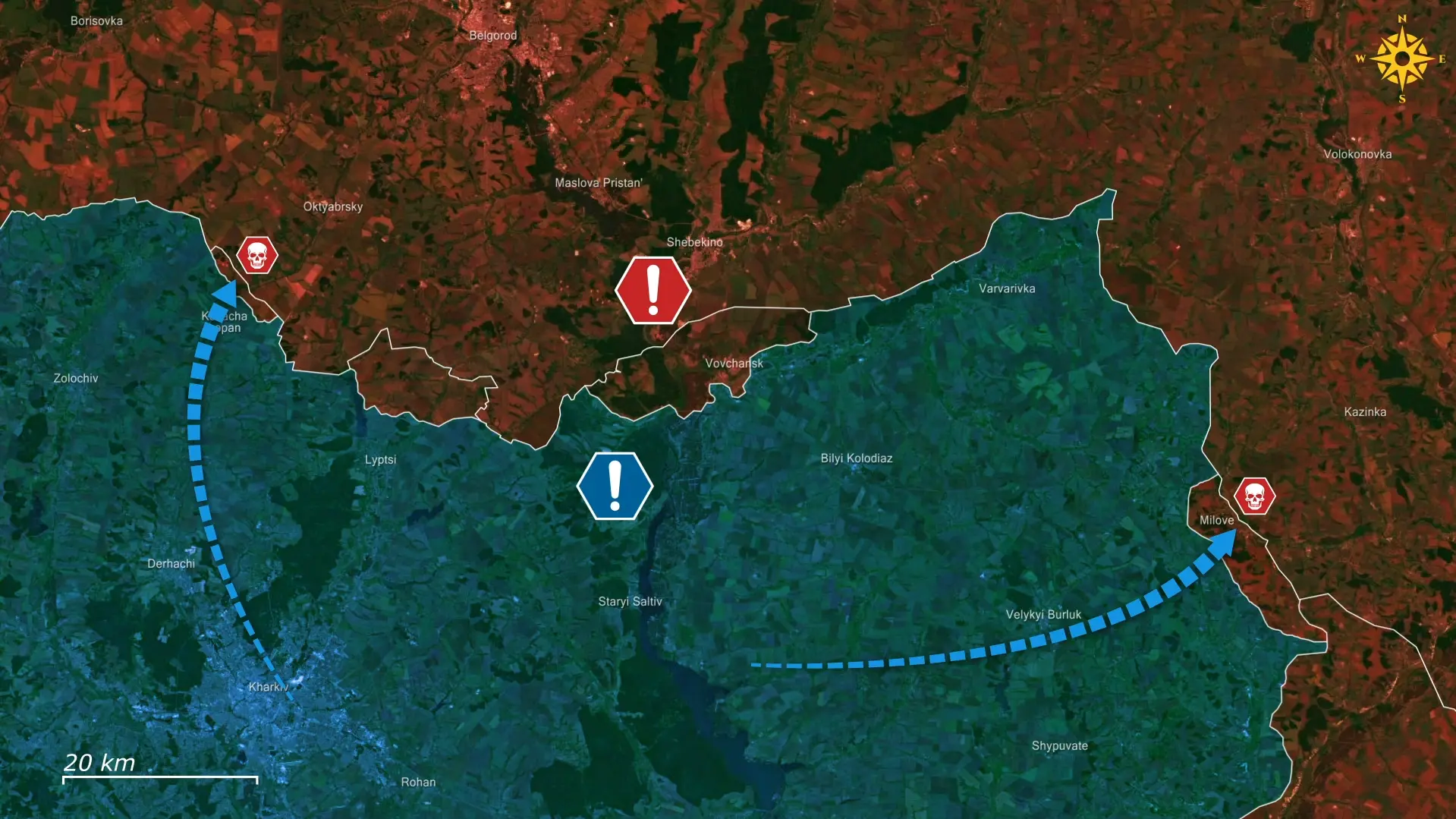
Ukrainian forces are systematically clearing Russia’s border infiltrations in Kharkiv Region, eliminating one assault group after another before they can establish meaningful footholds. Despite both armies suffering from manpower shortages, their two approaches to the fighting on the international border show how drastic the difference is.
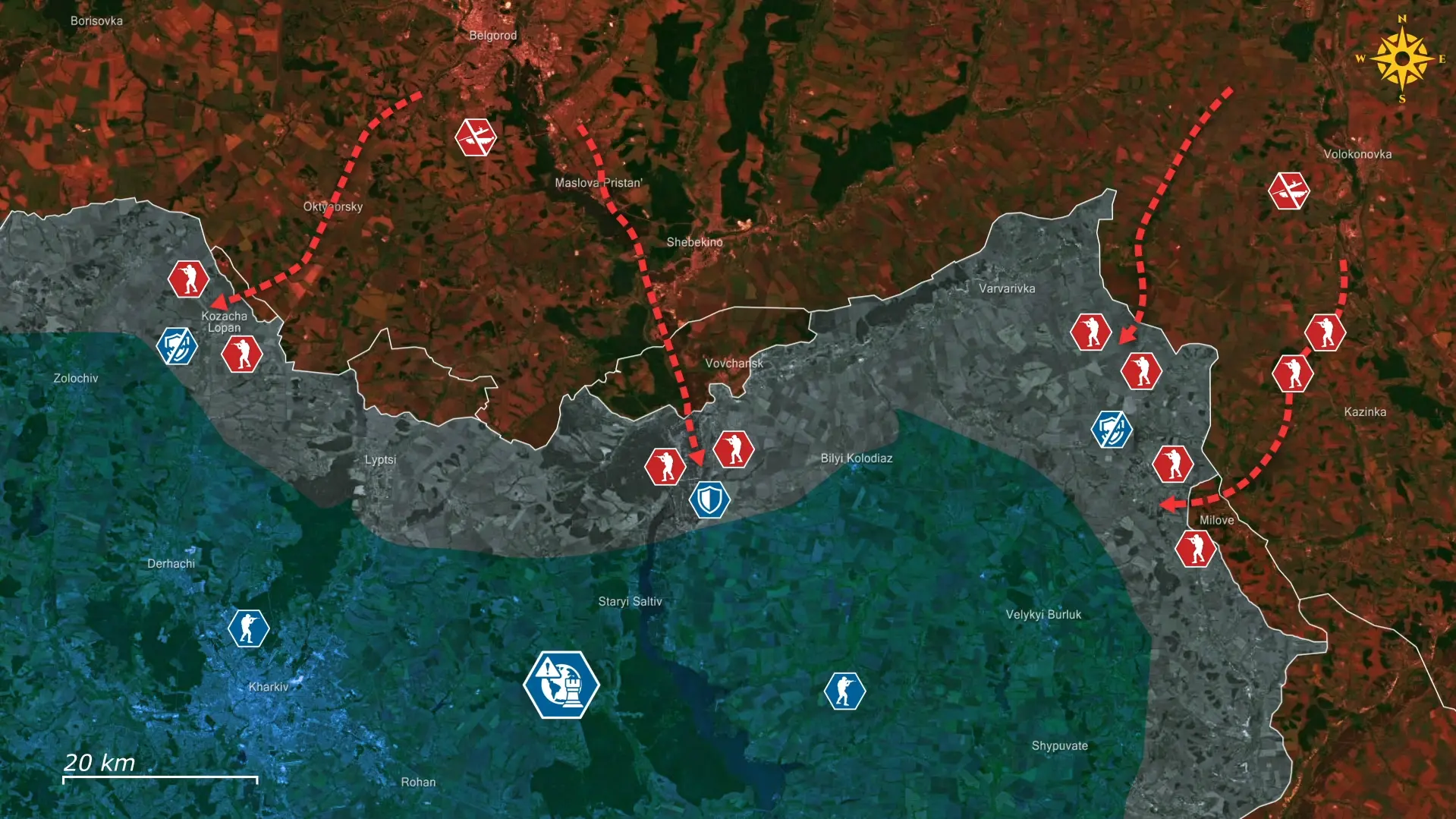
Russia’s objective is to create so-called buffer zones along the border, pushing Ukrainian forces further away, stretching Ukrainian reserves, and bringing more Ukrainian territory within artillery range. Instead of launching major offensives, for which the Russians lack troops and equipment, Russian forces probe weak sections with groups often numbering just two to five soldiers. They move through forests, lightly defended roads, and villages, sometimes even wearing civilian clothing, hoping to establish positions that can later receive reinforcements.
This Russian tactic exploits an unavoidable problem, as Ukraine cannot physically defend every meter of its enormous northern border during wartime. Placing infantry along every forest, field, and crossing would consume huge numbers of soldiers that are needed elsewhere on the front. Russia therefore searches for gaps for infiltrators to move quickly, as a tiny penetration can theoretically force Ukraine to react and divert even more reserves from other hot areas on the front line.
However, Russia suffers from the same resource shortage it is trying to exploit. Moscow lacks enough available manpower, armor, engineering equipment, and logistics to launch a high-intensity offensive across the Kharkiv border. Its small groups may enter territory, but they struggle to hold it because once detected, they have little firepower and no reinforcements. The Russian command is essentially hoping that Ukrainian forces will react slowly, but increasingly, their hopes are fruitless.
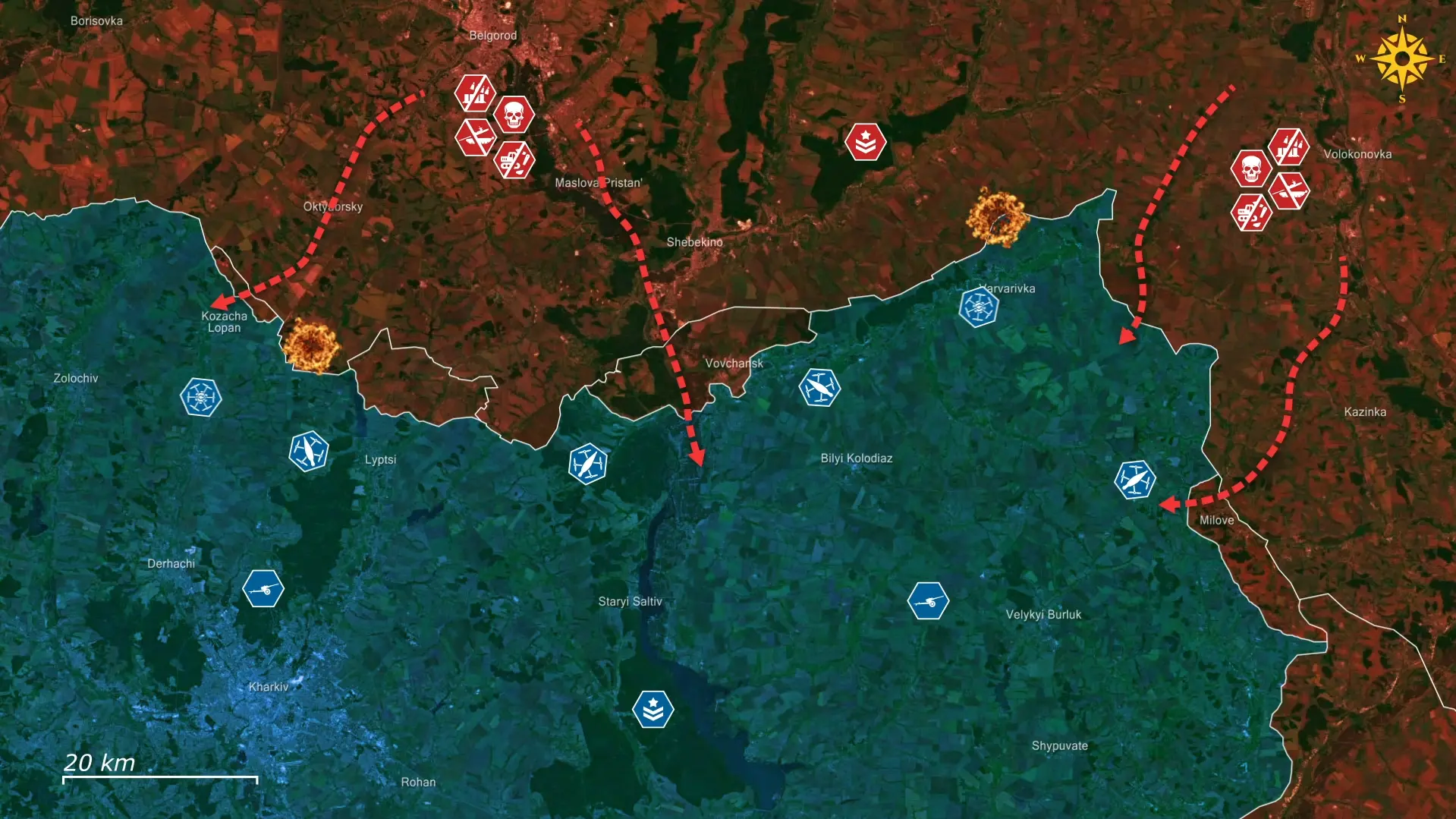
The two sides have therefore approached their manpower limitations differently. Russia continues sending small groups through gaps at ineffective intensity. Ukraine, meanwhile, does not attempt to fill every gap with soldiers. Instead, reconnaissance drones continuously observe roads, forests, settlements, and border approaches. Once infiltrators are detected, FPV drones, bomber drones, artillery, and assault teams engage them, with Ukrainian quick-response units ready to deploy across a much wider front, holding the entire border with far fewer men successfully. Ukraine has effectively replaced a continuous physical defensive line with a surveillance-and-strike network. As a result, even though Russia exploits empty space, Ukraine makes it an observable kill zone.
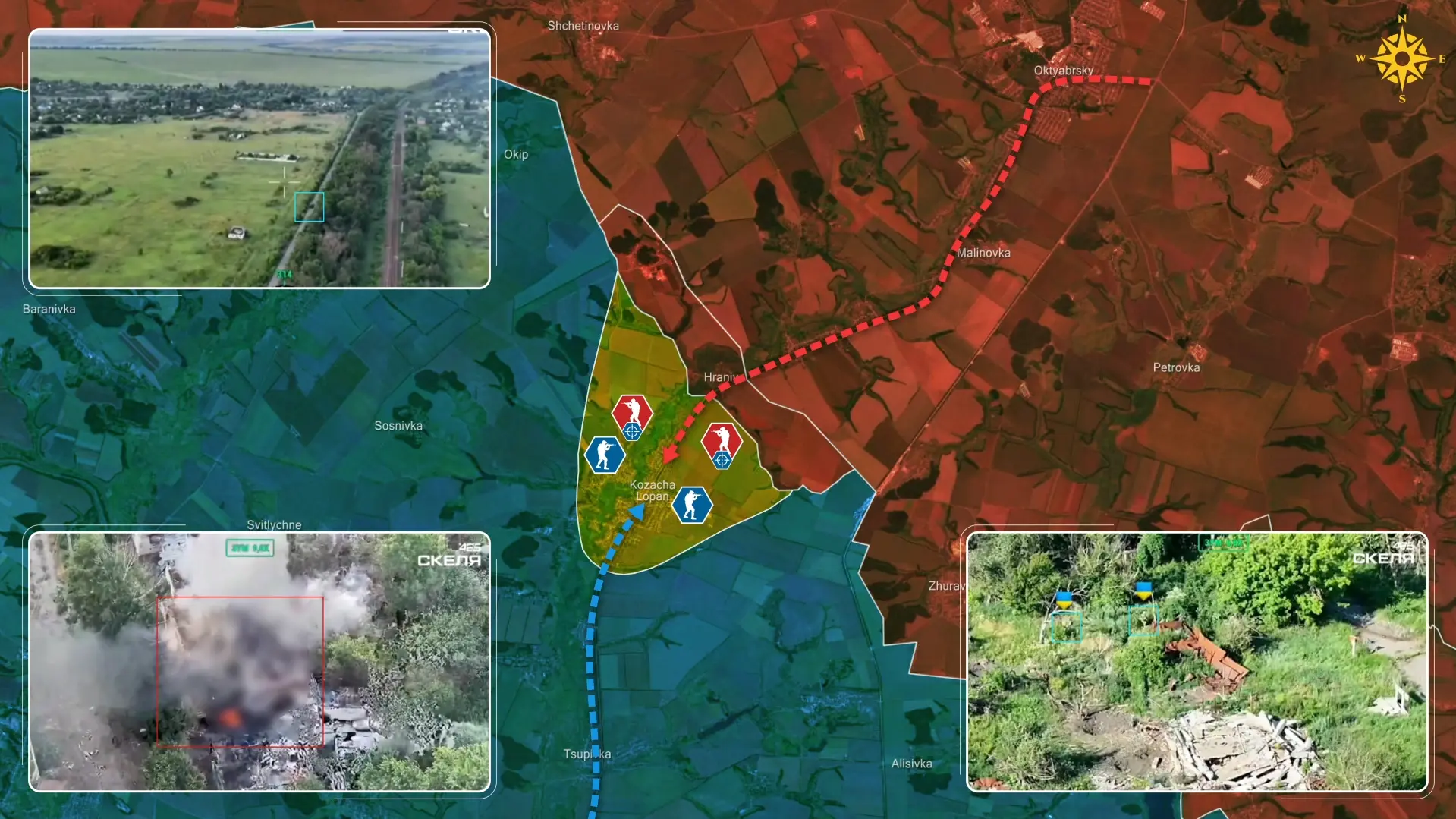
The recent Russian infiltration attempts near Kozacha Lopan demonstrated this approach clearly, as several Russian groups of two or three soldiers each crossed the border using the main road. Ukrainian drone surveillance located them almost immediately, after which assault troops from the Ukrainian Skala assault unit planned the clearing mission carefully and moved in toward the breach on ATV on the next day. Artillery first struck Russian hideouts before Ukrainian operators advanced on foot, clearing the survivors and pushing them directly back toward the border. Ukrainian reinforcements then secured the area, while octocopters and FPV drones subsequently attacked the Russian forces supporting the infiltration from inside Russia, destroying personnel, movement routes, rear positions, and an armored vehicle.
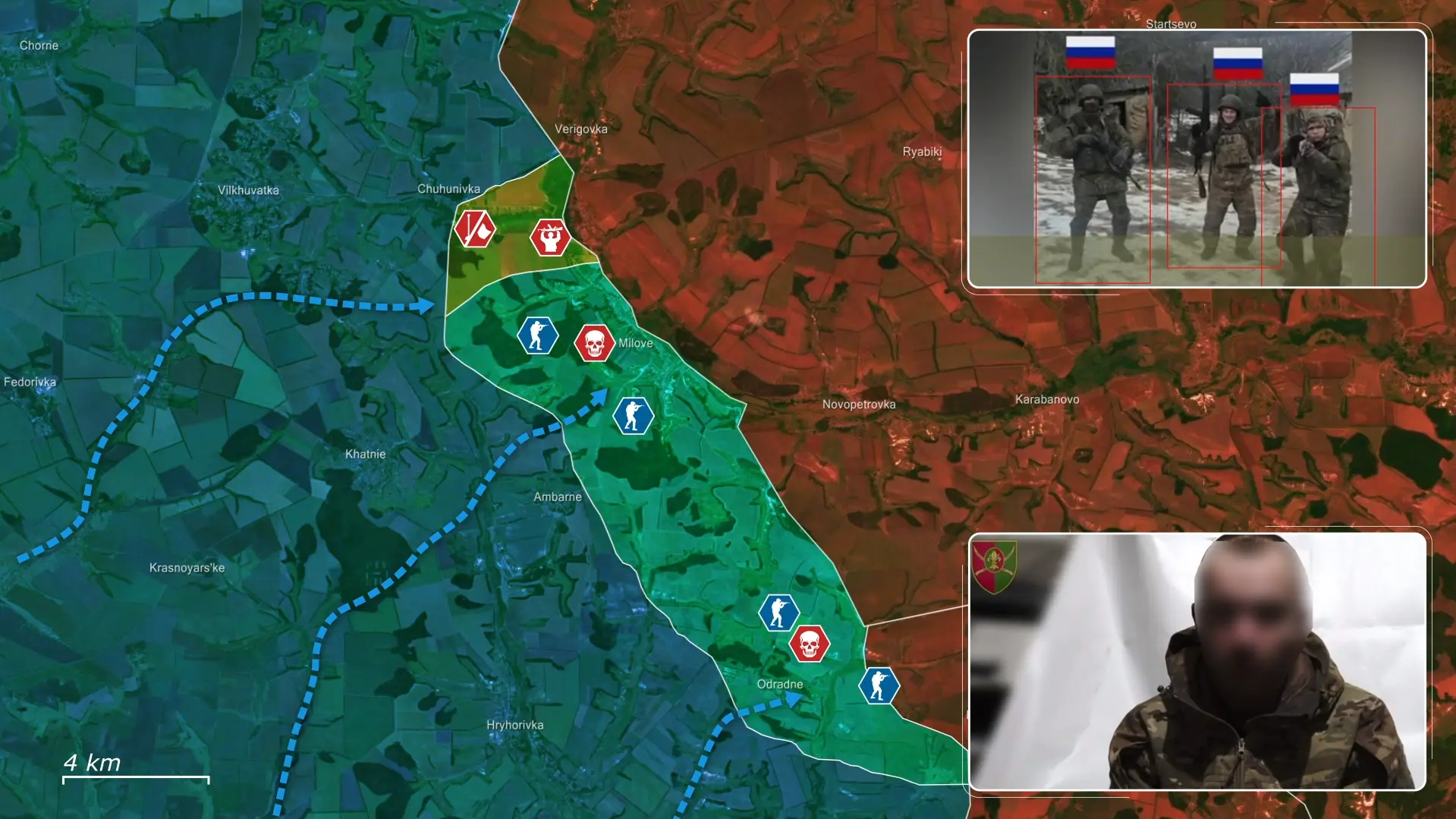
The same pattern unfolded around to the east, near the settlements of Odradne and Milove, where Russian forces infiltrated along three vectors, attempting to establish positions and dig into the forests surrounding the settlements that could provide cover. They were spotted almost immediately, after which Ukrainian drones dropped grenades onto their positions, FPV drones attacked troops attempting to change positions, and Ukrainian assault teams advanced on foot to clear the fortified positions, tree lines, and strongpoints. One video shows Ukrainian soldiers pouring a flammable substance into a trench, setting the enemy on fire to flush them out of their hideout. Ukrainian units recaptured Odradne and nearby territory, with Russian forces reportedly losing fifty-six soldiers without achieving anything.
At nearby Chuhunivka, three Russians attempted something even more symbolic by entering the settlement simply to film themselves waving a flag as proof of Russian control. It lasted only minutes, as Ukrainian forces captured them shortly afterward and published footage of their interrogation. Remarkably, Russian troops had attempted similar operations against these settlements two months earlier and were immediately caught then as well, but their command refuses to learn.
Overall, Russia continues sacrificing tiny infiltration groups, despite knowing it is highly unlikely they will even achieve establishing a foothold, let alone a breakthrough. Their goal is simply to distract Ukrainian forces, but losses of up to three hundred soldiers per square kilometer demonstrate that no one can sneak through anymore. Day-and-night drone surveillance now covers the border approaches, allowing Ukraine to preserve infantry while rapidly directing specialized assault teams and strike drones against every detected breach. With the Russian command unwilling to adapt, it will keep searching for empty gaps, only to discover that Ukraine is watching them all.
As a Partner and Co-Founder of Predictiv and PredictivAsia, Jon specializes in management performance and organizational effectiveness for both domestic and international clients. He is an editor and author whose works include Invisible Advantage: How Intangilbles are Driving Business Performance. Learn more...




0 comments:
Post a Comment