Russian Command Asks Kremlin For More Time As Fortress Belt Attacks Fail
For months, ostensibly 'knowledgeable' observers have been predicting the imminent demise of Kostiantynivka, and with it, the eventual collapse of Ukraine's Fortress Belt. Yet here we are, one day from September and, whaddya know, it remains in Ukrainian hands.
In fact, the Russian high command has now reportedly asked the Kremlin for more time - measured in months - as its attempts to take all of Donbas remain unrealistic. JL
Illia Kabachynskyi reports in United 24:
Russia's political leadership expects the entire Donetsk region to be occupied by December 31, 2026, while the military is asking for more time—until the end of March 2027. (But even) “that is unrealistic." For months, Kostiantynivka has remained one of the most difficult sectors of the front. Neighboring Dobropillia and Druzhkivka also face Russian pressure. Kostiantynivka is one of four major cities in the Donetsk region that together form the region’s defensive “fortress belt”: Kostiantynivka, Druzhkivka, Sloviansk, and Kramatorsk. But despite months of assaults, Kostiantynivka remains under Ukrainian control. Russia did not carry out a single successful mechanized assault.
March 2026 was supposed to mark the beginning of a major offensive, expected to deliver results at least on par with those of 2024-2025. The Russian army had made gains in previous years and planned to build on that momentum, with a specific objective: to capture the entire Donetsk region and gain leverage over Kyiv.
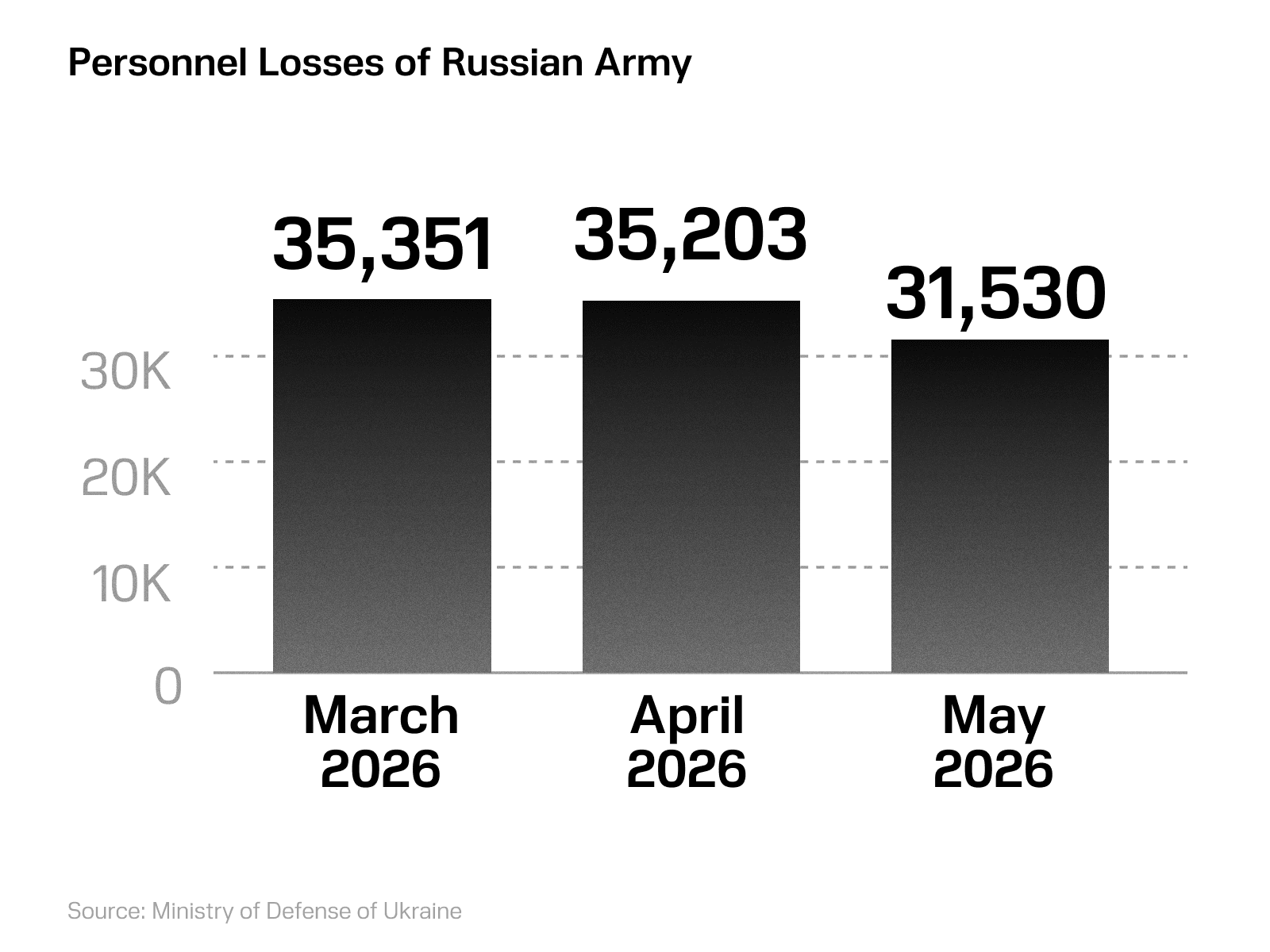
Instead, the first three days of active operations cost the Russian army more than 5,000 troops killed and wounded. By mid-March, it had become clear that there would be no significant advance.
Chart of personnel losses of Russian army from March to May 2026. (Illustration: UNITED24 Media)
Russia’s battlefield losses mount
The pace of losses continued. By the end of March, Russia had lost around 1.3 million troops since the start of the invasion, said the General Staff of the Armed Forces of Ukraine. By the end of August, that figure had risen to 1.48 million killed and wounded. The Russian army is losing soldiers at a record pace: more than 100,000 in the spring and another 100,000 in the summer of 2026.
July 2026 was the bloodiest month of the year for Russian troop losses: 42,860 casualties, the Russian army’s highest monthly toll since January 2025. Overall, Russia lost 238,650 personnel in the first seven months of 2026. At the same time, equipment losses also reached a record high, at nearly 14,000 units in a single month.
Yet Russia did not carry out a single successful mechanized assault. Ukrainian forces have managed to repel every such attack by using drones and organizing effective defenses across different sectors of the front.
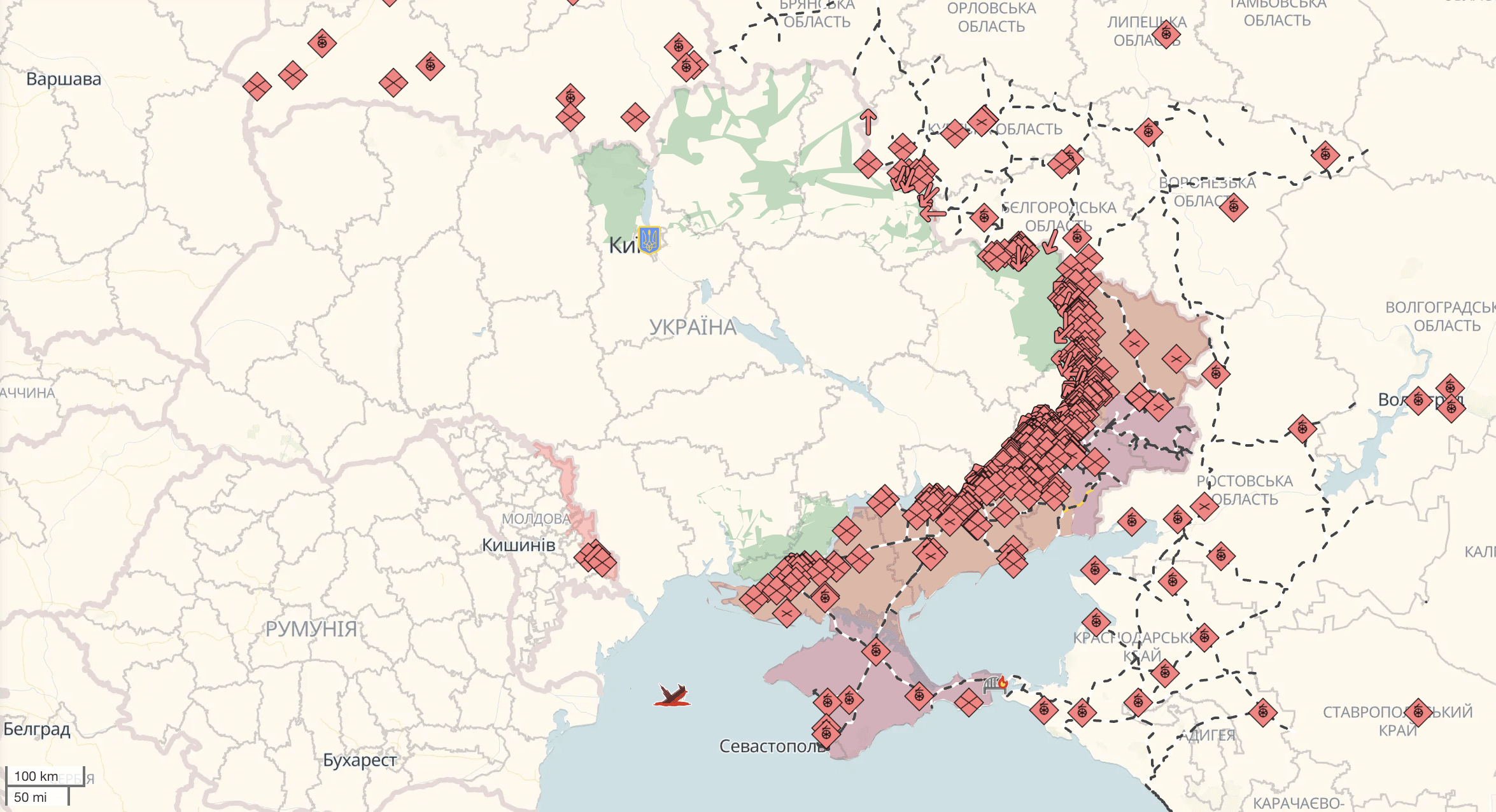
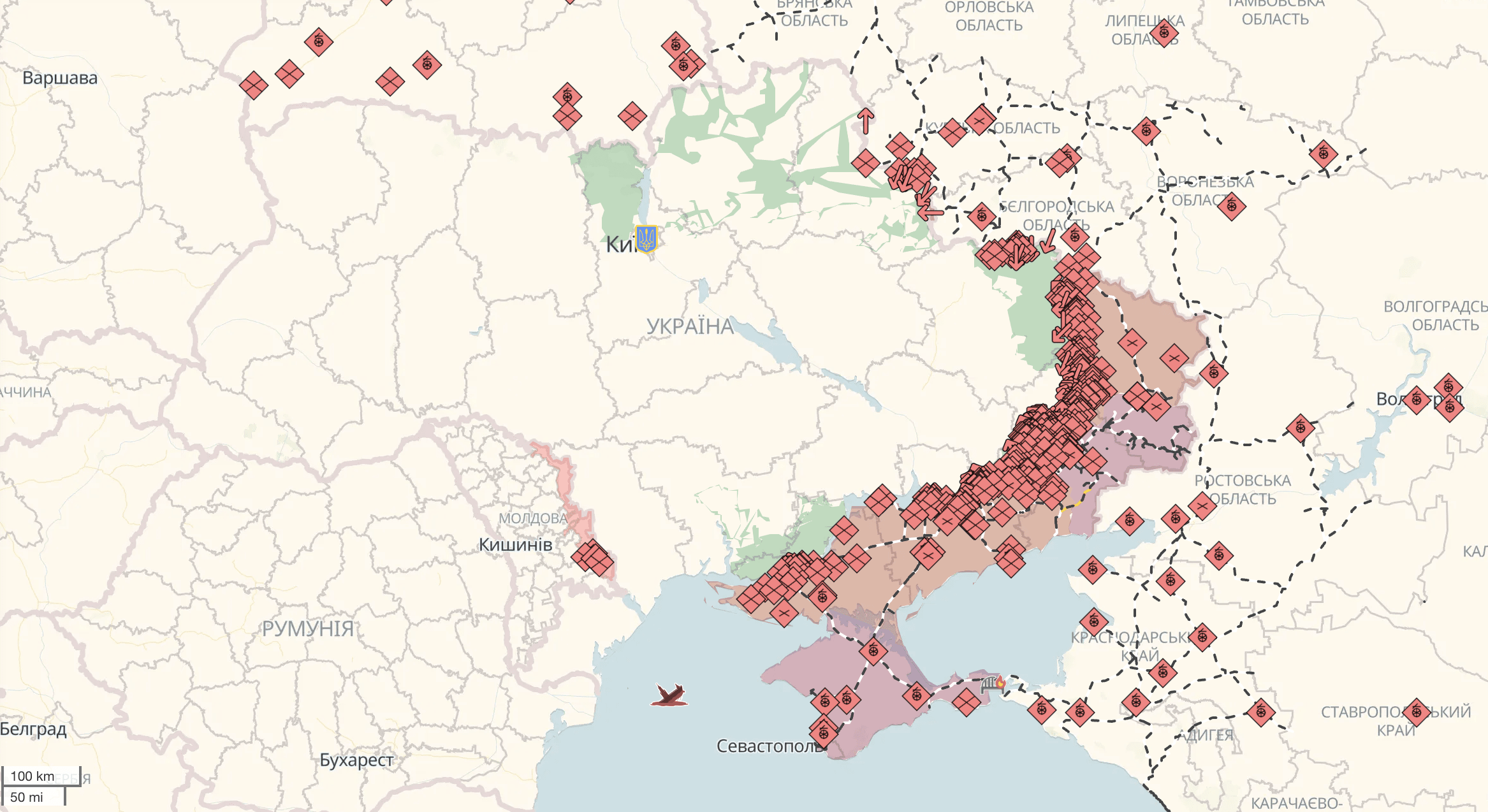
But the clearest measure of the campaign’s failure is not simply the scale of Russia’s losses, but how little territory those losses have gained for the Kremlin.
“We are seeing a trend toward a slowdown in the enemy’s rate of advance,” he said.
In some months, the area captured by Russian forces may amount to only a few dozen square kilometers, according to open-source data, including from Ukrainian open-source intelligence (OSINT) project DeepState.
Map of Russian military advances in Ukraine as of May 30, 2026. (Source: Open-source intelligence (OSINT) project DeepState)Map of Russian military advances in Ukraine as of August 30, 2026. (Source: Open-source intelligence (OSINT) project DeepState)
Ukrainian forces, by contrast, have achieved tangible results. By the end of 2025, they had liberated territory around Kupiansk in the Kharkiv region. In the first half of 2026, the Ukrainian army conducted offensive operations in the south, liberating 745 square kilometers of territory and 26 settlements in the Dnipropetrovsk, Donetsk, and Zaporizhzhia regions.
Ukrainian drones strike at Russia’s plans
One reason for the failure of Russia’s offensive campaign is a shift in the battlefield balance brought about by the saturation of the skies with drones. Ukrainian defenses are now capable of stopping infantry assaults as they approach, before they can develop into mass attacks. Attacks by columns of armored vehicles, which only a few years ago were a primary means of breaking through defensive lines, are now rarely attempted because of their extreme vulnerability to drones.
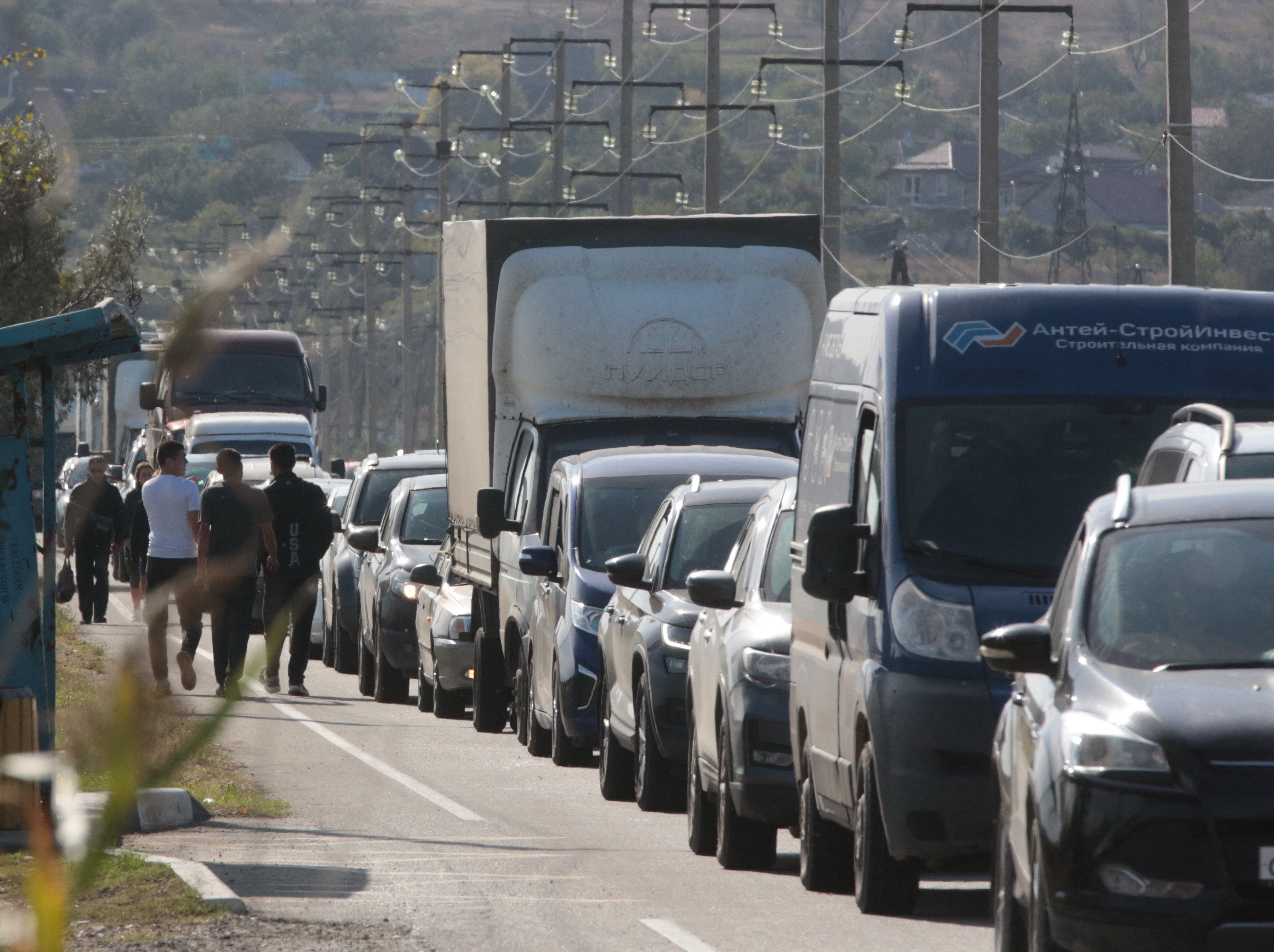
Another factor is Middle Strike drone operations, which systematically disrupt Russian logistics in the operational rear, 50 to 200 kilometers from the front line. In March 2026 alone, such drones struck around 350 targets. In May, similar strikes brought Russian logistics in the Luhansk region and supply routes toward occupied Crimea under fire control, with fuel tankers, trucks, and other vehicles regularly hit along supply routes. By the summer, Middle Strike operations had effectively enabled the isolation of Crimea.
People wait for the ferry in their cars after a truck exploded and heavily damaged the Kerch bridge that links Crimea to Russia, near Kerch, on October 8, 2022. (Photo: AFP via Getty Images)
As a result, Russia cannot reliably supply its assault forces with the necessary quantities of ammunition, fuel, and equipment at the right time. Its logistics have been disrupted, while significant forces have been diverted to air defense and rebuilding supply routes, further stretching Russian resources.
Russia fails to break the Donetsk region’s “fortress belt”
For months, Kostiantynivka in the Donetsk region has remained one of the most difficult sectors of the front. Neighboring sectors around Dobropillia and Druzhkivka are also facing mounting Russian pressure. But despite months of assaults, Kostiantynivka remains under Ukrainian control.
Kostiantynivka is one of four major cities in the Donetsk region that together form the region’s defensive “fortress belt”: Kostiantynivka, Druzhkivka, Sloviansk, and Kramatorsk. Russia seeks to capture these cities, which would open the way for an offensive against the rest of the region that remains under Ukrainian control.
Palisa reports that Russia’s political leadership expects the entire Donetsk region to be occupied by December 31, 2026, while the military is asking for slightly more time—until the end of March 2027. “That is unrealistic,” Palisa adds. This sector has been under constant pressure for months, but Ukrainian forces have managed to hold the Russian army back.
As a Partner and Co-Founder of Predictiv and PredictivAsia, Jon specializes in management performance and organizational effectiveness for both domestic and international clients. He is an editor and author whose works include Invisible Advantage: How Intangilbles are Driving Business Performance. Learn more...




0 comments:
Post a Comment