


Brendan Cole reports in Newsweek:
Russia is rushing to launch satellites called "Rassvet" to replace Starlink after it lost access to the SpaceX-owned network but Moscow’s version continues to hit snags, with none of the 16 Rassvet satellites launched on July 19 reaching an altitude of 340 miles, short of the intended 540-mile operational altitude, with many only reaching180 miles; some are experiencing orbital decay, and two are heading for reentry into Earth’s atmosphere. “It seems the rate of malfunction has been higher than Starlink’s first gen rate of failure.” The failure of all 16 satellites from its second launch to reach operational altitudes suggests Moscow was not ready to roll out the constellation. "Russia may have been unprepared to deploy at this pace and will likely face additional delays." Adding to Russia's woes, on August 15, Ukraine struck the Space Center in Samara with cruise missiles, targeting the only factory to assemble the Soyuz-2.1b rockets used to launch Rassvet satellites.Russia’s attempts to develop its own version of the Starlink satellite network have failed to reach the right altitude to work properly, it has been reported.
Moscow is rushing to launch satellites called "Rassvet" to replace Starlink connectivity over Ukraine after Russia lost access to the SpaceX-owned communications network.
Musk’s decision to deny Russian forces access to his service immediately affected the battlefield, and Ukrainian President Volodymyr Zelensky awarded SpaceX CEO Elon Musk his country’s Order of Liberty on August 26.
Meanwhile, Moscow’s version continues to hit snags, with none of the 16 Rassvet satellites from a second batch launched on July 19 reaching an altitude of 340 miles as of August 31, according to data from live satellite tracker N2YO.
These altitudes are short of the intended 540-mile operational altitude, with many only reaching as low as 180 miles; some are experiencing orbital decay, and at least two are heading for reentry into Earth’s atmosphere, according to the latest update from the Institute for the Study of War (ISW).
“It does seem safe to say that so far the rate of malfunction or failure has been higher than what I understand to be Starlink’s first gen rate of failure,” John Hardie, the deputy director of the Russia Program at the Foundation for Defense of Democracies (FDD), a U.S. think tank, told Newsweek.
Newsweek reached out to the Russian Defense Ministry for comment.
What Is Russia’s Rassvet Network?
Russia learned the hard lesson that relying on Musk’s Starlink network for its full-scale invasion of Ukraine left its military vulnerable when the SpaceX founder turned it off.
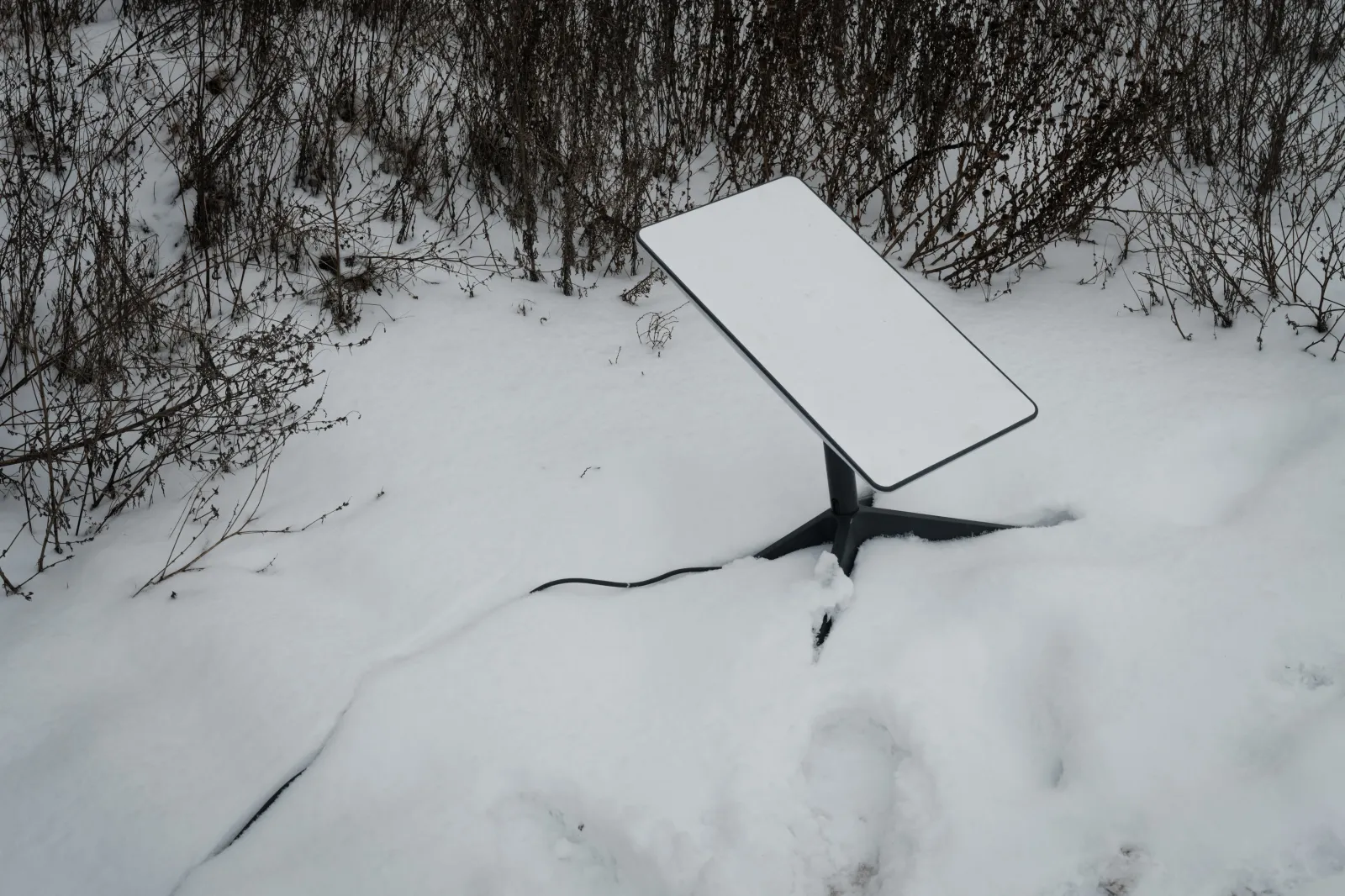
This has focused Moscow on creating its own variant, Rassvet, which means “dawn or daybreak” in Russian, backed by billions of dollars in private and government investment.
Since launching the experimental Rassvet-1 and Rassvet-2 in 2023 and 2024, the aerospace company Bureau 1440 behind it has begun Rassvet-3 launches ahead of an expected commercial service in 2027. But the apparent failure of all 16 satellites from its second launch to reach operational altitudes suggests Moscow was not ready to roll out the constellation as planned, the ISW said.
"Russia may have been unprepared to accelerate constellation deployment at this pace and will likely face additional delays," the Washington, D.C.-based think tank said in its Monday update.
Hardie from the FDD said Russia's Rassvet launch rate is behind the schedule it set for itself. “Maybe it’s a little too early to say for sure what's going on with them," he told Newsweek.
Ukraine's presidential adviser on defense technologies, Serhiy Beskrestnov, said in a Telegram post on May 31 that Moscow needs to successfully launch at least 200 to 300 satellites to achieve stable connectivity over Ukraine, but this is likely to be beyond Russia’s capability in the short term.
However, the ISW said that the existing Rassvet satellite constellation was still a threat to Ukraine, as it may allow Russian forces to conduct more precise strikes using remotely controlled unmanned systems.
"Even partially successful Rassvet launches could allow Russian forces to increasingly use satellite communications on the battlefield and in their strikes against Ukraine," the ISW said.
Hardie said deadlines in most Russian R&D and weapons development programs are almost always missed, but the capability is often fielded and may be successful.
“I think you need to find the right balance of ‘Chicken Little, the sky is falling’ versus just writing this off —I think the truth is somewhere in the middle," he said.
“Overall though this will eventually be a useful capability for Russia, the question is when they will come online and will that be soon enough to really impact the war," he said.
Ukraine Strikes Also Hamper Russia’s Plans
Adding to Russia’s plans for its satellite network is the threat posed by Ukraine.
On August 15, Ukrainian forces said they struck the Progress Space Center in Samara with Flamingo cruise missiles. This targeted the only factory to mass-assemble the Soyuz-2.1b rockets—the only launchers used to launch Rassvet satellites.
Ukraine also tried to strike the Plesetsk Cosmodrome on August 23, two days before Russian forces launched a Soyuz-2.1b medium-class launch vehicle that may have been carrying a GLONASS-K1 satellite for Russia’s GPS alternative.
The ISW said that Russia cannot launch satellites at the required tempo and scale partly because it remains dependent on the Soyuz-2.1b medium-class launch vehicle.
Hardie said that Starlink has been critical to Ukrainian military communications, especially for so-called “middle strike” drones to target supply trucks in the occupied territories.
But SpaceX restricts the system’s use inside Russia’s internationally recognized borders, which makes it difficult for Ukraine to find and strike mobile ballistic-missile launchers, typically located inside Russia.
Ahead of a fifth winter of the war, Ukraine is looking to get permission to use Starlink to target ballistic missile launchers on Russian territory, according to the Associated Press, which said that Zelensky asked U.S. President Donald Trump at the White House on July 28 to make the case to Musk. This could lessen the need for U.S. Patriot air defense systems against Russian missile and drone attacks on Ukrainian territory.
“I think it's probably the best option the United States has at the moment, given air defense interceptor capacity shortages,” Hardie said. “If you're not going to eliminate the threat, you can at least reduce it and extending that Starlink coverage into Russia would be a good way to help do that.”


0 comments:
Post a Comment