A Blog by Jonathan Low


Oct 15, 2022

Explosions In Russia's Ukraine Border Cities Destroy Supplies, Trains, Electricity

Ukraine is striking back at Russian logistics capabilities by hitting targets in the Belgorod region, which is the administrative hub for Russian troops in Ukraine. 

These attacks also send a message to the Russian populace, which polls show is increasingly anxious about Russia's Ukraine strategy, especially in light of Putin's ordered missile attacks on Ukrainian civilian targets. JL 

Thomas Newdick reports in The Drive:

Rail services in the Belgorod region were suspended today after at least one missile  damaged rail infrastructure and overhead power lines, temporarily shutting down an important logistics route for the Russian military in Ukraine. The ammunition dump struck (caused)  fatalities and injuries. Videos posted to social media suggested that further attacks were underway as night fell on the Belgorod region. These attacks targeted a thermal powerplant, resulting in power outages across the region. “Power lines are damaged. Trains are temporarily suspended,”

Multiple Sources Report Fierce Kherson Fighting As Ukraine Renews Offensive

While Ukraine has continued to press in the Kherson region, things had turned relatively quiet compared to the advances gained during the counteroffensive that began a few weeks ago.

There are now reports, though, that Ukraine has resumed its Kherson offensive in force and that Russian troops are again retreating. JL 

Daily Kos reports:

Russian Telegram sources now reporting on the new Kherson offensive, with Mylove a major target of the advance. Lots of reports of massive Ukranian artillery barrages across the entire contact line. The promised Ukrainian offensive toward Nova Kakhovka may have begun. We’re in that place again where Ukraine isn’t saying much. It’s hard to believe Ukraine took Mylove and no one reported it, but with the confirmed crackdown on Russian Telegram milbloggers, and with the Ukraine side quiet, it’s possible.

Why Apple Store Workers In Deeply Conservative Oklahoma Voted To Unionize

Attempting to intimidate Apple store workers to dissuade them from unionizing appears to be backfiring, whether in blue or red states. JL

Mitchell Clark reports in The Verge:

Workers at Apple’s store in Oklahoma City have voted to unionize with 56 yeses, and 32 nos. The election was only the second one carried out for a US Apple store. In June, workers in Maryland voted to unionize. Apple interrogated and surveilled workers at the (Oklahoma) store, held captive audience meetings (even during the busy iPhone 14 Plus launch day, and told that they wouldn’t receive the same benefits as non-unionized stores if they voted to organize

Why the "Art of Atrocity" Is Not Helping Putin Win In Ukraine

The reality is that Russian atrocities - seen by them as an extension of policy - have hardened Ukrainian resolve, further encouraged global support for Ukraine and have led to upgraded donations of weaponry which have contributed to the Russian defeat on the battlefield. JL 

Mick Ryan reports in the Sydney Morning Herald:

Shopping malls, train stations, playgrounds, hospitals, cultural sites and residential areas are all fair game for the brutal yet clueless Russian commanders. These attacks are further evidence of the ineptitude of the Russian military. They are unable to beat the Ukrainians, so they resort to murdering civilians. This has been a systemic approach from the Russian Army throughout the invasion. Killing civilians and mistreating prisoners is tolerated by the Russian state and the Russian people. This is not just Putin. (But) the reality is they have hardened Ukrainian resistance, and Western support for the defeat of Russia.

As Russia Retreats, Putin Claims 16,000 New Recruits Already Deployed In Ukraine

Given the faltering performance of Russian forces since the draft was instituted, that Putin claims 16,000 draftees are already on the battlefield suggests their contribution has not exactly been game-changing. JL 

Ivan Nechepurenko reports in the New York Times:

222,000 Russians already have been drafted and 16,000 of them have been deployed “in units that get involved in fulfilling combat tasks,” Mr. Putin told a news conference. (But) military bloggers have accused the Kremlin’s defense officials of throwing unprepared recruits into battle. The draft has also run into resistance across Russia as anger with the call-up spilled over into street protests. The deaths of recent recruits have been reported by local news websites and activists across the country.

How Ukrainian Strategy Is Running Circles Around Russian Forces

Russia is being outfought - and out-thought - by superior Ukrainian leadership and command structures which encourage initiative and the seizure of opportunity, while the Russians must wait for senior officers to approve every move. 

The result has turned the battle in Ukraine's favor. JL 

Stephen Fidler and colleagues report in the Wall Street Journal:

Eight months into Ukraine’s war with Russia, its strategy is combining classic military operations with opportunism on the battlefield to exploit the incompetence of Russian forces—and is changing the course of the battle. Ukraine’s command encourages junior officers to make in-the-moment battlefield decisions, an authority they have used to  take advantage of enemy weaknesses. The Ukrainian advances in the east and the south of the country appear to be part of a coordinated plan. “We didn’t have air superiority, we didn’t have superiority in firepower, we exploited lower their lack of reserves and geography."

Oct 14, 2022

"Their Losses Were Large:" Ukrainian Troops Explain Keys To Lyman Victory

The Russian troops in Lyman routed by Ukrainian forces were relatively well supplied, but they were poorly led and appeared to panic as the extent of the Ukrainian encirclement and NATO-supplied artillery accuracy became clear. JL 

Sam Skove reports in RFE/RL:

Elite Russian forces were entrenched in Lyman, a strategic rail hub that served Russian assaults on the major Donetsk cities of Slovyansk and Kramatorsk. Many of those soldiers are now lying in Ukrainian morgues, after an encirclement by Ukrainian forces and the retreat of surviving Russian troops. Russian positions in the town were compromised when Ukraine launched its counteroffensive in the adjacent Kharkiv region. Soldiers pointed toward NATO artillery provided by NATO was devastating to Russians attempting to flee. Panic appears to have set in among the units, which included elite formations

Russia Orders Stop To Offensive Operations in Donbas Due To Widespread Desertions, Refusal To Follow Orders

Russia's  no training, no weapons, no food approach to war seems to be working about as well as expected. JL 

Daily Kos reports:

In some areas of hostilities, in particular in the Donetsk oblast, enemy units began to receive orders from the top commanders to temporarily stop offensive operations. The main reason is the extremely low morale and psychological condition of the recruits, numerous facts of desertion from among the mobilized and non-fulfilment of combat orders.

Russian General Arrested After Conscripts Killed, Surrendered In Ukraine

One of the Russian generals in Ukraine was arrested by Kremlin directive after reports surfaced that he ordered the combat deployment of untrained conscripts, a number of whom subsequently died.

Other conscripts have surrendered without fighting and there are reports that some convicts freed from Russian prisons to fight in Ukraine have deserted with their weapons to resume criminal activities inside Russia. All in all, an inauspicious start to the great mobilization. JL

Gerrard Kaonga reports in Newsweek:

President Vladimir Putin faces rising tensions as his army's ineffectiveness results in deaths and surrenders to Ukraine forces."Russian media reported 5 mobilized men from Chelyabinsk have already died in combat in Ukraine, three weeks after mobilization. The number of dead and wounded among mobilized servicemen is likely higher than this due to the lack of training, equipment, unit cohesion, and commanders, as well as repeated instances of wrongful mobilization." Some deployed without any pre-combat training at the order of Mikhail Zusko, Commander of the 58th Combined Arms Army of the Southern Military District. The Kremlin arrested Zusko due to the combat losses.

The Fatal Flaw That Remains At the Core of Russia's Ukraine Strategy

Putin's fundamental assumptions about Ukrainian weakness, NATO indecisiveness and Russian strength were all fatally wrong. Given the Russian military's failures, no new general, no matter how brilliant and/or vicious, can fix the disaster Putin's arrogance created. JL

Mick Ryan reports in Australian Broadcast Corporation:

The reality is there is no Russian general who can reverse the situation in Ukraine. The largest single cause of failure in the Russian invasion has been bad assumptions and a fundamental misalignment of desired political outcomes with the military means available. Putin  assumed - based on slovenly analysis by his intelligence services - that the Ukrainian military would not fight, that the Russians would be welcomed as liberators and that the West would not intervene. Because of these assumptions, Russia invaded with a force that was too small, attacking on too many fronts in an uncoordinated way. All, in combination, are fatal for the "special military operation".

Russia Is Evacuating Occupied Kherson Residents As Ukraine Advance Threatens

As Ukrainian troops continue to advance towards Kherson, the Ukrainians are reporting particular emphasis on destroying air defense installations, suggesting that they are preparing for another major offensive to retake the city and the area around it. 

In response to these developments, Russia has begun evacuating civilians - some forcibly - and some non-combat units from the city preparatory to turning it into an urban battlefield. Ukraine appears hopeful of avoiding the city's destruction by outflanking Russian defenses there while eliminating major escape routes. JL

Sabra Ayres reports in Associated Press via ABC:

The Moscow-installed leader of Kherson said a decision was made to evacuate Kherson residents to the Russian regions of Rostov, Krasnodar and Stavropol, as well as to the Crimean Peninsula, a sign that Ukrainian military gains along the war's southern front are worrying the Kremlin.The evacuation announcement came as Ukrainian forces pushed deeper into the Kherson region. Ukrainian forces reported retaking 75 settlements in the region in the last month. Russia has characterized the movement of Ukrainians to Russian-controlled territory as voluntary, but reports have surfaced that some Ukrainians were forcibly deported. 

Why Pandemic Exodus Left Bay Area With Largest US Household Income Drop

The Bay Area's already exorbitant rents and cost of living provided added impetus to the broader national exodus from center cities during the pandemic. 

Tech companies willingness to let employees continue to work remotely added to that economic impact - driven, in part, by tech companies' to avoid having to pay cost of living increases to meet those food and housing costs. Remote and hybrid work has continued to slow the pace of recovery, even as costs in the region have remained stubbornly high, raising questions about what policy changes - changes in zoning chief among them - may be necessary to revive growth. JL 

Bryan Pietsch reports in the Washington Post:

During the pandemic, as workers and companies relocated elsewhere, San Francisco experienced the largest drop in median household income among top U.S. metropolitan areas. The drop of $5,546, or 4.6%, was the largest decline by both dollar amount and percentage among the 25 most populous metropolitan areas in the country. The second highest was in the New York City area, which experienced a 4.2% - $3,321 - decline. From 2020 to 2021, San Francisco lost 54,813 people, or 6.3% of its population, the largest in a major U.S. city during the pandemic. (And) San Francisco’s downtown has been the slowest to recover among any city in the US (with) activity at 31% of pre-pandemic levels.

Oct 13, 2022

Ukrainian Drone Filmed Taking Out Russian Drone, Heralding Unmanned Air Combat

While this is hardly the return of the Red Baron of WWI fame, both Ukrainian and Russian drone operators are experimenting with air war tactics aimed at taking down their adversary's UAVs. 

The technology is still imprecise and the maneuver tends to destroy both aircraft, but the video signals that unmanned air combat is coming. JL 

Thomas Newdick reports in The Drive:

Remarkable imagery shows a close-quarters ‘duel’ fought between a pair of quadcopter UAVs. The footage is shot from a Ukrainian UAV, a Chinese DJI Mavic. The camera aboard the drone observes a Russian quadcopter, which approaches the Ukrainian UAV before moving to collide with it, losing one rotor blade, then plummeting toward the ground. The footage is undated but taken over the Donetsk region. Descriptions of a “WW1-style duel” or of the Ukrainian drone “destroy[ing] a Russian” are fanciful. It’s conceivable the Russian drone was trying to knock down the Ukrainian. There is evidence the Russians are developing tactics to use drones against each other in aerial combat.

Ukraine Makes Fresh Gains As More New Conscripts Surrender Without Fighting

Ukrainian forces continue to advance into Donetsk and Luhansk thanks to poorly supplied and led Russian troops, who increasingly include new conscripts without weapons or training. JL 

Daily Kos reports, image Leo Correa, AP:

If Svatove is retaken, a big chunk of Russian-held territory turns Ukrainian. If Starobilsk is (then) liberated the entire Russian presence in the northeast will be cut off from supplies, down to Luhansk. Through Starobilsk is Russia’s last functional rail link into Ukraine from its main supply hub at Belgorod. New conscripts sent to Svatove were dumped into flooded trenches they said were “half destroyed, with weapons lying around, as the guys before us ran away.” They waited in those trenches, under constant Ukrainian fire and without food or water for three days. They (started) walking back to Belgorod, until they came across a Ukrainian checkpoint and surrendered.

Most Animal Group Populations Declined 69 Percent In Last Century

Though some species are evolving, many are declining. This includes mammals, birds and fish. Some freshwater species are doing even worse - and Latin America (home of the rapidly deteriorating Amazon) seems to worst of all. JL 

Benji Jones reports in Vox:

One of the planet’s largest conservation groups, the World Wildlife Fund (WWF), just published a frightening statistic: Populations of most major animal groups, including mammals, birds, and fish, have declined by an average of 69% in the last half-century. freshwater species, such as fish and frogs, have declined by an average of 83%, globally, whereas populations of all major vertebrate groups found in Latin America have fallen by an average of 94% during the same period.

How the Onset of Winter Is More Bad News For Russian Troops In Ukraine

Cold, wet weather which characterizes the onset of winter in Ukraine makes it harder to maneuver over muddy terrain, affects the performance of weapons and vehicles - on both land in the air - and makes them harder to use. 

Given Russia's well- publicized logistics problems even in the warm spring and summer months, winter is likely to make Russia forces' performance even less effective while providing more advantage to Ukrainian troops, well supplied with winter gear by NATO and fighting on their home ground. JL

Col. Phillip Nicholson (Canadian Army, retired) reports in Military Land:

Average winter temperatures in Ukraine range from -7°С to +2°C and fits the definition of a “Wet Cold.” The main problem with ‘wet-cold’ is the ground becomes slushy and muddy; it is never fully frozen or dry. Ukrainians call it “bezdorizhzhia,” or roadlessness. While Russians are no strangers to cold weather, it is unlikely the recently mobilized have cold weather gear. NATO has committed to providing the Ukrainians with cold weather clothing. The cold weather will adversely impact Russian morale more so than the Ukrainians.

US Howitzer's Deadly Effect In Ukraine Against Russia Leading To Global Demand

Howitzers are old school. Most governments now want rockets and missiles. 

But the M777's impact in Ukraine, especially using new GPS-guided shells, has revived global arms industry interest to the extent that its manufacturer wants to restart production, which had been curtailed in favor of other weapons. Another example of how the Ukraine war is changing how armies will fight. JL 

Alistair MacDonald and Daniel Michaels report in the Wall Street Journal:

British BAE Systems said it was considering restarting production of the M777 howitzer. The inquiries come after Ukrainian forces have been using the artillery piece to deadly effect against Russian troops. The M777’s resurrection exemplifies how the war in Ukraine could reshape the armaments industry. The M777, Himars, the Javelin and NLAW portable antitank missiles, which have proven effective against Russian forces, are likely to win new orders. The poor performance of Russian arms is expected to dent their sales on global markets. The performance of the M777 has been enhanced by the use of precision GPS-guided shells.

Ukraine Shows Why It's Winning the War As Russia Shows Why It's Losing

Ukraine is strategic, analytical and focused on the optimal application of available resources to the task at hand. 

Russia is driven by ego, emotion and brutality borne of disregard for its own forces as well as its enemy. Which is exemplified by Ukraine's attack on a vital bridge vs Russia's indiscriminate targeting of civilians. And that is why Ukraine is winning. JL 

Phillips O'Brien reports in The Atlantic:

On Saturday, Ukraine showed why it is winning its war against Russia. On Monday, Russia showed why it is losing. One is clever, well prepared, willing to undertake complex operations, and focused on maximally damaging its enemy’s ability to fight. The other is prone to bursts of rage and is open to committing any crime, but its actions are ultimately self-defeating. One tightly targeted, carefully planned, and well-executed operation opens up the possibility of great strategic gains for Ukraine. In contrast, an expensive, showy, brutal campaign by Putin’s military forces has only made Russia’s task harder.

Oct 12, 2022

As NATO Sends Air Defense, Ukraine Shoots Down 4 Russian Helicopters In 18 Minutes

Putin's terror missile attacks have succeeded in improving Ukraine's air defense systems. JL 

The Telegraph and The Guardian report:

Ukraine’s armed forces on Wednesday downed four Russian helicopters in 18 minutes in the south of the country (as) Ukraine’s defence minister lauded the arrival of the first of four Iris-T defence systems from Germany and an “expedited” delivery of the sophisticated national advanced surface-to-air missile systems (Nasams) from the US. Between 8.40am and 8.58am, anti-aircraft missile units of Ukraine’s Air Force managed to hit the Russian aircraft. The helicopters were said to be “providing fire support to ground occupation troops."

Over Half Of Ukraine's Tank Fleet Now Comprised of Captured Russian Armor

Nice to have such an accomodating adversary. 

But the even more serious issue for Russia is that its soldiers' poor morale and training is what is causing its troops to abandon their vehicles rather than destroy them. JL 

Jared Keller reports in Task and Purpose, image Gleb Garanich, Reuters:

Ukrainian troops captured “at least” 440 Russian tanks and an additional 650 armored vehicles, (meaning) “over half of Ukraine’s currently fielded tank fleet consists of captured vehicles. The failure of Russian crews to destroy intact equipment before withdrawing or surrendering highlights their poor state of training and low levels of battle discipline.” That has accelerated in the last several weeks amid an ongoing Ukrainian counteroffensive fueled by captured Russian weapons. Ukrainian forces captured “over 200” vehicles from retreating Russian forces during a week-long push to recapture Kharkiv Oblast alone.

UK Spy Chief Says Russian Military "Exhausted," Putin Committing "Strategic Errors"

This is both part of a 'psy ops' campaign to undermine support for Putin's leadership among the Russian elite who have homes and investments in the UK, but also a realistic assessment of how Russia's prospects in Ukraine have deteriorated due to poor decision making, leadership, planning and  capabilities. JL

Adela Suliman reports in the Washington Post:

Jeremy Fleming, head of the secretive GCHQ, Britain’s intelligence, cyber and security agency, warned in a speech Tuesday that Russian forces in Ukraine are overstretched and “exhausted” - and that President Vladimir Putin is committing “strategic errors in judgment.” “We know - and Russian commanders on the ground know - their supplies and munitions are running out.” Russians are “seeing how badly Putin has misjudged the situation. “They’re fleeing the draft, realizing they can no longer travel,  their access to modern technologies and external influences drastically restricted. And they are feeling the extent of the human cost of his war of choice.”

How Ukraine Continues To Make Gains Against Russian Forces

In both the Kherson and Donbas regions, Ukrainian forces continue to make gains as their numerical advantage in weapons and troops trained by NATO enter the fight and prove their worth. JL 

Andrew Kramer reports in the New York Times:

The Kherson region is one of two where Ukraine is pressing a counteroffensive against the Russians. In the north, the Russian retreat was unplanned and chaotic, as soldiers fled the Ukrainian advance on stolen bicycles leaving behind documents, laundry and dead comrades. In the south, Russian soldiers are dug in more securely, and while there are signs of low morale, retreats were planned and more orderly. Crumbling morale on the Russian side played a role in Ukraine’s advances in the south but the decisive factor was weaponry, tactics and troop numbers. Ukraine now has a numerical advantage in soldiers.

Why the Kerch Bridge Attack Symbolizes Course of the War For Russia

The Kerch Bridge was Putin's pet construction project, for which he paid one of his oligarchs @$4 billion. It was supposed to symbolize Russia's pretensions of conquest and empire. 

It is now damaged, possibly beyond repair, and the Ukrainians have made clear that any reconstruction is within their ability to undo, again, at a time of their choosing. Recriminations, staff changes and attacks on civilians as a matter of personal pique and a bone for the rabidly seething Russian right wing do nothing to change the military equation on the ground. Nor do they lessen the growing internal disquiet with Putin's so-called leadership. JL

Eliot Cohen reports in The Atlantic:

The Kerch Strait Bridge attack was a personal as well as a national humiliation. This was Vladimir Putin’s pet construction project. Dictatorships built solely on fear and self-interest are brittle, and in Russia the cracks are showing. Russia’s military mobilization is deeply unpopular, as more Russian men flee the country than can be inducted into an army that cannot equip them, train them, or lead them. General Surovikin will destroy civilians, power plants, and hospitals, because he cannot beat the Ukrainian army. Infighting of the Russian elite can only worsen, and internally directed violence will ensue.

Why Tech Investors Face New Challenge From Strong Dollar

Tech companies derive 58% of their revenues from countries outside the US. That makes tech the industry with the greatest exposure to falling global currencies as sales denominated in those currencies are then worth less. 

Lower earnings may result from this additional challenge to tech companies, thus impacting investors even more in the near term. JL 

Akane Otani reports in the Wall Street Journal:

Large technology companies generate 58% of their revenue outside of the U.S.—the highest share of the S&P 500’s 11 groups. That makes them particularly vulnerable to fallout from the surging dollar. When the dollar strengthens, sales that companies earn in nondollar currencies are worth less. That can shave millions of dollars off company earnings. The speed and scale of the dollar’s gain this year has also compounded investors’ pain. Historically, every 8 to 10 percentage points the dollar gains against other currencies shaves off about 1 percentage point from U.S. earnings growth.

Oct 11, 2022

Meanwhile, Back On the Battlefield, Ukraine Has Forced Russia To Choose Between Bad - and Worse

Putin's barbaric missile attacks on civilians did nothing to change the reality that both his armies in the field - in the north, retreating from Kharkiv and in the south retreating to Kherson - are any better off. 

And as outraged as Ukrainians are, they are not letting themselves be distracted from the strategic goal of destroying those two Russian armies while recapturing their occupied territory. JL

Phillips O'Brien reports in Twitter:

Though most of the talk is about the Bridge (and Russian missile attacks), for the last few days, the Ukrainians have continued to press towards Svatove. If/when they force the Russian out of Svatove, they are forcing a Russian pull back to start an even more humiliating campaign to envelope Severodonetsk and Lysychansk. (But) the Russians have a large, and even more vulnerable Army around Kherson. The attack (on the bridge) showed just how vulnerable that force is. Ukraine is pressing towards two strategic targets (Svatove and Kherson) in a way that they can continue to degrade Russian forces.

AI May Be Able To Diagnose Illness From Patient's Voice Sounds

AI is proving to be able to match vocal cord vibration and breathing patterns with various illnesses, making it easier to provide accurate diagnoses to underserved populations and directing them to more specific medical care. JL 

Carmen Acosta reports in NPR:

Everything from vocal cord vibrations to breathing patterns when you speak offers potential information about health. Someone who speaks low and slowly might have Parkinson's disease. Collecting the voices of people with conditions in five areas: neurological disorders, voice disorders, mood disorders, respiratory disorders and pediatric disorders like autism and speech delays is part of the NIH's Bridge to AI program, which launched over a year ago with the goal of creating large-scale health care databases for precision medicine. The program is collecting 30,000 voices, with data on other biomarkers - like clinical data and genetic information - to match.

Will Belarus Finally Join Putin's Ukraine War? Don't Bet On It

With all of Putin's other erstwhile allies like China, Kazahkstan, Armenia et al backing away from Russia, there is little chance Belarus will seize this moment to commit. 

Lukashenko is sending some outdated tanks to buy himself a few more months in hopes that either the war ends or Putin is removed. JL 

Daily Kos reports:

Lukashenko has zero interest in joining the war. His army is designed to keep him in power and little else. When Putin pressed the heaviest, Lukashenko would make some stupid declaration like “Russia is right, NATO is a threat, Poland is about to invade!” and rush his troops to his western border. A stupefied Putin could only watch helplessly. With Russia’s allies (including China) leaving it high and dry, why would Belarus choose this moment to finally enter the war? Handing old, outdated kit to the Russians buys him another month or two before Putin comes again, begging for additional cannon fodder.

What's Really Behind Russia's Unusually Big Missile Attacks On Ukraine?

There was no strategic military point in the retaliatory missile attacks of the past two days. They are, in fact, an admission of failure. 

Putin has to appease the hardliners who are the only population segment still willing to support his Ukrainian aggression - and they hold the key to his retention of power. Which is to say, his leadership base is shaky due to the repeated failure of his Ukraine invasion. JL 

Igor Kossov reports in the Kyiv Independent:

From the battlefield perspective, the Russian armed forces just dropped hundreds of millions of dollars to achieve basically nothing. The Russians’ ability to inflict damage has been spotty. Russia's missiles have a failure rate of up to 60%. Ukrainians are also getting better at shooting them down. If the objective was to terrify Ukrainians, it seems to have failed. “The invaders can't (beat) us on the battlefield and thus resort to terror. ” But Putin also needed to appease the angry hardliners who want Russia to win the war. The hardliners celebrated “Putin admitting he kind of obeys them,”

Retribution and Regime Change: The Consequences of Putin's Weakness

Putin's cowardly response to Ukraine's brilliantly timed attack on the Kerch Bridge is a further demonstration of his weakness and the failure of both his war on Ukraine in which his army keeps getting beaten as well as his approach to governing. 

He is unlikely to weather this crisis in his leadership as he and his shrinking band of supporters may hope. JL

Lawrence Freedman reports in Comment Is Freed:

Everything that now happens in this war, including the murderous missile attacks on Ukrainian cities, has to be understood in terms of the logic of Putin’s exposed position as a failed war leader. He is desperately trying to demonstrate to his hard-line critics that he is up to the task. The opening salvos of this week, ending yet more innocent lives for no discernible military gain, will not make Ukraine less determined or able to win this war. They will have the opposite effect.

Oct 10, 2022

How New Technologies Changed the Ukraine Conflict - and Modern Warfare

Effective application of new technologies has caused military organizations and civilian leadership to completely rethink the way wars are going to be fought in the present and future. JL 

Stephen Kalin and Daniel Michaels report in the Wall Street Journal:

Inexpensive microprocessors are putting “cheap precision” in the hands of Ukrainian soldiers. Ukrainian commanders estimate Himars are responsible for 70% of military advances on the Kherson front. By nearly guaranteeing hits on targets, Himars are upending century-old assumptions about how wars must be fought and collapses the massive logistical trail that modern war demanded. Himars offer a combination of range, precision and mobility that allows them to do the job traditionally handled by dozens of launchers firing thousands of shells.  “If I enter the coordinates of this hole, it will hit this hole.”

Putin Names 9th Leader In 7 Months Of Ukraine 'Special Military Operation'

As a general rule, frequent leadership changes are an indication of poor oversight, weak governance and inadequate vetting. 

They are also an indication that supervisory and hiring authorities have imposed sub-optimal strategies, insufficient resource allocation decisions and unrealistic expectations on those leaders. JL  

Jared Gans reports in The Hill:

Putin has on multiple occasions fired military leaders as Russia has fallen short of its objectives throughout the war. Russian forces have been largely unable to hold back the major Ukrainian counteroffensive that has seen Ukraine retake thousands of square kilometers of territory in the eastern and southern parts of the country over the past month. Gen. Sergey Surovikin previously served as commander of Russia’s Eastern Military District and led Russian soldiers in Syria.

Oct 9, 2022

Why Dictators Always Underestimate Liberal Democracies

Diversity of thought and action, self-criticism and transparency create stronger institutions and processes than do authoritarian systems. JL 

David French reports in The Atlantic:

Although it is very true that polarization can be dangerous and that political combat can grow far too toxic, the baseline level of relentless self-critique is also a source of strength. Our liberal democracies are thus learning organisms. We know how to change. even when today’s dictatorships can replicate a version of the West’s economic vitality, there is still the challenge of kleptocracy, the tendency towards corruption that is immune from correction as the rule of law fails.Corruption plus sullen compliance is not a formula for ultimate military success.

What the US Army Has Learned From the War In Ukraine

In sum, logistics, precision vs mass, drones, combined arms including heavy armor. JL

Daniel Goure reports in 19fortyfive:

The first lesson (is) logistics. The Russia-Ukraine conflict is industrial-age warfare on a scale not seen in decades. The expenditure of munitions by both sides has been immense. NATO are discovering their defense industries are not capable of surging to meet wartime demands. Second, Ukraine’s performance suggests precision may be worth a lot more than mass when it comes to long-range fires. Third is the air zone below 1,000 feet, fought from the ground dominated by drones and drone intelligence. Fourth is the continuing relevance of heavy armor. The Ukrainian counteroffensive demonstrates that combined arms, can be effective on both the offense and defense.

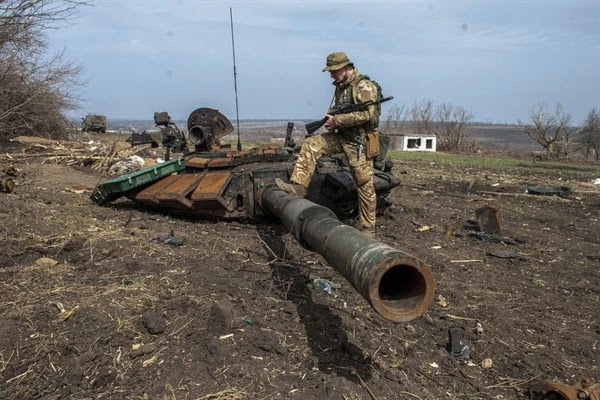
Russian Bodies, Shattered Armor Litter Liberated Ukrainian Towns

The losses of men and materiel are staggering. The question is to what degree Russia can continue to defend the territory it has taken - and for how long. JL 

Jonathan Landay reports in Reuters:

Bodies of two Russian soldiers lay bloating in trees on opposite sides of the road, close to the blasted hulks of the cars and the van in which Ukrainian army officers said the dead men’s unit was retreating into the eastern town of Lyman. The bodies, ruined vehicles and carpets of bullets, torn uniforms and metal shards testified to Moscow’s loss of Lyman. Countless homes lining the town’s rutted roads were destroyed or damaged from the recent fighting.

Russian Forces Are Mostly Retreating Rather Than Fighting Back

Some experts believe the Russians are retreating to more defensible positions, but the shortage of weapons, ammunition and fresh troops - now exacerbated by the attack on the Kerch bridge which was a primary supply route for the Kherson area - makes their situation even more untenable. JL

Sinead Baker reports in Business Insider:

Russian troops are mostly retreating from a key region of Ukraine, rather than staying to fight, the UK Defense Ministry said. "Russian forces have typically broken contact and withdrawn." Ukrainian troops thought Russia was pulling back to bolster its defense of the city of Kherson, the region's capital. Russia no longer has full control of any of the four eastern Ukrainian regions, which it last week declared it would absorb. Russia was faced with a "dilemma" — to prioritize keeping its soldiers alive or to follow "the political imperative" to defend.