Russia "Declining Major Power" Given "Extraordinary Price, Minimal Gain" In Ukraine
A new assessment, released yesterday by the Center for Strategic and International Studies, a leading US military think tank, reports that Russia's anemic performance against Ukraine has produced the slowest advance of any major campaign in the past century, including the infamous WWI Battle of the Somme, long considered the benchmark for modern military futility.
The extraordinary price Russia has paid in casualties and equipment lost is greater than any other major power in the past 80 years. And for all that, it has achieved none of its strategic goals while appearing unlikely to be capable of doing so. As a result, the Kremlin's prospects of conquering Ukraine are now considered nil. To make matters worse, the effort required to deliver even these pathetic results have virtually bankrupted Russia while causing as many as one million Russians to emigrate - many of them younger, technologically savvy and the only demographic capable of driving the country into the AI age. As a result, the report concludes that Russia is in decline as a major power. JL
Seth Jones and Riley McCabe report in the Center For Strategic and International Studies:
The data show Russia is paying an extraordinary price for minimal gains and is in decline as a major power. Since February 2022, Russian forces have suffered 1.2 million casualties, more losses than any major power in any war since World War II. (Since) 2024, Russian forces have advanced at an average rate of between 15 and 70 meters per day in their offensives, slower than almost any major campaign in any war in the last century. Meanwhile, Russia’s war economy is under mounting strain, with manufacturing declining, slowing growth of 0.6 percent in 2025. Russia’s progress on the battlefield, especially in the last two years, falls decisively short of Moscow’s goal to militarily conquer Ukraine.
Despite claims of battlefield momentum in Ukraine, the data shows that Russia is paying an extraordinary price for minimal gains and is in decline as a major power. Since February 2022, Russian forces have suffered nearly 1.2 million casualties, more losses than any major power in any war since World War II. At current rates, combined Russian and Ukrainian casualties could reach 2 million by the spring of 2026. After seizing the initiative in 2024, Russian forces have advanced at an average rate of between 15 and 70 meters per day in their most prominent offensives, slower than almost any major offensive campaign in any war in the last century. Meanwhile, Russia’s war economy is under mounting strain, with manufacturing declining, slowing growth of 0.6 percent in 2025, and no globally competitive technology firms to help drive long-term productivity.
If you listen to Russian President Vladimir Putin and even some U.S. policymakers, it sounds like Russia is marching to an inevitable battlefield victory in Ukraine. In a December 17, 2025, speech at the National Defence Control Center of the Russian Federation, President Putin remarked, “Our troops are advancing with confidence and grinding down the hostile forces, defeating enemy units, its groups forces and reserves, including so-called elite formations trained in Western centers and equipped with modern foreign weaponry.”1 Two days later in his annual end-of-year question and answer session, Putin noted that “ever since our forces drove the enemy from the Kursk Region, the strategic initiative has been firmly in the hands of the Russian Armed Forces. What does this mean? It means that our forces are advancing along the entire line of contact.2 Others have echoed this sentiment. As one U.S. policymaker noted, Russia has the “upper hand. And they always did. They’re much bigger. They’re much stronger. . . . At some point, size will win.”3
Yet a close look at the data suggests that Russia is hardly winning and, even more interestingly, that Russia is increasingly a declining power. To better understand the state of the war and Russia’s battlefield performance, this analysis asks: How successful has the Russian military been in achieving the Kremlin’s main objectives? What are the broader implications for the United States and Europe? To answer these questions, this assessment examines several indicators of Russia’s battlefield performance: fatality and casualty rates, the relative rate of advance of Russian forces, and the size of Russian territorial gains. The assessment also examines the state of Russia’s wartime economy, including long-term economic performance.
Russian forces have suffered approximately 1.2 million casualties (killed, wounded, and missing) and as many as 325,000 killed since February 2022.
The analysis has several main findings. First, Russian forces have suffered approximately 1.2 million casualties (killed, wounded, and missing) and as many as 325,000 killed since February 2022. No major power has suffered anywhere near these numbers of casualties or fatalities in any war since World War II. Second, Russian forces are advancing remarkably slowly on the battlefield. In the Pokrovsk offensive, for example, Russian forces advanced at an average rate of just 70 meters per day. This is slower than the most brutal offensive campaigns over the last century, including the notoriously bloody Battle of the Somme during World War I. Russian forces have gained less than 1.5 percent of Ukrainian territory since the start of 2024. Third, Russia is becoming a second- or third-rate economic power. Its economy is showing strains because of the war, though it has not buckled. Russian manufacturing is declining, consumer demand is weakening, inflation remains stubbornly high, and the country faces a labor crunch. Economic growth slowed to 0.6 percent in 2025, and Russia continues to fall behind in key technologies such as AI.4 Russia had a grand total of zero companies in the top 100 list of technology companies in the world as measured by market capitalization.
The rest of this brief is divided into three sections. The first provides an overview of Russian strategy—including ends and means—regarding the war in Ukraine. The second assesses Russian military and economic performance. And the third provides brief conclusions.
Russian Ends and Means
Effective strategy requires the alignment of ends, or objectives, and means to achieve those objectives.5 Putin’s primary objective is to bring Ukraine back into Russia’s sphere of influence, either directly by militarily conquering and annexing Ukraine (as Russia has done in some areas of eastern Ukraine) or indirectly by installing a Russian ally in Kyiv. In addition, Putin seeks to prevent further NATO expansion eastward, either through NATO membership or an expanding U.S. or European sphere of influence.
Putin has been clear and consistent in claiming—falsely—that Ukraine is not, and has never been, an independent country with a distinct culture, history, religion, or language. In his article “On the Historical Unity of Russians and Ukrainians,” Putin misleadingly noted that Russians, Ukrainians, and Belarussians are descendants of Ancient Rus and “bound together by one language (which we now refer to as Old Russian), economic ties . . . and—after the baptism of Rus—the Orthodox faith.”6 Putin continued that “there was no historical basis” for “the idea of Ukrainian people as a nation separate from the Russians.”7
After failing to bring Ukraine back into Russia’s orbit by seizing Crimea in 2014 and then using a combination of regular and irregular military units in eastern Ukraine over the next several years, Putin resorted to a conventional invasion in February 2022. But the Russian military was unable to swiftly defeat Ukrainian forces through a blitzkrieg campaign and has resorted to a strategy of attrition warfare.
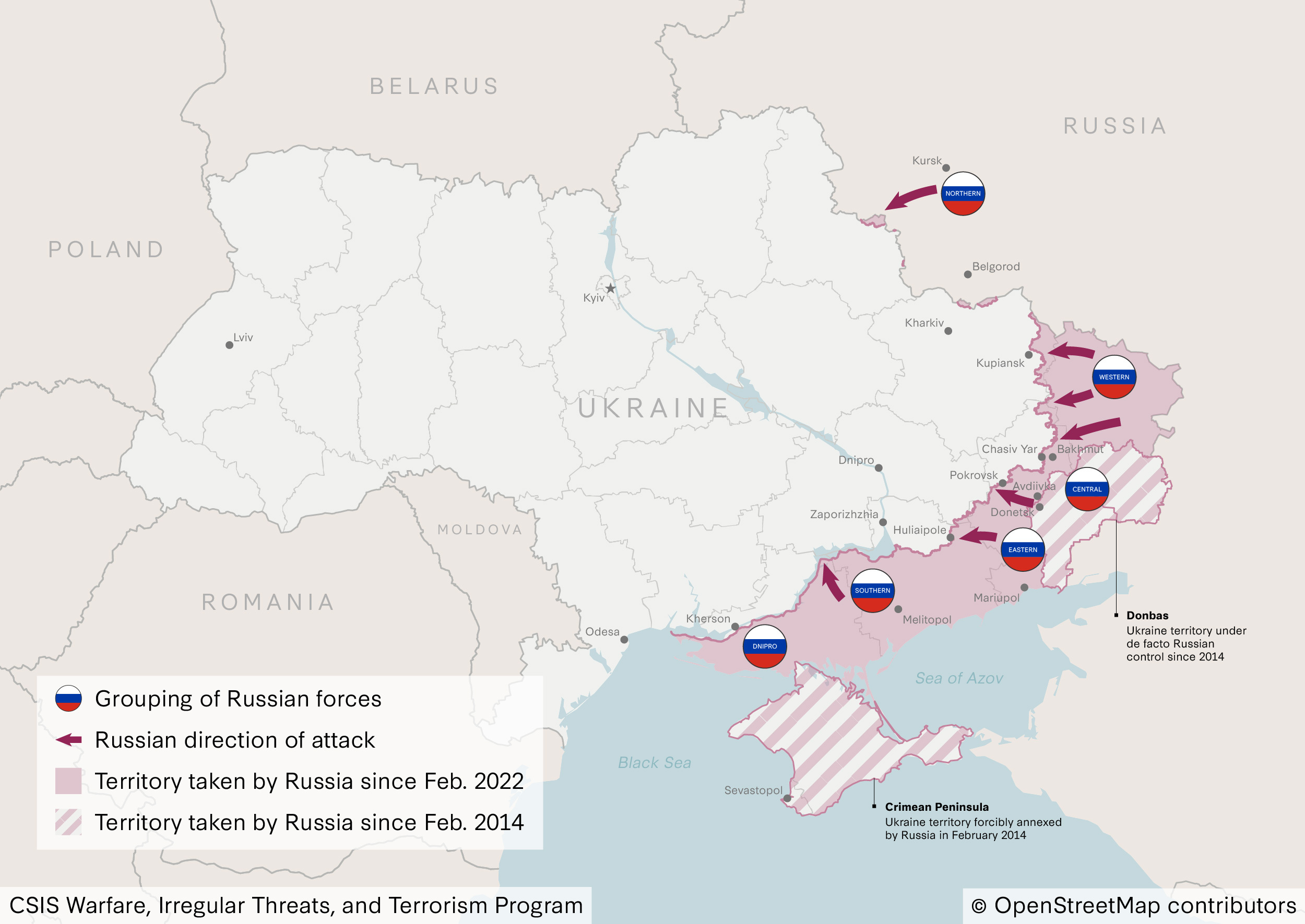
Figure 1: Ukraine Battlefield Map, January 2026
Remote Visualization
Source: UK Ministry of Defence; and CSIS estimates
A war of attrition is one in which a belligerent attempts to wear down its opponent during a series of set-piece battles through piecemeal destruction of its military, including matériel and personnel.8 Attrition warfare is characterized by high casualties, massive expenditures of matériel, and limited movement of front lines. Attrition can be distinguished from maneuver warfare, in which an attacker attempts to defeat an enemy decisively by maximizing speed and refraining from bloody set-piece battles.9
Despite significant challenges, which are outlined in more detail in the next section, Russia has been innovative in its use of drones, electronic warfare, and other facets of the fight. Mick Ryan, a military strategist and former Australian general, concluded following repeated trips to Ukraine that Russia “combines its evolving infiltration ground tactics with its use of fires (particularly attack drones and glide bombs with improved electronic warfare resilience and longer range) to attack where it identifies gaps or weaker Ukrainian units.”10 Russian tactical aviation has provided help to Russian ground maneuver units, particularly through the use of long-range glide bombs and Shahed drones.11
Russia’s air campaign against Ukrainian energy, economic, and military industrial targets has also been highly destructive. Russian strikes from ballistic missiles, cruise missiles, and drones have left Ukraine’s energy system able to meet only 60 percent of national electricity demand as of January 2026 and have created prolonged blackouts across the country—including in Kyiv.12 In addition, Russia’s defense industrial base has produced significant quantities of weapons systems—such as main battle tanks, munitions, and drones—with the help of China, Iran, North Korea, and other partners to conduct a continuing war of attrition. Russia also has an advantage from its much larger pool of soldiers that can be mobilized.13
Russian Military and Economic Indicators
In this war of attrition, Russia has held the military initiative on the battlefield in Ukraine since roughly January 2024 and been on offense.14 But how effective has the Russian military been? To evaluate Russian efforts, this section examines Russia’s casualties and fatalities, its rate of advance, the amount of territory seized, and the state of its war economy. These factors provide insights into how Russia is performing on the battlefield and its ability to sustain the conflict over the long run.
Russian Casualties and Fatalities
Assessing casualties and fatalities in wartime is difficult and imprecise, and various sides have incentives to inflate or shrink the numbers for political purposes. According to CSIS estimates, Russian forces suffered nearly 1.2 million battlefield casualties, which include killed, wounded, and missing, between February 2022 and December 2025, as highlighted in Figure 2.15 There were roughly 415,000 Russian casualties in 2025 alone, with an average of nearly 35,000 casualties per month.16 In addition, there were roughly 275,000 to 325,000 Russian battlefield fatalities between February 2022 and December 2025.17
No major power has suffered anywhere near these numbers of casualties or fatalities in any war since World War II.
These numbers are extraordinary. No major power has suffered anywhere near these numbers of casualties or fatalities in any war since World War II.18 For example, U.S. battlefield casualty and fatality numbers are significantly lower, with the United States suffering 54,487 battle deaths during the Korean War, 47,434 deaths during the Vietnam War, 149 deaths during the 1990–1991 Gulf War, 2,465 deaths in Afghanistan during Operation Enduring Freedom and Operation Freedom’s Sentinel, and 4,432 deaths in Iraq during Operation Iraqi Freedom.19
Russian casualties and fatalities are also remarkable from a historical Russian and Soviet perspective (see Appendix A). Russian battlefield fatalities in Ukraine are more than 17 times greater than Soviet fatalities in Afghanistan during the 1980s, 11 times greater than during Russia’s First and Second Chechen Wars in the 1990s and 2000s, respectively, and over five times greater than all Russian and Soviet wars combined since World War II.
Russian battlefield casualties and fatalities are significantly greater than Ukrainian casualties and fatalities—with a ratio of roughly 2.5:1 or 2:1. Ukrainian forces likely suffered somewhere between 500,000 and 600,000 casualties, including killed, wounded, and missing, and between 100,000 and 140,000 fatalities between February 2022 and December 2025.20 Combined Russian and Ukrainian casualties may be as high as 1.8 million and could reach 2 million total casualties by the spring of 2026.21
Combined Russian and Ukrainian casualties may be as high as 1.8 million and could reach 2 million total casualties by the spring of 2026.
Why are Russian casualties and fatalities so high? There are several possible explanations, such as Russia’s failure to effectively conduct combined arms and joint warfare, poor tactics and training, corruption, low morale, and Ukraine’s effective defense-in-depth strategy in a war that favors the defense.
Russia’s attrition strategy has accepted the costs of high casualties in hopes of eventually wearing down Ukraine’s military and society. On the battlefield, Russia has utilized dismounted infantry to wear down and attrit Ukrainian lines, along with small first-person view (FPV) drones, artillery, glide bombs, and other stand-off weapons. Russian units have routinely conducted advances using small squads of troops, often poorly trained, that are supported by armored vehicles or light mobility vehicles. Higher Russian headquarters frequently order these forces to advance toward Ukrainian positions to conduct reconnaissance by drawing fire. If Ukrainian positions are positively identified, Russian soldiers may be sent forward to attack positions, which are further mapped and then targeted with artillery, FPV drones, and glide bombs. These tactics have led to high fatalities and casualties.22
Ukrainian forces have also imposed significant costs with their defense-in-depth strategy in a war that has largely favored the defender. Ukraine has used trenches, dragon’s teeth (anti-tank obstacles), mines, and other barriers—along with artillery and drones—to attrit advancing Russian soldiers and vehicles. The eastern front line, for instance, continues to be saturated with drones. As a result, vehicle movement is difficult within 15 kilometers of the front line. Infantry soldiers must instead march to their positions for 10 to 15 kilometers. Ukraine has also relied on decoys and deception and is building frontline headquarters underground.23 These actions have affected Russia’s rate of advance.
Russian Average Rate of Advance
Russia’s slow rate of advance in multiple offensives over the last two years underscores the attritional nature of the war in Ukraine and the difficulty of breaking through fortified defensive positions. This analysis measures the straight-line distance that the front line has shifted during specific military offensives.24
After Russia won control of the city of Avdiivka in Donetsk Oblast in February 2024, Russian forces began a sustained offensive aimed at the nearby city of Pokrovsk, a key logistics and transportation hub that supported Ukrainian operations across the eastern front line. The offensive relied on infantry assaults, heavy artillery shelling, drone attacks, and glide bomb strikes to erode Ukrainian positions.25 From late February 2024 to early January 2026, Russian forces advanced just under 50 kilometers, at an average pace of only about 70 meters per day. By January 2026, Russia controlled most of the city of Pokrovsk.26
After capturing Avdiivka, Russia also intensified its effort against the nearby city of Chasiv Yar, which is located just west of Bakhmut. Ukrainian defenders leveraged both natural and man-made features in the fighting, including Chasiv Yar’s elevated terrain and a canal, which complicated Russian movement and repeatedly forced contested crossings.27 Russia relied on artillery and glide bomb strikes, drone attacks, and small assault groups to advance. In the summer of 2025, Russian forces took control of most of the city, but they have been unable to eliminate the remaining pockets of Ukrainian troops and secure full control. From late February 2024 to early January 2026, Russian forces advanced roughly 10 kilometers, at an average pace of approximately just 15 meters per day.
Further north, in Kharkiv Oblast, the Russian rate of advance has also been slow. In November 2024, Russia launched an offensive toward Kupiansk, crossing the Oskil River and pushing westward in an effort to capture the city. From mid-November 2024 to early January 2026, Russian forces advanced approximately 9.5 kilometers, at an average pace of about 23 meters per day.
To the south, in Zaporizhzhia Oblast, a more recent Russian offensive has made greater progress. In November 2025, Russia intensified an offensive aimed at capturing the city of Huliaipole. Between early November 2025 and early January 2026, Russian forces advanced roughly 18.5 kilometers, at an average pace of 297 meters per day.
In all of its offensives over the last two years, Russia has failed to generate rapid breakthroughs to collapse the Ukrainian front line and allow for sweeping territorial gains. Figure 3 illustrates this trend by comparing the average rates of advance for major offensives in Ukraine since 2022 alongside historical benchmarks from World War I, World War II, and other wars. Russia’s Pokrovsk offensive has advanced slower than Allied forces in the Battle of the Somme in World War I, one of the most grinding offensives of the war. Russia’s offensives around Kupiansk and Chasiv Yar have been even less efficient, moving at mere fractions of the pace of historical campaigns.
Territory Seized by Russia
In addition to its slow rate of advance, Russia’s territorial gains over the past two years have been modest. In 2024, Russian forces seized approximately 3,604 square kilometers of Ukrainian territory, or about 0.6 percent of Ukraine—an area smaller than the U.S. state of Delaware.28 In 2025, Russian forces made marginally larger gains, seizing approximately 4,831 square kilometers (about 0.8 percent of Ukraine) and retaking approximately 473 square kilometers in Russia’s Kursk Oblast.29
Remote Visualization
Russia’s gains since it took the initiative in January 2024 are far smaller than the large territorial shifts seen earlier in the war. At the peak of the initial invasion in March 2022, Russian forces seized roughly 115,000 square kilometers in less than five weeks, but by April 2022, Ukraine had retaken more than 35,000 square kilometers.30 By November 2022, Ukraine had retaken approximately 75,000 square kilometers, including through successful counteroffensives around Kharkiv and Kherson.31
In total, Russian forces have seized around 75,000 square kilometers (approximately 12 percent of Ukraine) since the 2022 invasion and control about 120,000 square kilometers (approximately 20 percent of Ukraine and an area roughly the size of Pennsylvania).
In total, Russian forces have seized around 75,000 square kilometers (approximately 12 percent of Ukraine) since the 2022 invasion and control about 120,000 square kilometers (approximately 20 percent of Ukraine and an area roughly the size of Pennsylvania), including territory seized before 2022 such as Crimea and parts of Donbas.32 These gains and Russia’s overall progress on the battlefield, especially in the last two years, fall decisively short of Moscow’s goal to militarily conquer Ukraine.
Russia’s War Economy
The Russian economy has held up better than some expected following Western economic sanctions, which the United States and other Western countries imposed after Russia’s full-scale invasion in February 2022. Russia’s trade balance remains in surplus, the ruble is not far off its prewar valuation against the dollar, and the country heavily relies on such energy exports as oil.33 But Russia’s economy is showing signs of strain, and long-term productivity looks bleak.
In 2025, Russian manufacturing declined at its fastest rate since March 2022, with contractions in output and new orders, a rising labor shortage, and a decrease in input buying.34 Overall, Russian manufacturing suffered seven consecutive months of contraction in 2025, with production levels declining for ten consecutive months.35 In addition, consumer demand weakened and inflation was high. The country also faced a labor crunch. Oil revenues lagged with lower global prices, which contributed to a fiscal squeeze and a widening budget deficit. Economic growth slowed to 0.6 percent in 2025, and the International Monetary Fund estimated that growth would remain slow, at 0.8 percent, in 2026.36
Remote Visualization
Russia also faces a capital problem. The country receives limited foreign investment and is unable to borrow on international markets. To finance the Ukraine war, the Kremlin has borrowed at home and raised taxes. It spends roughly half its budget on the armed forces, the military-industrial complex, domestic security, and debt service. While the war sustains jobs and industrial activity, it produces few lasting assets or productivity gains. Higher taxes burden the civilian economy, which is already suffering from double-digit interest rates and significant labor shortages. Tank factories are working overtime, but automobile producers have cut shifts.37
Economic output is directed toward low-productivity goods necessary to sustain the war effort. While such items as ammunition, uniforms, and fortifications contribute to GDP, they do not improve long-term welfare or capital formation.38 Russia also faces one of the most severe demographic challenges among major economies, with a shrinking and aging population, low birth rate, high mortality rate (especially among working-age men), and high rate of emigration among skilled workers.
Overall, Russia’s nominal GDP is closer to Canada or Italy—not the United States, China, or even Germany or Japan.39 Even adjusted for purchasing power parity, Russia remains far smaller than top-tier economic powers like the United States or China; it has a GDP five and a half times smaller than the United States and four times smaller than China.40
These challenges have second- and third-order effects on economic productivity and innovation. One example is AI. As President Putin once predicted, “Artificial intelligence is the future not only of Russia but of all of mankind. . . . Whoever becomes the leader in this sphere will become the ruler of the world.”41 But Russia today is a bottom-tier AI power. It ranks 28 of 36 countries in the overall strength and development of its AI ecosystem—or AI “vibrancy”—according to Stanford University.42 The top-performing Russian AI model trails even older iterations of OpenAI’s ChatGPT and Google’s Gemini.
Russia had zero companies in the top 100 technology companies in the world by market capitalization.
Even worse, Russia had zero companies in the top 100 technology companies in the world by market capitalization—the total market value of a company traded on the stock market.43 The United States led the pack with such companies as Nvidia, Apple, Alphabet (Google), Microsoft, and Amazon. Other countries—including China, Taiwan, South Korea, the Netherlands, Germany, Japan, Canada, France, the United Kingdom, Sweden, Argentina, Singapore, Thailand, Ireland, Switzerland, and Australia—all had technology companies in the top 100 list by market capitalization. But not a single Russian company made the list, a damning statement of the failure of Russian technological prowess.
Remote Visualization
Russia’s space industry, which was once a global leader, has fallen to historically low levels. Roscosmos, the state corporation in charge of the Russian space program, carried out only 17 orbital launches in 2025, compared to 193 orbital launches by the United States (led by SpaceX) and 92 by China.44 Russia’s space industry has also suffered a range of embarrassing incidents, including an accident in December 2025 that caused severe damage to the launchpad Russia uses for sending astronauts and cargo to the International Space Station. In 2018, a Soyuz rocket carrying two astronauts failed as it headed to space; the emergency abort system carried the two to safety. In 2022, a Soyuz spacecraft docking at the space station sprang a leak after it was apparently hit by a meteorite. Russia’s last successful robotic planetary science mission was four decades ago, while the United States, China, Europe, and some others continue to conduct them. During its most recent attempt in 2023, the Luna-25 spacecraft crashed into the Moon as it prepared for landing.45
To help prevent a further deterioration of Russia’s economy and defense industrial base, Russia has leaned heavily on China. China-Russia trade reached nearly $250 billion in 2024, up from $190 billion in 2022.46 China has been Russia’s top trading partner since 2014, with its share of Russia’s foreign trade increasing from 11.3 percent in 2014 to 33.8 percent in 2024.47 In addition, Russia relies on oil exports to China, which now make up about 75 percent of China’s imports, compared to a pre-2022 average of between 60 and 65 percent.48
In the defense sector, China has significantly increased exports to Russia of “high-priority items,” a set of 50 dual-use goods that include computer chips, machine tools, radars, and sensors that Russia needs to sustain its war efforts.49 While Russia lacks the capacity to produce many of these goods in sufficient quantities, China’s massive manufacturing sector can produce a number of them at scale.50 Chinese exports helped Russia triple its production of Iskander-M ballistic missiles from 2023 to 2024, which Russia has used to pound Ukrainian cities.51 In addition, China accounted for 70 percent of Russia’s imports of ammonium perchlorate in 2024, an essential ingredient in ballistic missile fuel.52 China has also provided Russia with drone bodies, lithium batteries, and fiber-optic cables—the critical components for fiber-optic drones used in Ukraine, which can bypass electronic jamming.53
A Declining Power
While Russia still possesses nuclear weapons and a large military, it does not measure up as a great power in virtually any category of military, economic, or science and technology indicators.54 Russia has suffered the highest casualty rate of any major power in any war since World War II, and its military has performed poorly, with historically slow rates of advance and little new territory to show for its efforts over the last two years.
For comparison, it took the Red Army 1,394 days after Operation Barbarossa (the German invasion of the Soviet Union) to make it to Berlin during World War II.55 Russia hit that mark (1,394 days) on December 19, 2025, but had barely made it to Pokrovsk, over 500 kilometers from Kyiv. Russia will likely face a major challenge from the return of tens of thousands of soldiers, including many violent offenders and individuals who have faced traumatic combat experience. Russian military veterans that have returned from fighting in Ukraine have already perpetrated a growing number of violent crimes—including murders—against Russian civilians.56
Russia’s wartime economy also faces serious problems. Manufacturing exports and high-tech goods are limited, and Russia will likely continue to fall behind in emerging technology. There is little chance that Russia will reintegrate into global trade and the financial system in the near term.
Some data suggests that there has been a major decline in popular support inside Russia for the war. According to one poll, for example, 57 percent of Russians in May 2023 believed that most people in their inner social circle supported the war, compared to 39 percent who opposed the war. By October 2025, those numbers flipped, with 55 percent of Russians who believed that most people in their inner social circle opposed the war, compared to 45 who supported the war.57
Still, President Putin remains undeterred by the high casualty and fatality rates, and Russia’s economic downturn is unlikely to bring the Kremlin to the negotiating table—at least on terms that would be acceptable to Ukraine or Europe. Putin may be willing to accept the high casualty and fatality numbers because most of these soldiers are from such regions as the Far East and North Caucasus—and not politically vital areas for him, such as Moscow and St. Petersburg.58
In addition, President Putin and the Russian government have been adept in conducting an aggressive disinformation campaign that has convinced some policymakers, including in Washington, that Russian victory is inevitable, despite substantial evidence to the contrary. Russia boosted its funding for state-run media in 2026 by roughly 54 percent, indicating a commitment to intensified information warfare.59 The Kremlin’s propaganda machine is designed to sustain domestic support for the regime and its war against Ukraine, as well as to convince key foreign audiences that the war has been successful and needs to continue.
Yet as this analysis highlights, Russia has several vulnerabilities that the United States and Europe can exploit. Even with recent transatlantic tensions over Greenland and other issues, cooperation between the United States and Europe is possible.
The first vulnerability is Russia’s economy. Increased sanctions against Russia’s energy sector—including sanctions against any country that buys Russian oil—would likely cause major pain.60 Energy sanctions could be combined with sanctions against other Russian exports, such as minerals, metals, agricultural goods, and fertilizers. Some members of Congress have suggested putting up to 500 percent tariffs on imported goods from countries that buy Russian oil, gas, uranium, and other products.61
Russia’s “shadow fleet” is also vulnerable to action by the United States and European countries. The fleet is used to circumvent Western economic sanctions on Russian oil transported by sea. Many of the ships sail under the flags of other countries—such as Comoros, Gabon, Liberia, the Marshall Islands, and Panama—and sell oil to buyers in such countries as India and China.62 U.S. military and intelligence agencies could assist Ukraine and European navies by providing additional intelligence on Russian illegal shipping to better target these ships and place more diplomatic pressure on countries whose flags they use. Several European countries, such as France, have stepped up seizures of Russia’s shadow fleet.63
A second Russian vulnerability is the blood cost of a protracted war. As this analysis has outlined, Russia has suffered massive numbers of fatalities and total casualties. If Moscow continues to drag its feet on peace talks, the United States and Europe should provide more advanced and longer-range weapons, mines, engineering capabilities, and other matériel to Ukraine. U.S. aid can come through the Prioritized Ukraine Requirement List, which includes packages of equipment and munitions provided by the United States, purchased by European countries, and coordinated by NATO. The United States and Europe could also provide additional training for Ukrainian corps-level commanders and staff.
Despite Russian challenges, the great irony is that the United States and Europe have failed to fully wield the economic or military cudgels. Without greater pain, Putin will drag the talks out and keep fighting—even if it means millions of Russian and Ukrainian casualties.
Custom websites truly make a difference when it comes to brand identity and user experience. Unlike templates, a custom-built website allows businesses to showcase their uniqueness, improve performance, and scale easily as they grow.
Local website designers can make all the difference for your business. Local designers understand the culture, audience, and market trends in your area, allowing them to create websites that truly resonate with your customers.
As a Partner and Co-Founder of Predictiv and PredictivAsia, Jon specializes in management performance and organizational effectiveness for both domestic and international clients. He is an editor and author whose works include Invisible Advantage: How Intangilbles are Driving Business Performance. Learn more...




2 comments:
Custom websites truly make a difference when it comes to brand identity and user experience. Unlike templates, a custom-built website allows businesses to showcase their uniqueness, improve performance, and scale easily as they grow.
Local website designers can make all the difference for your business. Local designers understand the culture, audience, and market trends in your area, allowing them to create websites that truly resonate with your customers.
Post a Comment