


Dmytro Shumliasnkyi reports in Militarnyi:
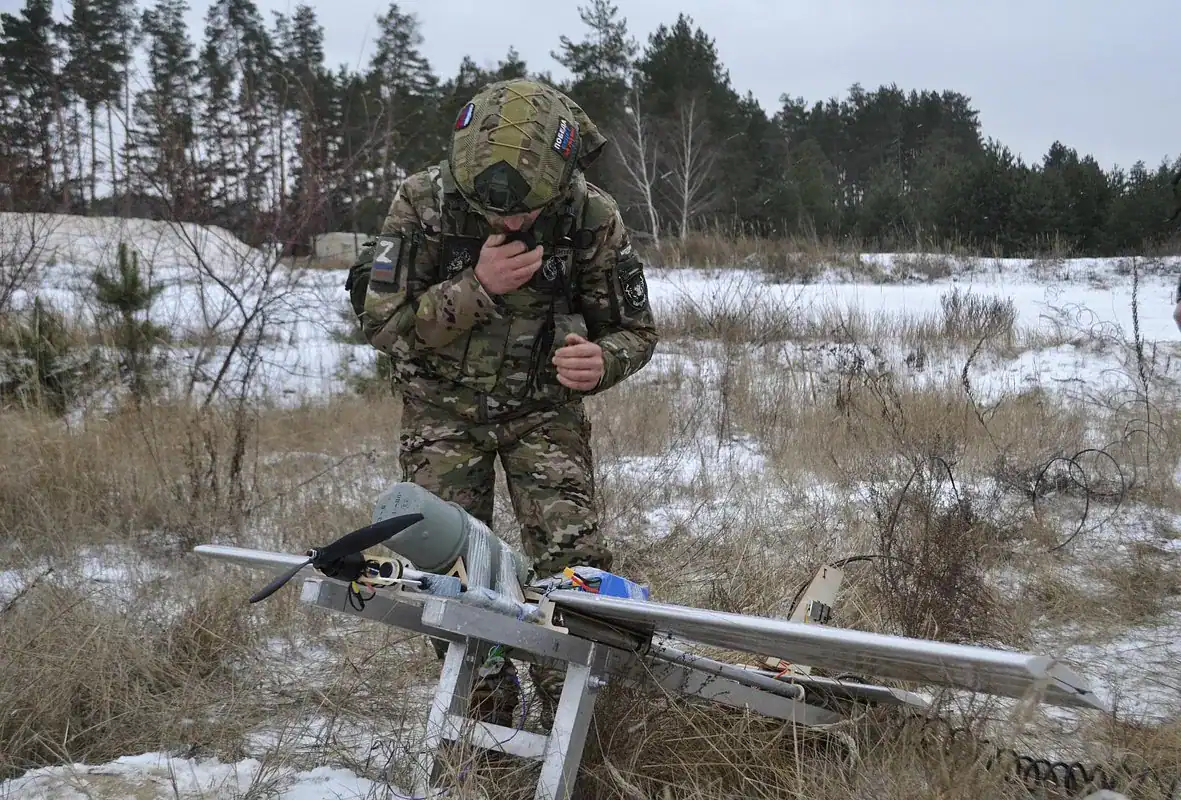
Miroslav Simonov, who served in Russia's Rubkon drone unit, defected to Ukraine. He is originally from Novosibirsk and worked in real estate. During a trip to Moscow, he was detained by police and, under the threat of a criminal case, he was conscripted. He described the unit as harsh, with psychological and physical pressure, humiliation, and threats of being sent to “meat assaults” if conflicts arose with commanders. He cites a turning point when a Molniya UAV strike hit the wrong coordinates, killing a civilian girl in Kupyansk. He was shocked by the battalion’s chat reactions and the command’s apparent approval of the incident. Following that, Simonov decided to defect through contact with Ukraine's "I Want To Live" project.Miroslav Simonov, who served in the Russian army’s Rubikon drone unit, defected to Ukraine and described how training is conducted in this elite formation.
The Defense Intelligence of Ukraine’s “I Want to Live” project published an interview with the former Russian serviceman.
According to Simonov, he is originally from Novosibirsk and worked in real estate before being “mobilized.” During a trip to Moscow, he says he was detained by police and, under the threat of a criminal case, given a choice: conscription with the prospect of being sent to the front or formalizing an assignment closer to his father, who was already serving in a support unit.
After signing the documents, Simonov says he was taken to the Avangard collection point and then to the Pogonovo training ground in the Voronezh region, where recruits trained as attack-drone operators for two to three weeks before being assigned to their specialties.
He was assigned to a UAV unit and sent to the Luhansk region, where he joined a special drone company under the Russian 20th Army. According to him, he spent part of his time on administrative tasks and underwent brief training on Mavic quadcopters.
Simonov describes the atmosphere in the unit as harsh, with psychological and physical pressure, humiliation, and threats of being sent to “meat assaults” if conflicts arose with commanders.
Later, he says, an order came to transfer some “combat specialists” to a new battalion. To avoid giving real specialists to the command, he and another soldier were labeled “unnecessary” and sent away instead, leading him to the elite Rubikon unit.
According to Simonov, newcomers were sent to the unit’s base in Naro-Fominsk near Moscow, where they were assigned a separate building.
He noted the unit demonstrated high security, with a new fleet of vehicles, equipment, and facilities, all intended to rapidly establish a drone center.
Investigative journalists suggest this is the Patriot exhibition facility in the Moscow region. The Rubikon center reportedly occupies Hall D and part of Hall C in the southern part of the facility. This was inferred from statements by propagandist Vladimir Solovyov, which inadvertently revealed the location of the “secret base.” Following that, Ukrainian forces launched a drone strike on the facility.
Simonov described the unit’s leadership as recruited “by chance,” with commanders, including one called “Hunter,” chosen for their loyalty and fanaticism. He says fear and intimidation were the primary tools to maintain discipline.
Simonov reported having minimal training on Mavic drones and experience in logistical support. He was then assigned to learn the Supercam reconnaissance UAV and sent to Izhevsk for training at the manufacturer’s facility.
He claims that part of his group, including himself, failed the final exams in Izhevsk but remained in the battalion in support roles. They were later deployed to positions near Kupyansk, where he served as a technician.
He cites a turning point when a Molniya UAV strike hit the wrong coordinates, killing a civilian girl in Kupyansk. He was shocked by the battalion’s chat reactions and the command’s apparent approval of the incident.
Following that, Simonov decided to defect. Initially, he forged documents for a business trip and fled the front line, hiding in his hometown while preparing to escape to Kazakhstan. He was later detained and returned to the front as a stormtrooper.
Simonov says he eventually leveraged contacts with the “I Want to Live” project and, under fire, reached Ukrainian positions, surrendering to the Ukrainian military.
“Now — to fight. To kill the ‘dogs.’ I don’t consider them people. The insults to my country are serious. They destroyed not only my life but the lives of many others. To protect your home. And to hope there will be a similar resistance movement against Russian authorities when we return home,” he said when asked about his plans.


4 comments:
Search Engine Optimization In Digital Marketing plays a crucial role in digital marketing success. I especially like the emphasis on combining technical SEO with high-quality content, since both are essential for improving visibility and user experience. Many businesses focus only on keywords, but aspects like site speed, mobile responsiveness, and user intent are just as important for ranking and conversions.
This report highlights a striking contradiction between the reputation of Russia’s elite Rubikon drone unit and the internal culture described by Miroslav Simonov, whose defection through Ukraine’s I Want to Live project suggests deep morale and ethical fractures beneath the surface. The account of coercive mobilization, minimal training, intimidation by commanders, and the alleged civilian casualty in Kupyansk paints a picture of dysfunction that challenges the image of a highly disciplined, technologically advanced formation. If accurate, his testimony not only raises concerns about command climate and accountability within specialized units, but also underscores how individual moral turning points can influence the broader psychological dimension of the war. 7e777 Game
Choosing the right CBSE school in Greater Noida is an important decision for parents seeking strong academics, modern facilities, and holistic student development. In this regard, G.D. Goenka International has earned a positive reputation for delivering quality education aligned with the Central Board of Secondary Education curriculum. Located in Greater Noida, the school focuses on nurturing confident, skilled, and future-ready learners through a balanced blend of academics, co-curricular activities, and value-based learning.
The cheapest airport taxi London options in London are usually pre-booked minicabs, which offer fixed and more affordable rates compared to black cabs or last-minute bookings.
Post a Comment