Drunk, Unconscious Russian Troops Enable Ukraine To Collapse Zaporizhzhia Flank
The cascading elements of this catastrophe for Russia only get more amazing. First Russian troops in a forward position drink themselves to unconsciousness - some, literally, to death - and they are undiscovered by their commanders for almost a week. Then, talk about it on Russian comms is intercepted by Ukrainian forces, who investigate, probe - and launch an attack to take advantage, which may threaten the collapse of the entire Russian flank in Zaporizhzhia oblast.
That Russian troops would be so hopeless and forlorn is, perhaps, not surprising. But the degree of leadership failure, indiscipline and incompetence is a telling indication of why the Kremlin is now losing ground in Ukraine. JL
RFU News reports:
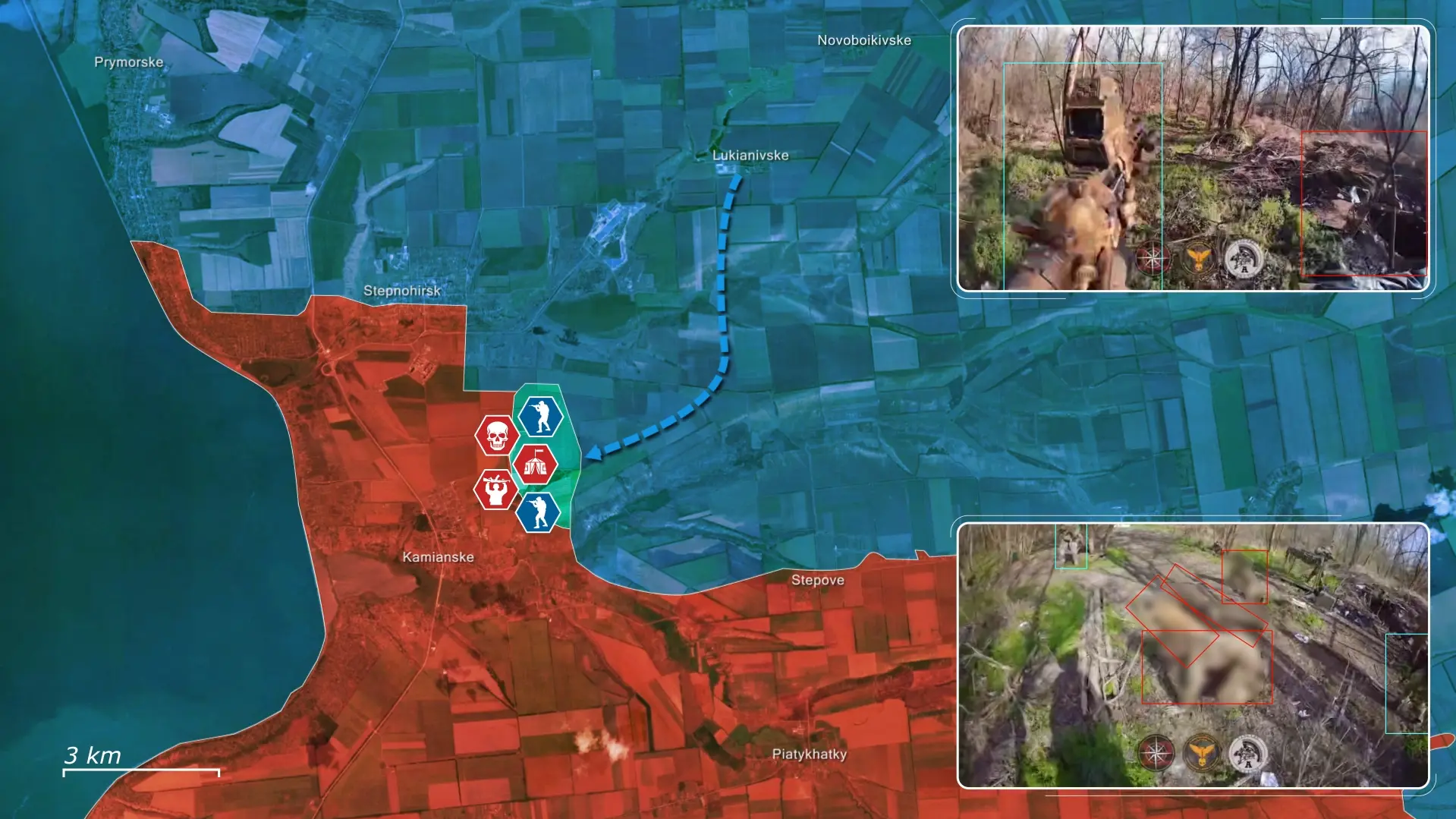
In Zaporizhzhia oblast, dozens of Russian soldiers couldn’t take it anymore and literally drank themselves to death at the frontline. Ukrainian intelligence intercepted a radio call in which Russian troops discussed a mass alcohol poisoning in the sector. Ten bodies were discovered at an observation post in Kamianske after the troops there had drunk themselves to death. The dead soldiers were not collected for six days, indicating a lack of command awareness. Ukrainian drones then destroyed a Russian site for ammunition and drones leaving Russian troops without drone coverage. Ukraine launched attacks on the weakened Russian positions toward Stepove to further isolate Stepnohirsk, pushed back the Russian flank, and now threatening to collapse the Russian flank.
Today, there are important updates from the Zaporizhzhia direction.
Here, dozens of Russian soldiers at once couldn’t take it anymore and literally drank themselves to death at the frontline. Ukrainians followed up with an immediate coordinated assault on the weakened Russian positions, now threating to collapse Russia’s flank.
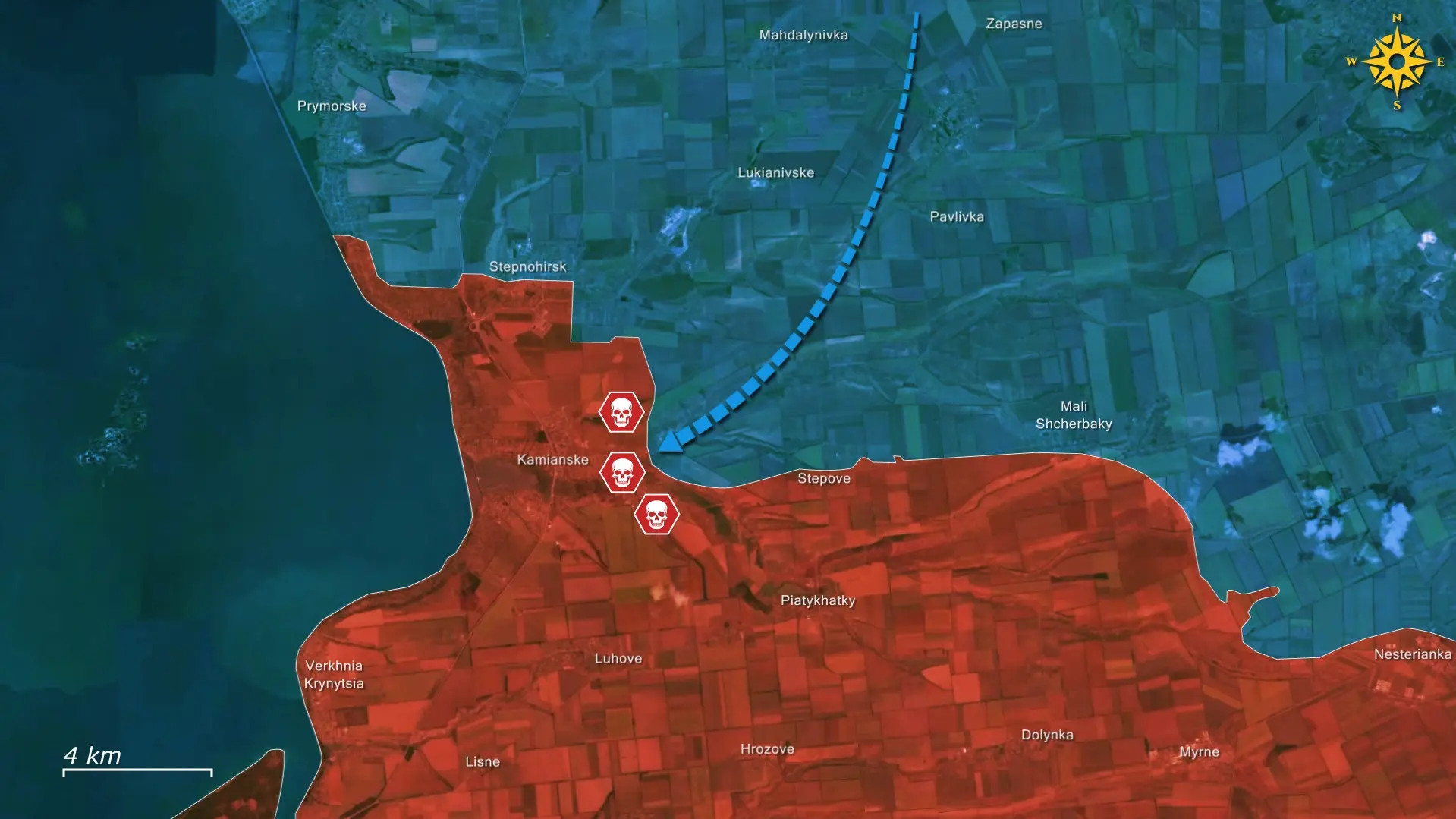
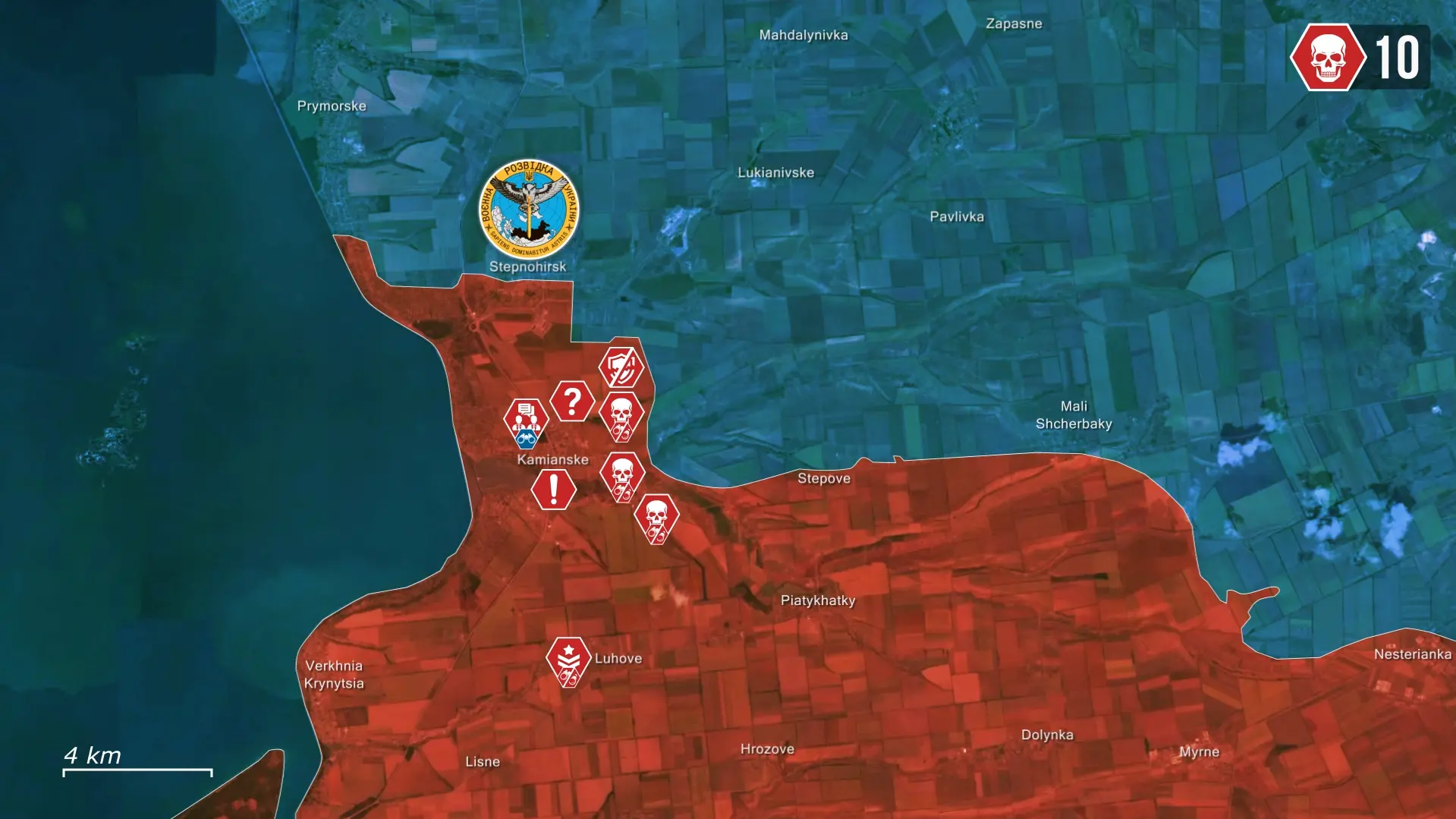
Recently, Ukraine’s Main Directorate of Intelligence released an intercepted radio call in which Russian troops discussed a mass alcohol poisoning in the Zaporizhia sector. According to one soldier, ten bodies were discovered at an observation post after the troops stationed there had reportedly drunk themselves to death. What is most revealing is that the incident did not shock the soldiers discussing it, suggesting that severe alcohol abuse and battlefield indiscipline have become normalized within Russian frontline units. One soldier asked the other over the radio how the dead bodies could be evacuated from their positions, which is believed to be in the cottage area in Kamianske. The dead soldiers were not collected for six days, indicating a lack of command awareness and position monitoring. Then one of the soldiers added the shocking fact that all dead soldiers were stacked and covered with sleeping bags, as if they were just sleeping, creating the impression that the position was manned while in reality nobody defended it, underlining the broader Russian command failure.
The fact that the bodies remained at the position for six days before anyone realized the soldiers were dead highlights that commanders didn’t track or care whether such a forward post was functioning, supplied, or combat capable. Even the complete loss of radio contact did not raise any alarm, as no one bothered to see if the position was still Russian or not, effectively making the Russian defense line blind. This indicates that prolonged breakdowns in communication are treated as routine within the Russian army, while allowing Ukraine to find weak points in the Russian line, which they did east of Stepnohirsk.
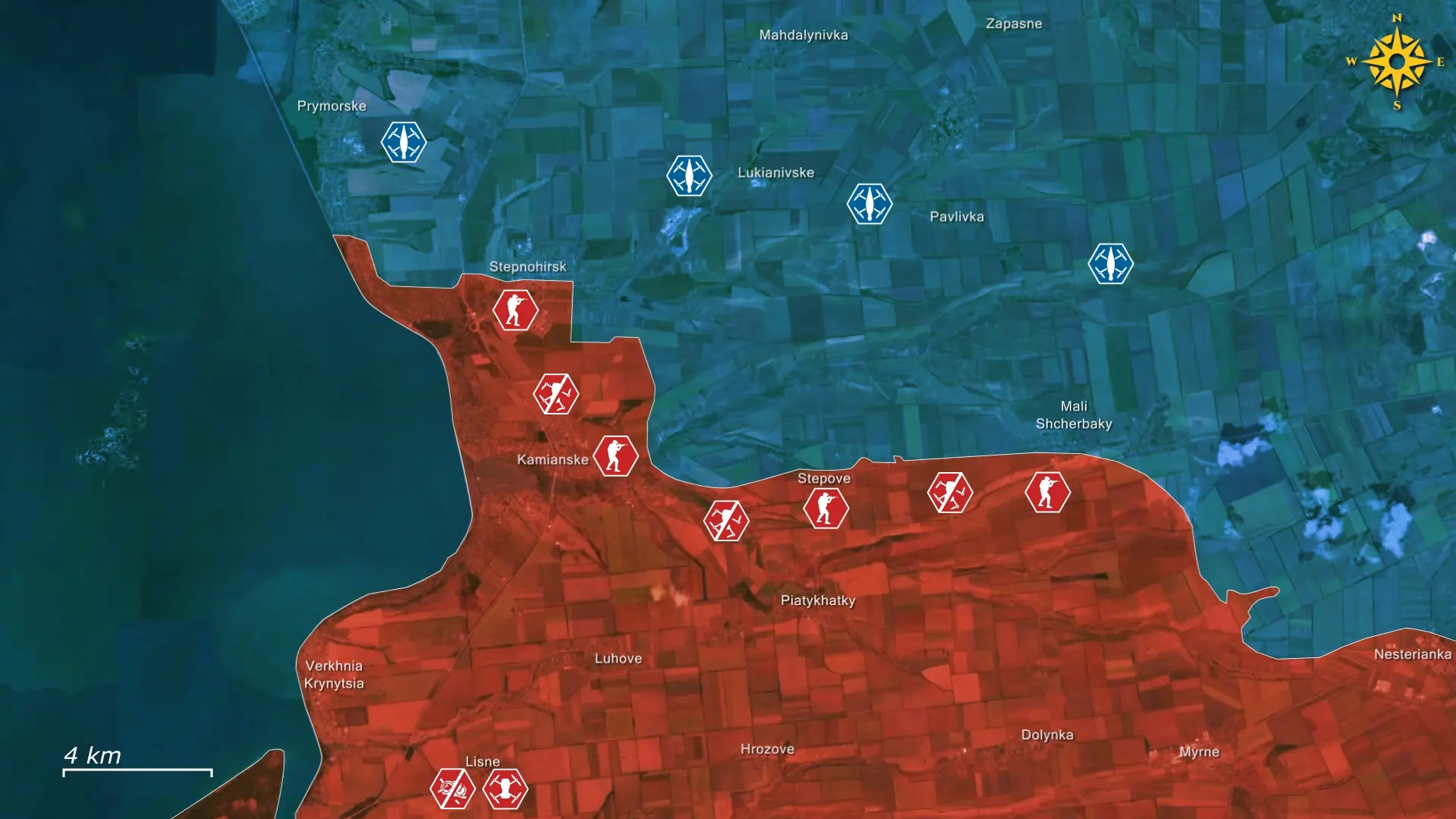
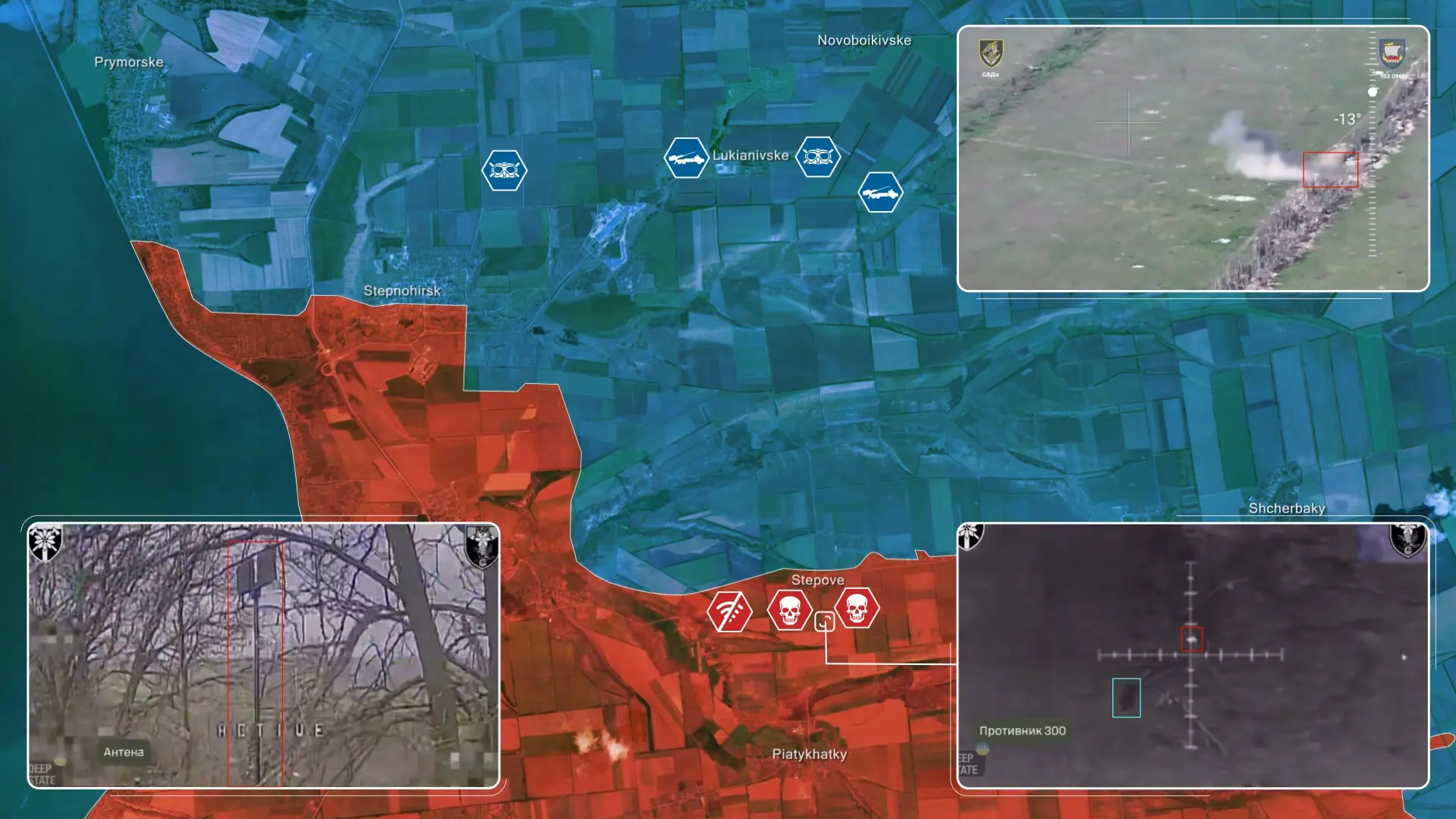
The Ukrainians immediately exploited the situation by launching preparatory strikes ahead of their counterattack. Ukrainian kamikaze drones destroyed a building in the village of Pryshyb, thirty-six kilometers south of Stepnohirsk, which Russian drone operators were using as a position and storage site for ammunition and drone equipment. As a result, Russian frontline troops were left without full drone coverage, which detects Ukrainian movements, guides artillery, and protects exposed flanks. This further worsened an already critical shortage of drones in the sector, where Russian soldiers had previously complained that Ukrainian drone operators were dominating the battlefield.
After the Russian frontline units were left exposed, Ukrainian artillery struck Russian soldiers positioned in the Mali Shcherbaky area, which was important to suppress before the flank attack could begin. Further west, near Stepove, Ukrainian drone operators attacked Russian personnel and shelters using FPV drones and drone dropped grenades. They also targeted Russian radio antennas to disrupt communications with commanders and interfere with drone operations. These strikes were intended to weaken Russia’s local communications and immediate defensive response, while also securing Ukraine’s eastern flank ahead of the assault. To support the operation, Ukrainian defense forces reinforced the sector with the one hundred and fifty-third Mechanized Brigade. Shortly afterward, the Ukrainian Armed Forces launched attacks toward Stepove and in the direction of Kamianske, which would further isolate Stepnohirks.
This comes at a critical moment for Russian forces, being hit by two problems at the same time, struggling to contain Ukrainian special operations forces infiltrating Stepnohirsk, while facing the risk of its logistics through Kamianske being completely cut off from the east. Notably, the main Ukrainian counterattacks toward Stepnohirsk are being led by special forces units of Ukraine’s Main Intelligence Directorate and the International Legion, both of which have extensive experience in urban combat, which is vital inside Stepnohirsk. Despite Russia redeploying airborne assault units to halt the Ukrainian advance, these forces are steadily being pushed back, proving the seriousness of the breach.
Meanwhile, Ukrainian special forces assaulted a Russian position in a wooded area east of Kamianske. After covertly approaching the position and conducting tactical drone reconnaissance, the Ukrainian troops launched the clearing operation against the Russian dugouts. The Russian paratroopers defending the position were eliminated, while six soldiers surrendered against the overwhelming attack and were captured alive. As a result of the counterattack, Ukrainian forces pushed back the Russian flank and narrowed the Russian maneuver space, worsening the cut-off threat.
Overall, the situation near Stepnohirsk demonstrates how rapidly collapsing discipline creates physical gaps in the line. A Russian unit drinks itself to death while commanders fail to notice for nearly a week, exposing catastrophic communication failures across the sector. Ukraine immediately exploited the chaos and pushed Russia’s flank, threatening a collapse. Now, Russia’s local defense is no longer failing only from Ukrainian firepower, but from internal command decay.
As a Partner and Co-Founder of Predictiv and PredictivAsia, Jon specializes in management performance and organizational effectiveness for both domestic and international clients. He is an editor and author whose works include Invisible Advantage: How Intangilbles are Driving Business Performance. Learn more...




0 comments:
Post a Comment