Russia's Lyman Retreat Risks Becoming A Rout Due To Ukraine's Advance Speed
As if driving Russian forces out of their salient north of Lyman and retaking as much as 200 square kilometers of territory weren't success enough, it now appears that the speed of the Ukrainian advance has compounded the Russians' defeat by making it difficult to consolidate new defensive positions along the Zherebets River.
This has meant that more confused and isolated remnants of Russian units are trapped in their former pocket without hope of resupply, reinforcement or even, for many, withdrawal. The one remaining crossing point is under Ukrainian fire control and in danger of being closed. This has caused many of the Russians to try to concentrate in hopes of improving their defensive prospects, but it has also made Ukrainian targeting by drones, artillery and planes much easier, which is leading to higher Russian casualties. JL
RFU News reports:
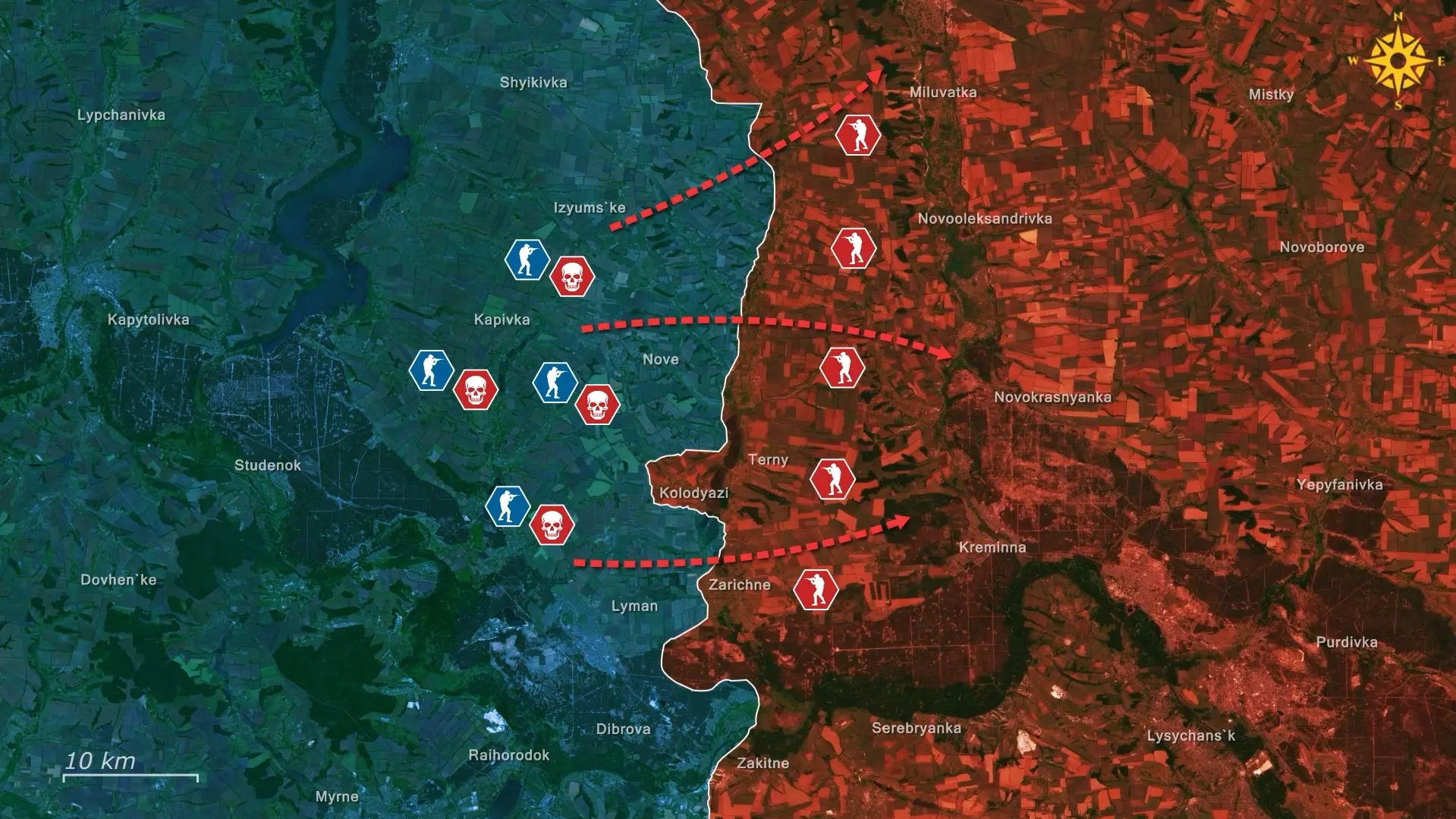
After Ukraine pushed Russia out of 200 square kms north of Lyman, the Russians were overwhelmed by the speed at which the Ukrainians consolidated their old positions. This resulted in Russia failing to strengthen their new defensive line, as the Ukrainians press toward the eastern bank of the Zherebets River. There are only a limited number of crossing points over the river, and attempting to set up new fords has become more dangerous. Russia never intended to lose their bridgehead across the Zherebets, only to withdraw forces that Ukrainians threatened to encircle. But the speed of the Ukrainian advance, and the failure of Russians to hold their new line, is turning the retreat into a rout, with Ukrainians overrunning Russian lines faster than they can be solidified. Russian have become concentrated inside a deadlier, smaller pocket, making Ukrainian targeting easier.
Today, there is important news from the Liman direction.
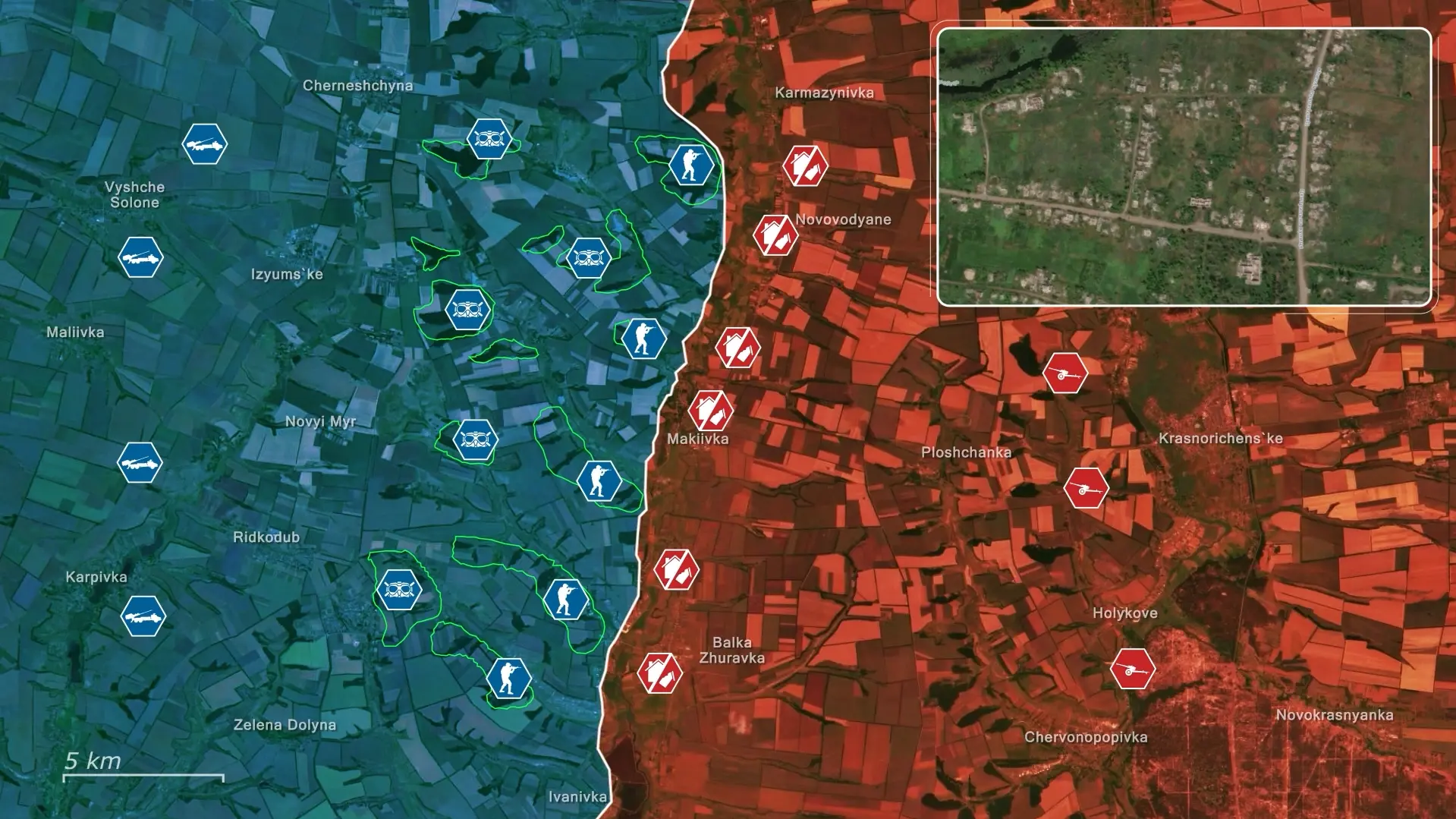
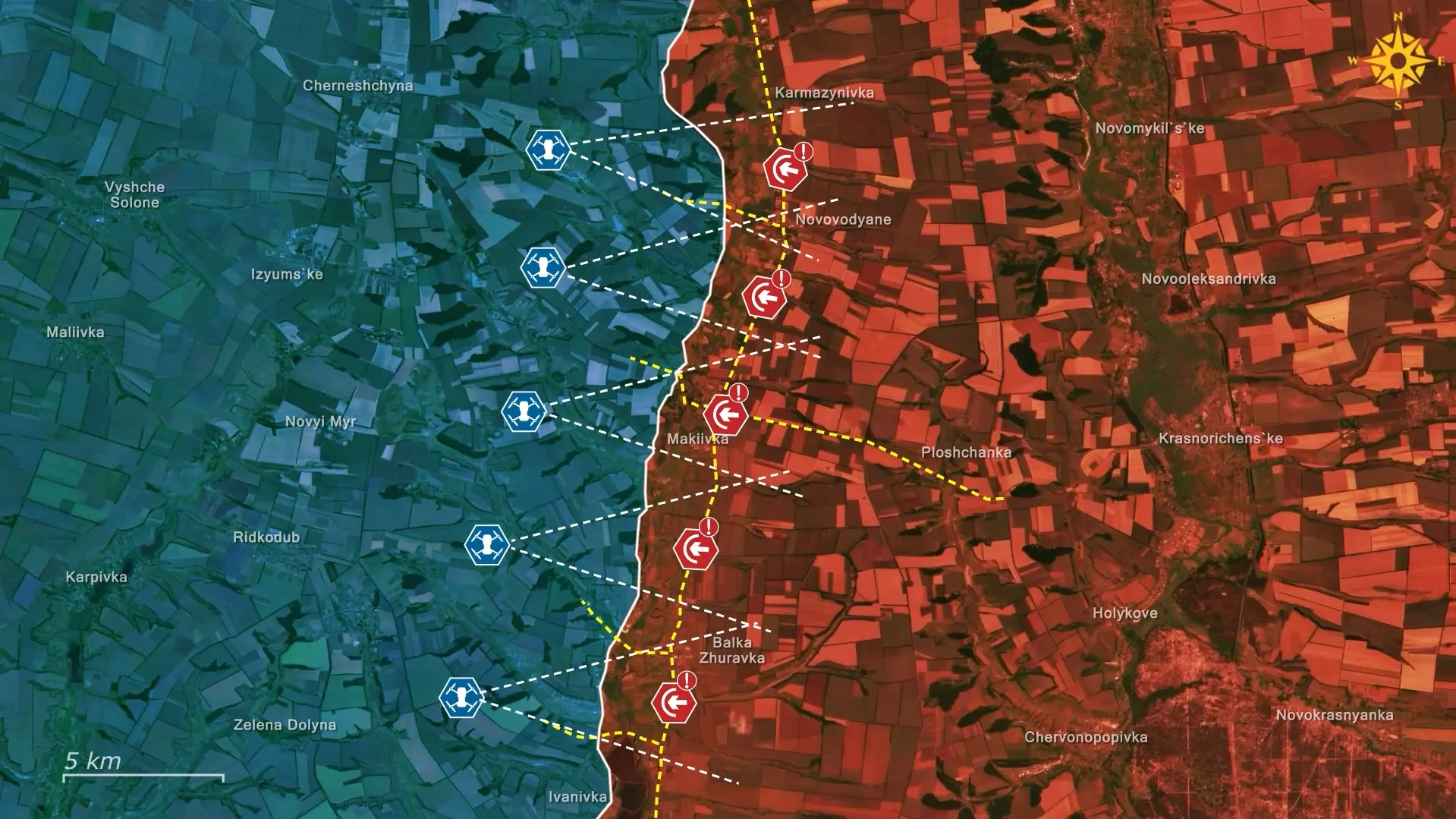
Here, Ukrainians are actively pressing their advantage and overrunning Russian lines. After Ukrainians pushed Russians out of over two-hundred square kilometers of territory north of the city and forced a massive Russian withdrawal, Russians were overwhelmed by the speed at which Ukrainians began consolidating their old positions. Notably, this resulted in Russians failing to adequately consolidate their own new defensive line, with Ukrainians clearing northern Liman of Russian infiltrators and remnants. Additionally, Ukrainians are pressing on directly toward settlements on the eastern bank of the Zherebets River, namely Novovodiane, Makiivka, and Balka Zhuravka.
Notably, the most important target here is not the capture of these settlements themselves, but rather the forests that cover the hills on the west side of the Zherebets River. These positions are excellent for Ukrainian drone operators and soldiers to establish positions in, as the trees and foliage cover a lot of their movement. This will allow Ukrainians a much more secure line to push Russian control even further back, as well as massively improve their defensive capabilities in case of renewed Russian assaults. Aside from the cover advantage, the towns that Russians are currently retreating into also provide extremely little shelter and cover for Russian soldiers to hide and accumulate forces in. First, these towns were intensely shelled by Russians during their initial offensive toward Liman. Then, these towns were intensely shelled by Ukrainians when Russians were using them to try and cross the Zherebets River.
This has left only basements for Russian soldiers to shelter in, giving Ukrainians even more advantage as they can drop grenades or other high explosives directly into the Russian shelters. Additionally, as with the Kolodiazi pocket to the south, there are only a limited number of crossing points over the river, and attempting to set up new fording points has become even more dangerous. Coordination among Ukrainian drone operators in the sector has increased significantly since last year, when Russians first established their bridgehead. This means that after being pushed back across the river in full, Russians will find it even more difficult to reestablish the bridgehead they are currently losing.
Important to note is that Russians never intended to lose their bridgehead across the Zherebets River, only to withdraw the large number of forces that Ukrainians were threatening to encircle north of Liman. However, the speed at which Ukrainians began advancing, and the failure of Russians to consolidate their new line, is completely dismantling this Russian operation. The supposed organized Russian withdrawal is quickly turning into a complete rout, with Ukrainians overrunning Russian lines and overwhelming the enemy before they can reform.
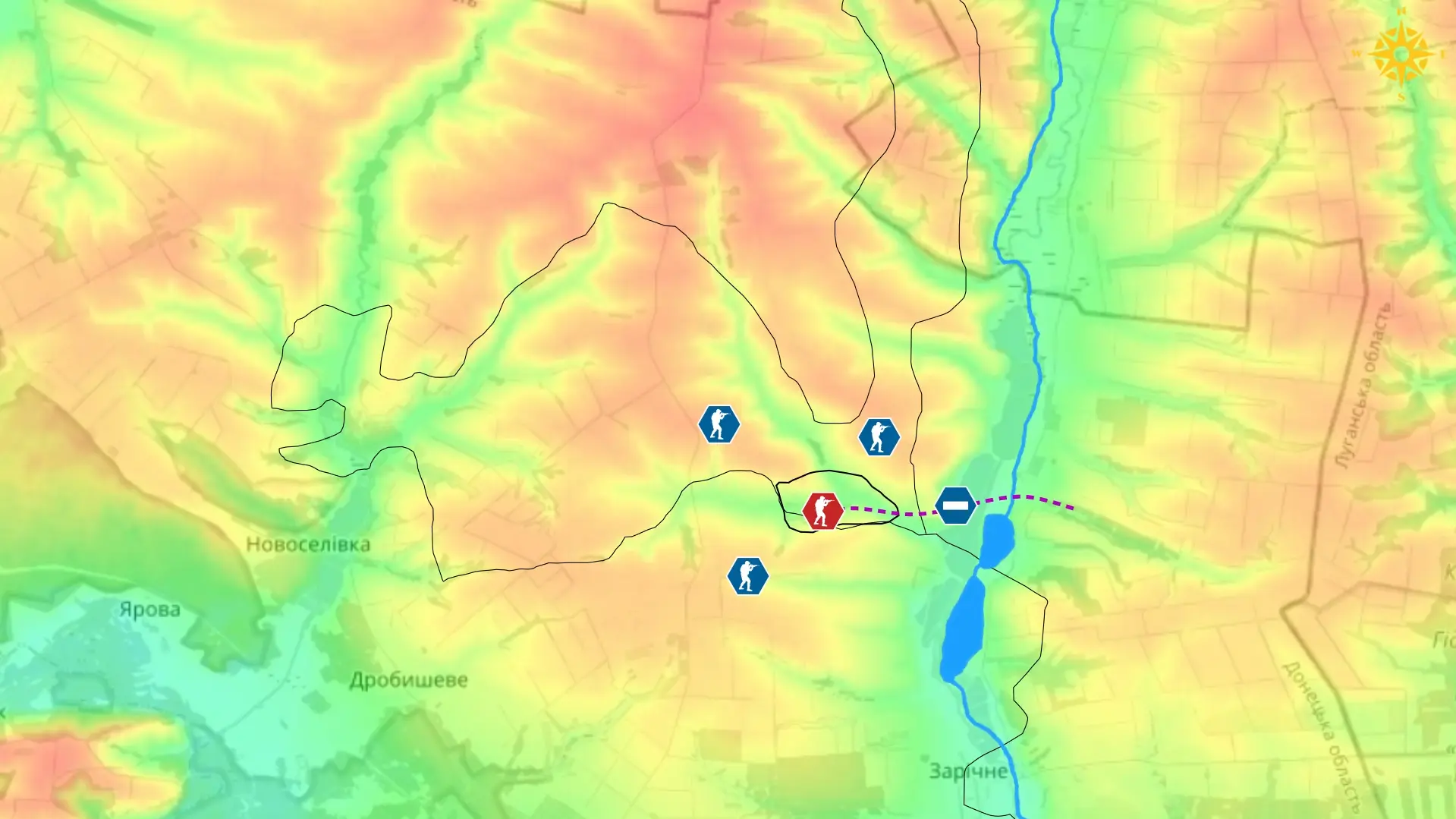
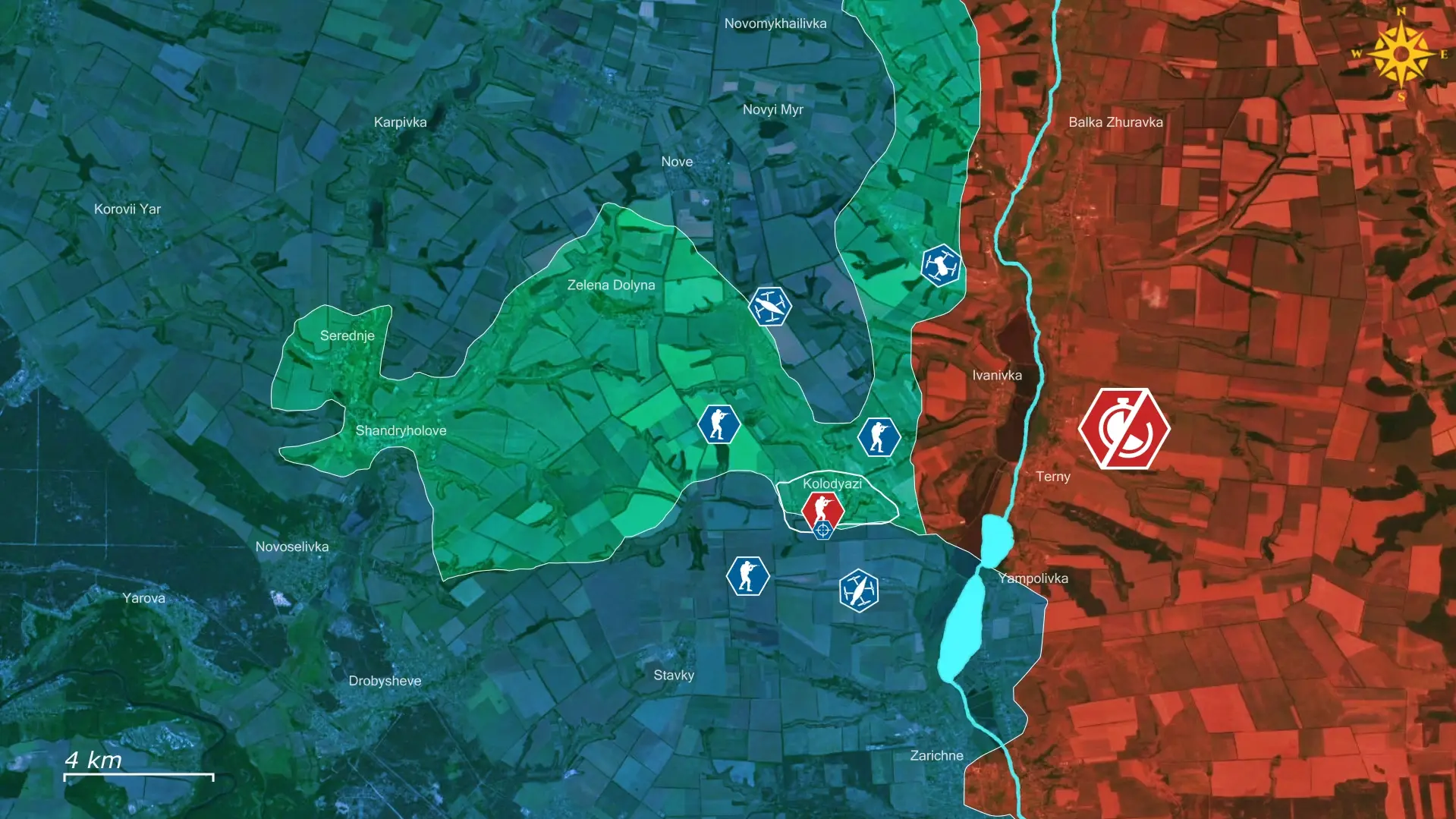
Additionally, reports are now emerging that a significantly larger number of Russian soldiers than originally admitted were left stranded deep inside the pocket. Russian sources are reporting ongoing clashes in the fields and tree lines now within the areas Ukrainians have advanced into. These consist of small groups of Russian soldiers stuck inside their positions, which did not withdraw for one reason or another. Regardless however, as Russian forces are now fully focused on retreating back across the river, it is unlikely that these remnant positions will soon be reinforced or resupplied. Ukrainians are reporting rapid clearing operations in the new rear, as Russian holdouts are being eliminated one by one. If we take a look at the topographic map, we can see that the geography makes their situation particularly difficult, as Kolodiazi lies on low terrain, while recent Ukrainian advances have secured elevated positions overlooking the settlement from all directions. By penetrating the Russian flanks and capturing these strongpoints, Ukrainian troops effectively gained observation over both Kolodiazi and the only approach leading east toward the Zherebets River.
Most importantly, this places the remaining Russian withdrawal route under Ukrainian observation and fire control. Russian troops attempting to escape must leave their positions, cross completely open terrain, and move toward river crossings while Ukrainian reconnaissance drones watch from above. Even without Ukrainian infantry overlooking every Russian position, this creates an effective tactical encirclement because the practical escape corridor can be attacked at any point.
However, time is also working against the Russians. Ukrainian assault troops are already clearing the southern parts of Kolodiazi. Fighting has heavily damaged the settlement, leaving increasingly few protected positions where isolated Russian groups can conceal themselves. Remaining inside, therefore, means waiting while Ukrainian infantry, reconnaissance drones, and FPV’s systematically locate their positions.
Running toward the river may be even more dangerous, as Russian soldiers would have to cross open ground where Ukrainian drone operators could identify even individual soldiers and pursue them, while moving in larger formations would make detection even easier.
This is precisely the opposite of what Russia intended when it abandoned the salient, as the withdrawal was supposed to preserve manpower before Ukrainian forces completed their pincer movement, allowing surviving troops to establish a new defensive line closer to the river. Instead, these same Russian forces that were supposed to do this appear to have become concentrated inside a deadlier, smaller pocket.
That concentration makes Ukrainian targeting easier, as artillery, drones, and other strike assets no longer need to search across the entire former bridgehead. Russian troops are compressed around a much narrower area, while Ukrainian forces occupy advantageous terrain surrounding and cutting off their only remaining way out.
Their potential loss would have consequences beyond the soldiers themselves, as Russian attempts to entrench along the western approaches to the Zherebets and prevent Ukraine from immediately exploiting the retreat are hopeless. If those Russian troops are killed, captured, or forced into disorderly attempts to escape, their command loses exactly the manpower intended to stabilize its new defensive line. The Russian defeat north of Liman has therefore potentially become worse after the withdrawal itself, which abandoned almost two hundred square kilometers of territory that already caused thousands of Russian losses to be captured in the first place.
Overall, the planned organized Russian withdrawal out of the Liman pocket is quickly devolving into a full rout. Ukrainians are rapidly advancing and overwhelming Russian forces before they are able to consolidate a new line of defense. The loss of key tactical positions west of the Zherebets River will completely dismantle any Russian hope of retaining a foothold and provide Ukrainians with a much stronger position to strike into Russian lines from. With Russian remnants in the rear being eliminated at this very moment, and Russian forces losing more than they initially intended to, the question now is how much more Ukrainians can exploit this Russian defeat and inflict the maximum damage to the retreating Russian forces.
As a Partner and Co-Founder of Predictiv and PredictivAsia, Jon specializes in management performance and organizational effectiveness for both domestic and international clients. He is an editor and author whose works include Invisible Advantage: How Intangilbles are Driving Business Performance. Learn more...






0 comments:
Post a Comment