Ukrainian Forces Cross Zherebets, Enter Luhansk, Adding To Russian Debacle
As Ukrainian forces begin to cross the Zherebets River at multiple points, the Russian debacle in the Lyman sector and across the Donbas grows.
The river crossing and entry into occupied Luhansk oblast signifies that the only Russians remaining on the west bank are isolated units or small groups either cut off by the speed of the Ukrainian advance and/or abandoned by their commanders. This expands the scope of the 3rd Corps counteroffensive beyond northern Donetsk and now threatens further roll-backs of Russian forces on a broader front, which forces the Russians to contend not only with what is in front of them, but which now may also be behind them. The implication is that the Russian threat to the Fortress Belt is now, itself, threatened on several axes. JL
RFU News and Giorgio Provinciali report:
As Russian forces continue withdrawing from positions west of the Zherebets River, Ukrainian forces pushed forward with across the river while consolidating control of the western bank. After Russian withdrawals, Ukrainian troops continued their counterattacks with limited resistance, pushing deeper into the previously contested zone. Russian sources have reported Ukrainian groups appearing across the Zherebets. Russian commanders must now manage threats on both sides of the river, (and) because they have refused to acknowledge the extent of the Ukrainian advance, many drone operators, support teams, and command posts have stayed instead of withdrawing further east, exposing them to Ukrainian capture. The advances in Luhansk widen the frame of this counteroffensive beyond the north of Donetsk Oblast.
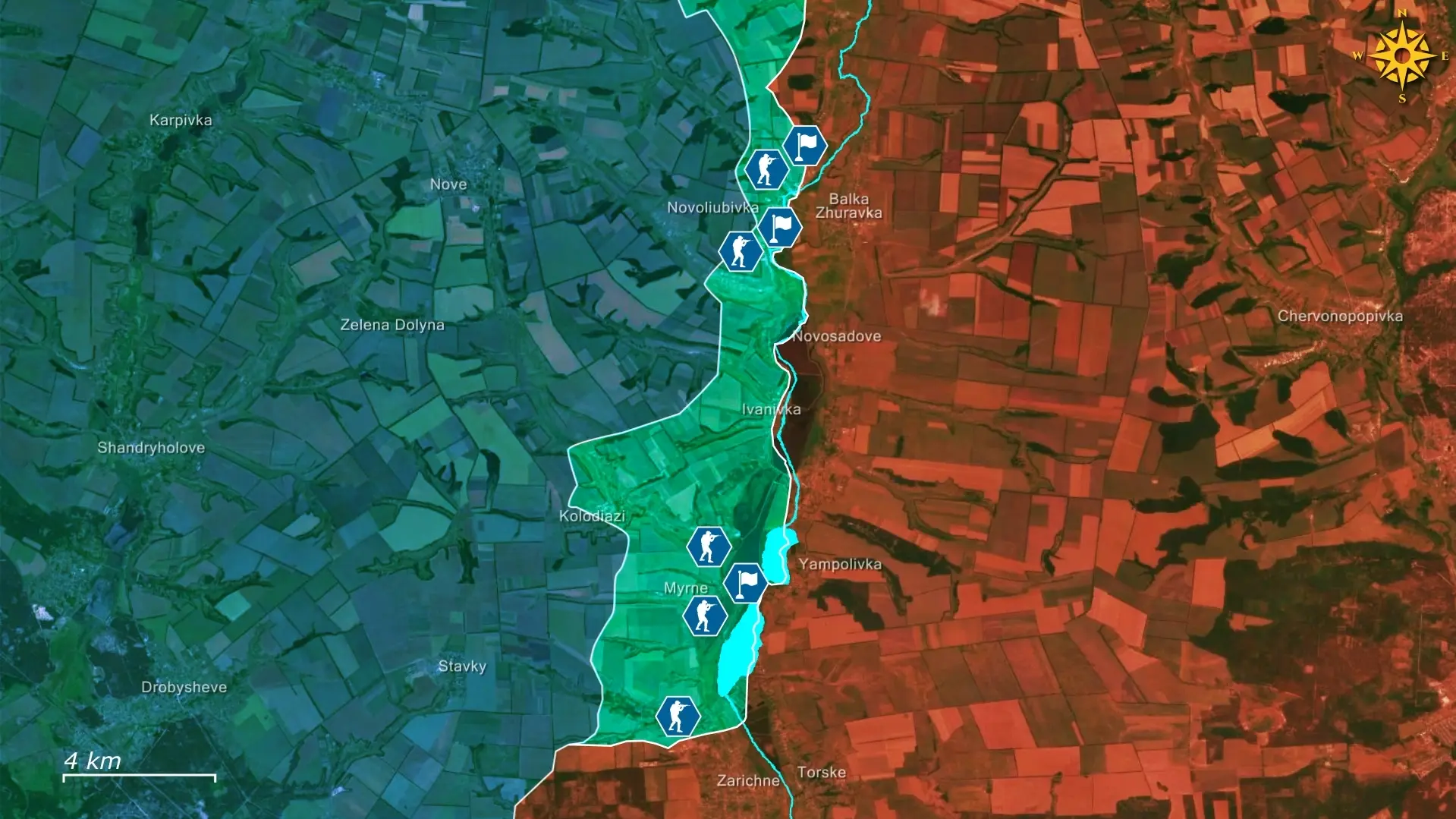
Russian forces are continuing to pull back from positions west of the Zherebets River, allowing Ukrainian forces to expand their control across several settlements and secure new ground along the river line. After Russian withdrawals from the areas of Zelena Dolyna and Shandryholove, Ukrainian troops continued their counterattacks with limited resistance, pushing deeper into the previously contested zone. In the Liman direction, Ukrainian forces retook Myrne, while further north in the Borova direction they entered Novolyubivka and reached the western side of Balka Zhuravka, bringing additional sections of the riverbank under Ukrainian control.
These advances have given Ukraine control over another thirteen square kilometers of Luhansk Oblast, which Russian officials claimed they have captured in full. Reaching the Zherebets River means Russian forces now have to prepare defenses along a wider section of the front, as Ukrainian positions along the river create several possible directions for future offensive operations.
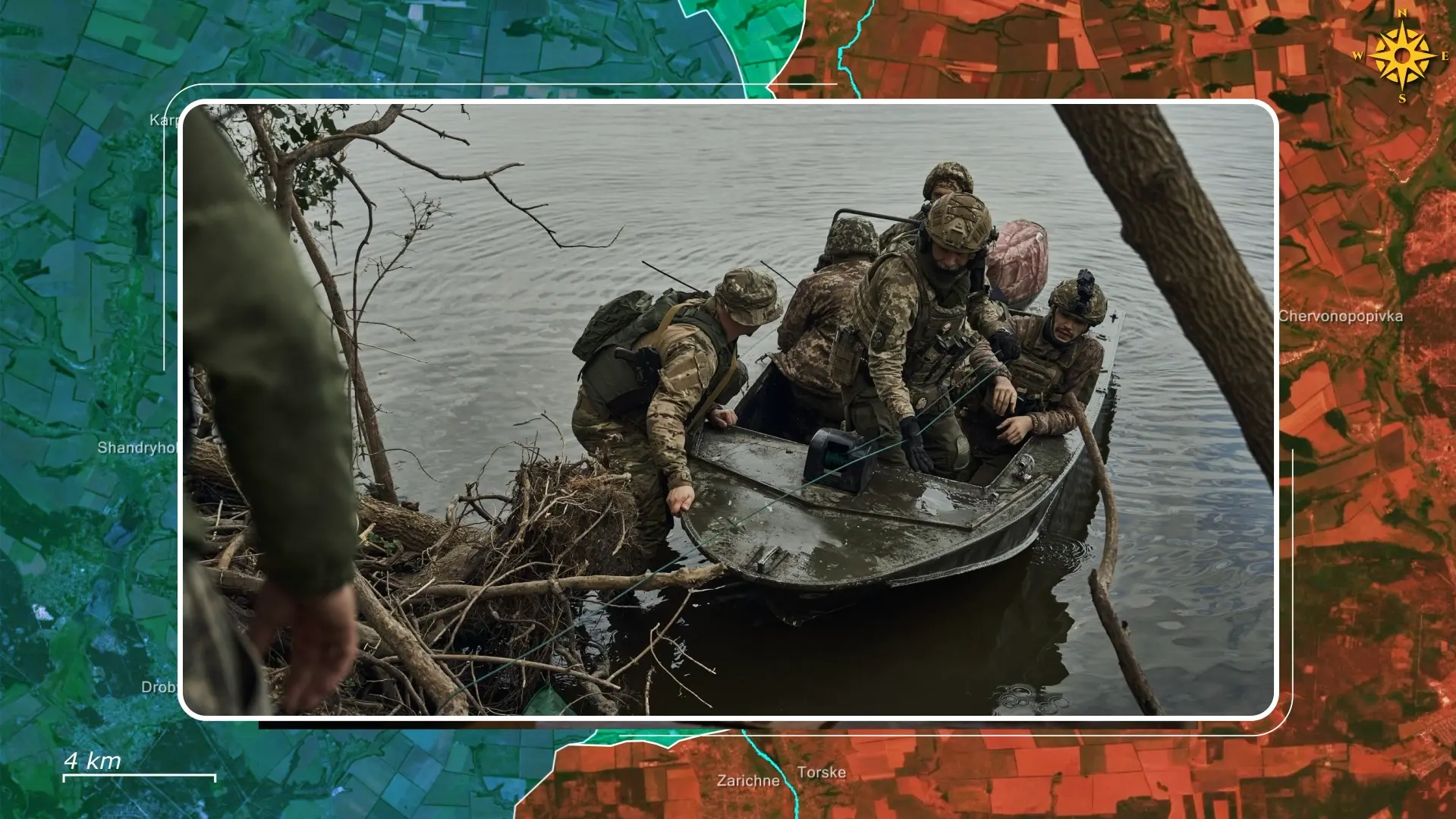
As Russian forces began withdrawing from positions west of the Zherebets River, Ukrainian forces pushed forward with smaller infiltration groups across the river while gradually consolidating control of the western bank. Russian sources have reported Ukrainian groups appearing across the Zherebets River, indicating that Ukrainian forces are already probing the eastern bank and identifying vulnerable areas behind the frontline.
The commander of Ukraine’s 3rd Army Corps, Andrii Biletskyi, points to the next objective: preventing Russia from rebuilding it by striking logistics and rear areas. This came with such an overwhelming capacity for penetration that Ukrainian pressure north of Lyman now extends into Luhansk Oblast’ as well.
Because Russian commanders have refused to acknowledge the full extent of the Ukrainian advance, many drone operators, support teams, and command posts have stayed in the same areas instead of withdrawing and regrouping farther east. This leaves them exposed to Ukrainian ambushes, allowing Ukrainian groups to strike the personnel and equipment supporting Russian operations behind the frontline and delay the preparation of new defensive positions along the eastern bank. As a result, Russian commanders must manage threats on both sides of the river at the same time, while Ukrainian forces use the disruption to strengthen their positions closer to the frontline.
While Russian units are attempting to reorganize behind the frontline and guessing where Ukraine will launch its main effort, Ukrainian forces are clearing remaining positions, improving logistics, and preparing the formations that will take part in the next phase of the operation. A river crossing also requires the ability to keep forces supplied after reaching the opposite bank, with stable logistics and continuous drone support needed to hold new positions. Ukrainian infiltrators across the river are disrupting Russian lines and creating the time needed for the main Ukrainian force to move support closer, strengthen its positions, and prepare the follow up assault.
Without this preparation, a rapid crossing would leave Ukrainian forces vulnerable after reaching the opposite bank, while the disruption of Russian positions gives Ukraine more time to organize the forces needed to continue the advance.
Overall, Ukraine’s advances along the Zherebets River have created a new position from which Ukrainian forces can continue developing their operations. Ukrainian infiltrators are already disrupting Russian rear areas, while units on the western bank are securing their positions and preparing for further movement along the river. The return of Ukrainian forces into Luhansk Oblast challenges Russian efforts to present the region as permanently secured and gives Ukraine a foothold in an area Moscow has spent years trying to control.
The advances in Luhansk widen the frame of this counteroffensive, since the formally announced perimeter of “Vivaldi” had so far concerned the north of Donetsk Oblast’. In recent hours, however, the Ukrainian General Staff reported strikes on a logistics depot in the occupied city of Luhansk, about 105 km from the front, and on a concentration of personnel at Druzhne, as far as 143 km from the front, carried out on September 16–17.
The longer Russia struggles to stabilize this sector, the more time Ukraine has to turn these gains into a larger offensive effort.
As a Partner and Co-Founder of Predictiv and PredictivAsia, Jon specializes in management performance and organizational effectiveness for both domestic and international clients. He is an editor and author whose works include Invisible Advantage: How Intangilbles are Driving Business Performance. Learn more...







0 comments:
Post a Comment